


By reinterpreting Yoruba resist-dye textiles through relaxed silhouettes and colour experimentation, Udela Designs presents Adire as a material for modern wardrobes.
In contemporary Nigerian fashion, traditional textiles are increasingly being reimagined as vehicles for modern design rather than simply cultural artifacts. Udela Designs’ Aduni Adire 2024 Collection, presented on 12 June 2024 at Jabi Lake Mall in Abuja, reflects this ongoing shift. Creative Directors Racheal Ifedapo Bomodeoku and Udochi Wuchegbule place the Yoruba resist-dye tradition of Adire at the centre of the collection, exploring how its distinctive patterns and dye techniques can be adapted to contemporary ready-to-wear.
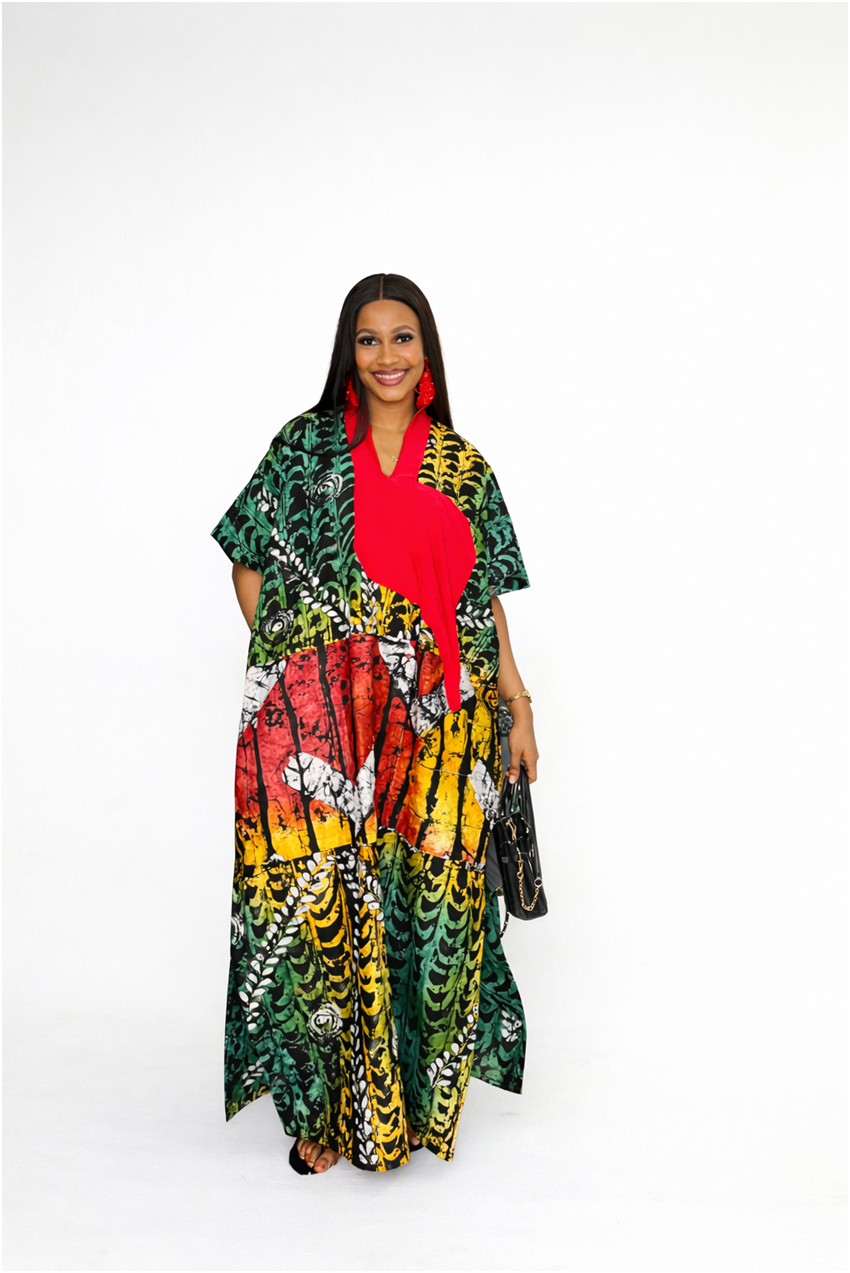
The designers approach Adire not as a decorative afterthought but as the starting point of the design process. The garments are built around generous, flowing silhouettes, allowing the textiles to move freely while showcasing the visual complexity of the dye patterns. Long, relaxed forms reminiscent of traditional boubou garments appear throughout the collection, though they are styled with a simplicity that aligns with modern fashion sensibilities.
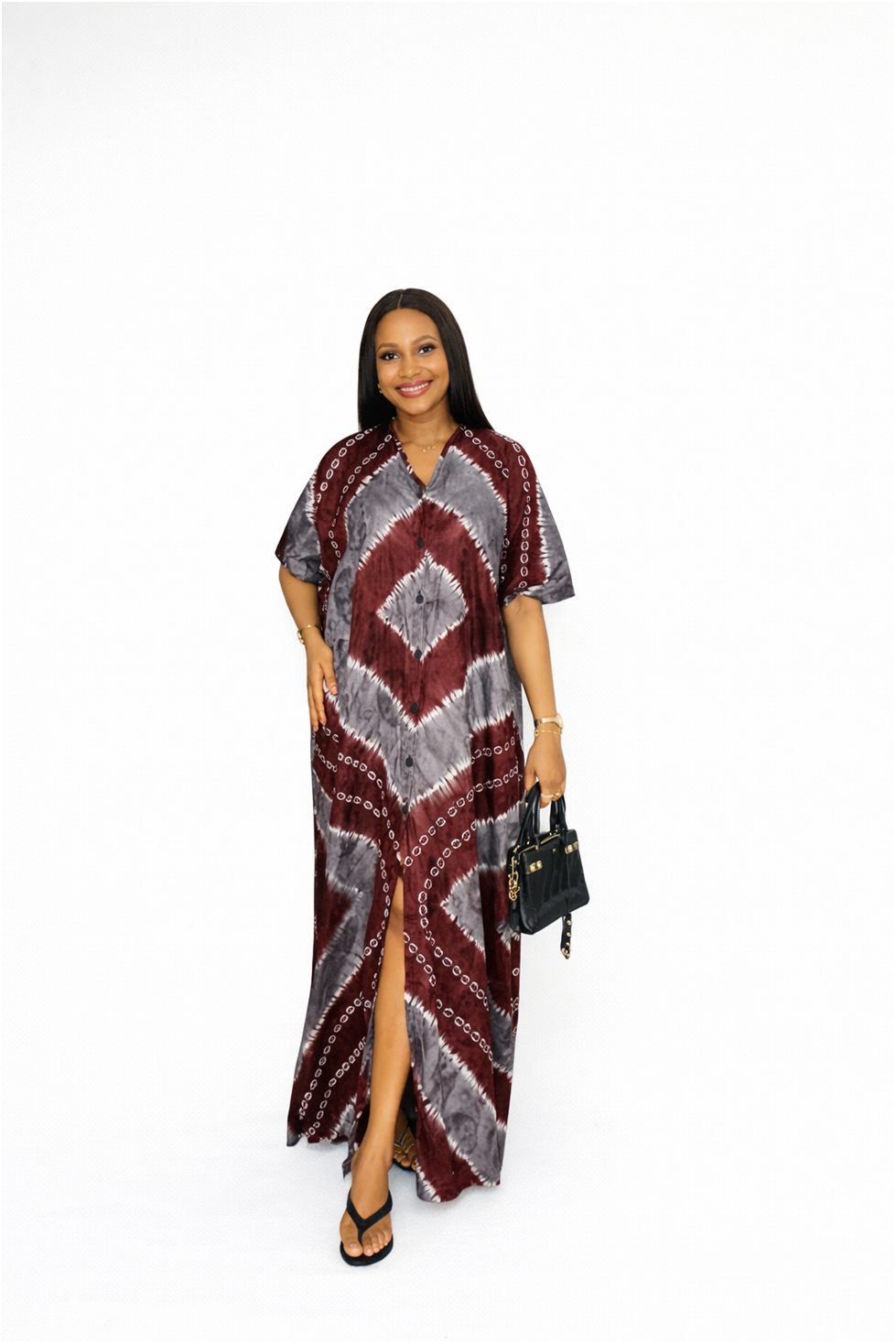
A particularly notable look appears in a burgundy and grey Adire kaftan, where a large diamond motif dominates the surface of the garment. Rather than dispersing patterns evenly across the fabric, the designers place the motif strategically at the centre of the composition, creating a visual structure that draws the eye vertically along the body. A subtle slit at the front introduces movement, giving the otherwise voluminous silhouette a sense of lightness.
Colour experimentation also plays a significant role in the collection. While Adire is historically associated with indigo dyeing, the designers introduce a broader palette that includes vibrant tones of red, yellow, green and black. In one piece, a multi-coloured kaftan is interrupted by a striking red panel layered across the patterned fabric. This detail disrupts the visual rhythm of the textile and adds depth to the garment, suggesting a contemporary approach to colour blocking.
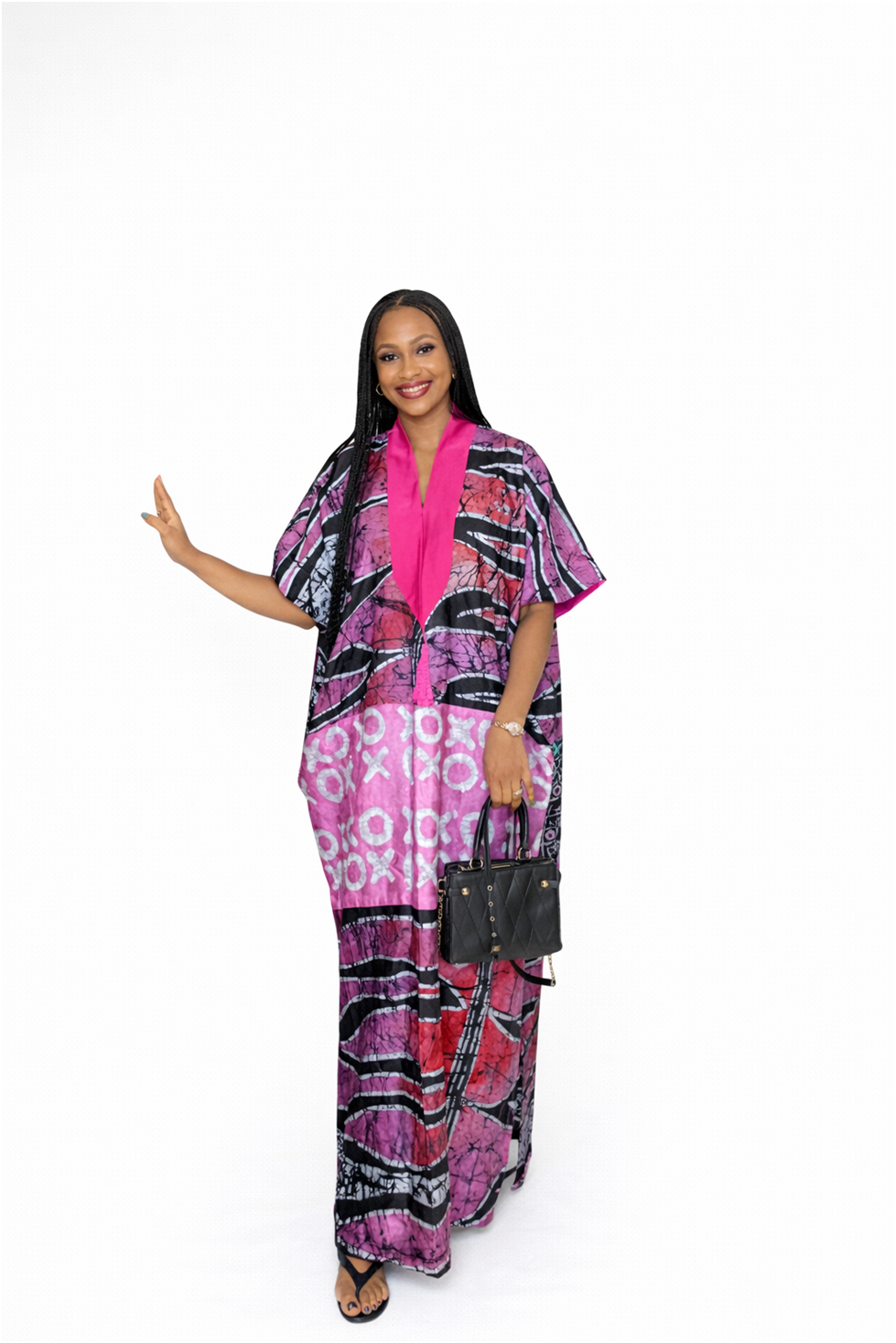
Another garment in the collection presents Adire in a pink and black palette, pushing the traditional dye technique into a more experimental territory. The contrast between the bold colour choice and the organic irregularities of the resist-dye process produces a design that feels simultaneously playful and rooted in craft.
The designers also introduce a look that leans toward a more casual aesthetic: a brightly patterned maxi dress paired with a woven handbag and straw hat. The styling evokes an easy, leisure-oriented sensibility, suggesting that garments inspired by heritage textiles can move comfortably between cultural expression and everyday wear.
Throughout the collection, accessories remain understated. Structured handbags, simple footwear and natural materials complement the garments while ensuring that the focus remains firmly on the textiles themselves. This restrained styling reinforces the idea that Adire is the primary design language of the collection.
That said, the emphasis on loose kaftan forms means that the structural range of the collection remains somewhat narrow. Introducing more varied silhouettes such as tailored garments or layered separates might have opened additional possibilities for exploring the textile within contemporary fashion design.
Nevertheless, the Aduni Adire 2024 Collection demonstrates a clear commitment to repositioning Adire within modern fashion practice. By combining heritage dyeing techniques with accessible silhouettes and expanded colour palettes, Bomodeoku and Wuchegbule present the textile as both culturally grounded and adaptable to evolving design contexts.
As Nigerian fashion continues to gain international attention, designers who engage thoughtfully with traditional materials are helping to shape a broader Afrocontemporary aesthetic. Udela Designs’ Aduni Adire 2024 Collection contributes to this conversation by illustrating how indigenous textile traditions can inform modern design without losing their cultural significance.


