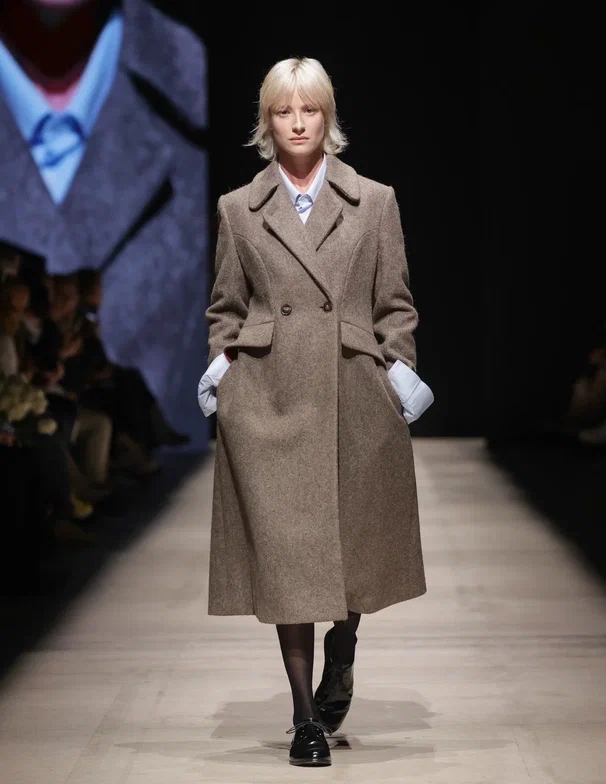
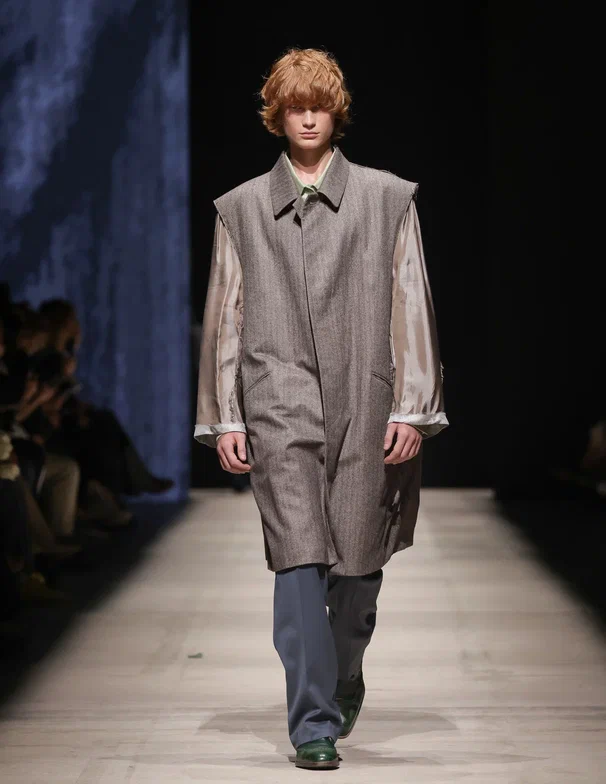
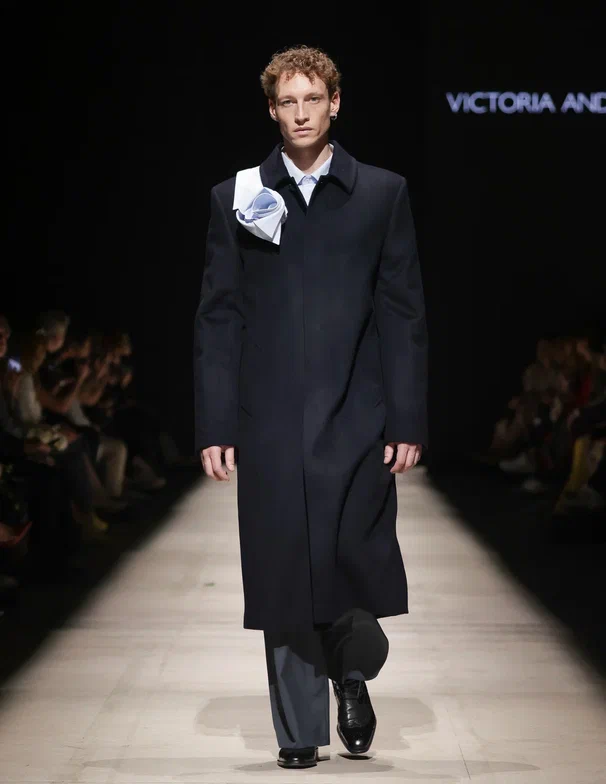
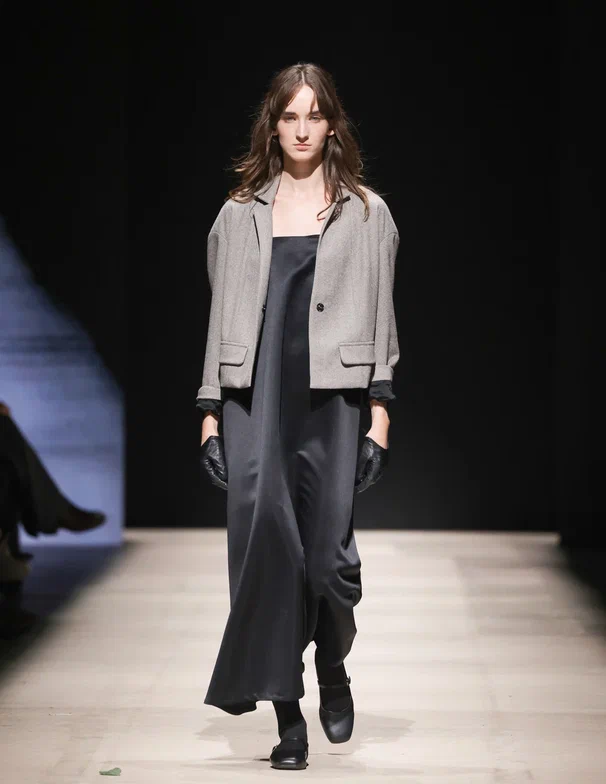
Moscow Fashion Week returned for a six-day showcase of Russian and international fashion, bringing together more than 350 designers from 24 Russian regions and over 10 countries. Held across nearly 15 venues in Moscow, the event featured runway shows by established labels and emerging designers, with student showcases highlighting the next generation of fashion talent. Designers from cities including Chelyabinsk, St. Petersburg and Yakutia shared the runway alongside Moscow-based brands, while the Manege served as the central hub for back-to-back shows, a pop-up shop featuring nearly 100 Russian labels, and industry discussions.
Beyond the runway, the event expanded its focus to fashion education, technology and international collaboration through lectures, film screenings and business discussions. The programme also included the BRICS+ Fashion Summit, which brought together industry experts from more than 60 countries to discuss topics such as local brand development, investment, traditional craftsmanship and artificial intelligence in fashion. With designers representing countries across Africa, Asia, Europe and the Americas, Moscow Fashion Week offered a platform for showcasing diverse creative perspectives and exploring opportunities within the global fashion industry.
See all the designers that showcased below:
Universal University x British Higher School of Art and Design (Moscow). Twelve original collections by graduates of the Fashion & Textile Design bachelor’s program were presented on the runway at the country’s main fashion event. Each student chose a theme of their own, and although the concepts were deliberately diverse, they were united by boldness, daring, and a conceptual approach. The graduates developed their techniques and design solutions in the workshops of Universal University. The collections featured recycled materials, eco-friendly fabrics, upcycled leather, latex, silicone, and couture tweed. The runway showcased bridal, romantic, and especially daring aesthetics, while each collection was experimental and innovative in its own way. Each collection was accompanied by its own tracks created by students of the Moscow School of Music. Among the program’s graduates are Maria Kazakova, an LVMH Prize finalist (JAHNKOY); Sasha Barbakov; Dasha Selyanova (ZDDZ); and many others.
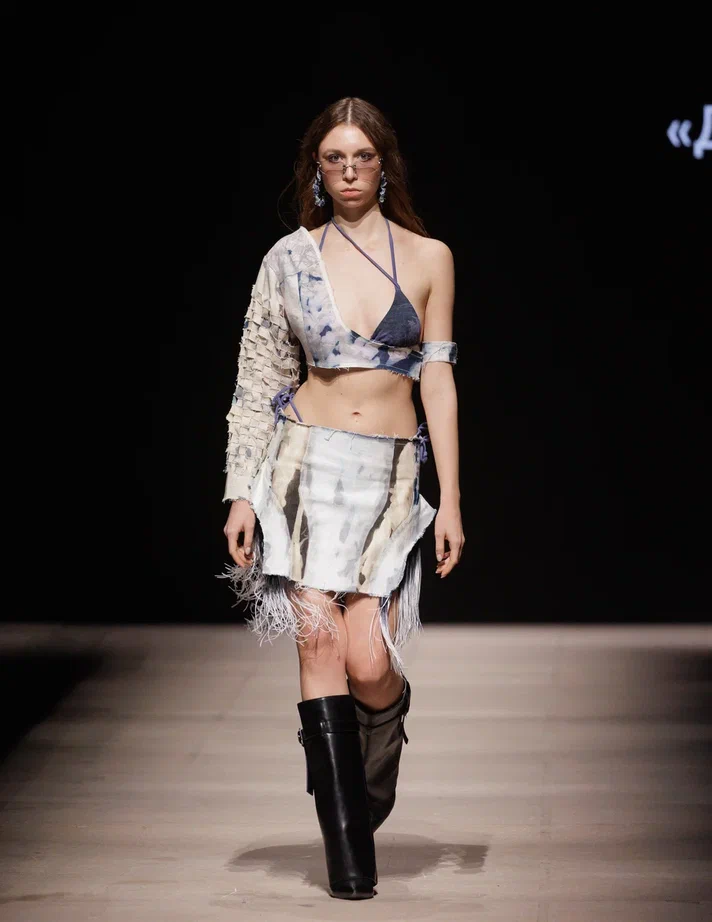
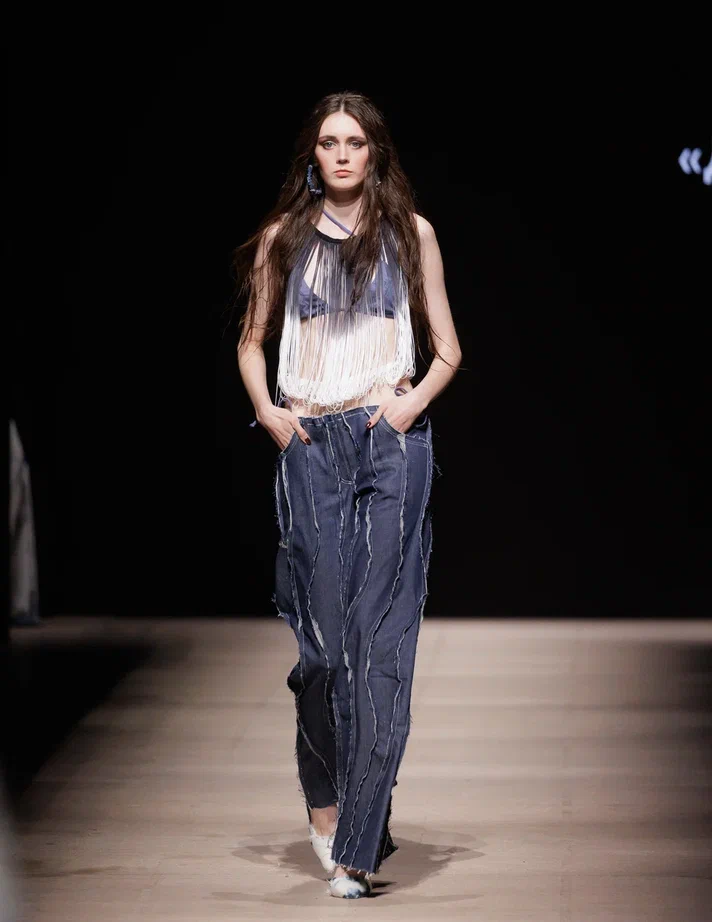
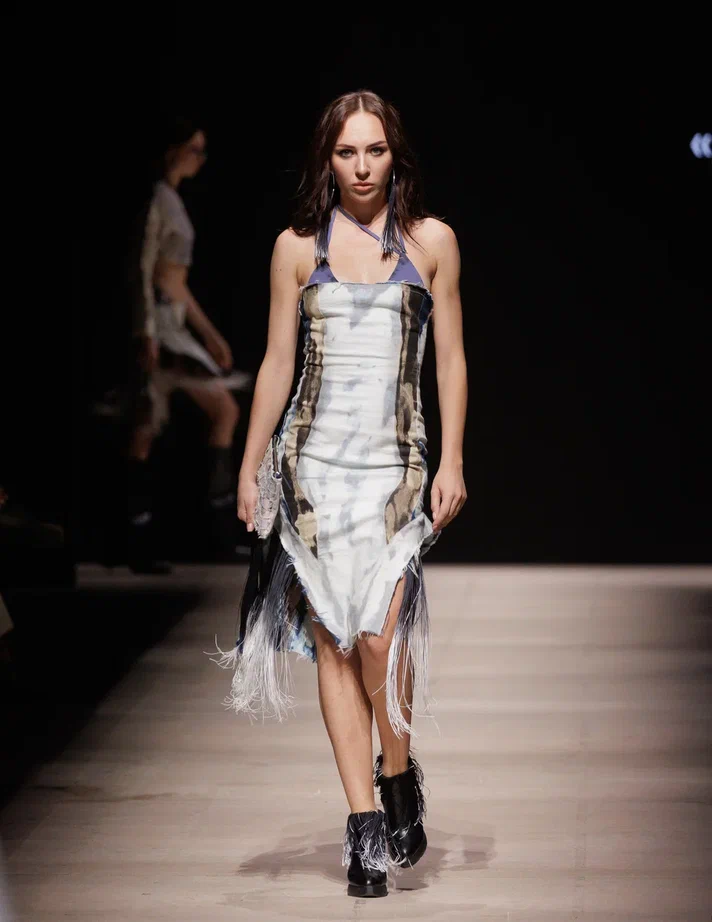
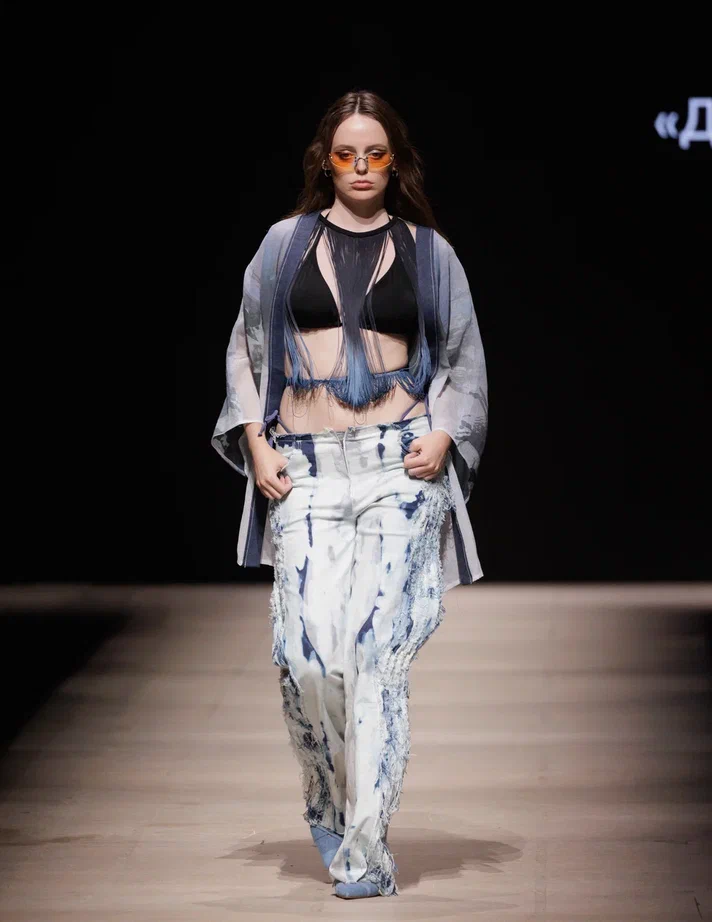
The Academy of Branding and Design METRICS (Moscow) presented a group show featuring the strongest work by its graduates: 50 looks by designers with distinct styles but a shared interest in form, concept, and conscious fashion. The collections featured architectural tailoring, asymmetry, layering, and sophisticated work with silhouette. The graduates draw on historical tailoring, architecture, and current trends, reinterpreting them through their own visual language. Sustainable approaches were also part of the picture: slow fashion, recycling, and upcycling are becoming part of the designers’ concepts. Ultimately, the group show by the Academy of Branding and Design METRICS forms a vivid portrait of a new generation of creatives for whom clothing is not only about form but also a way of expressing ideas.
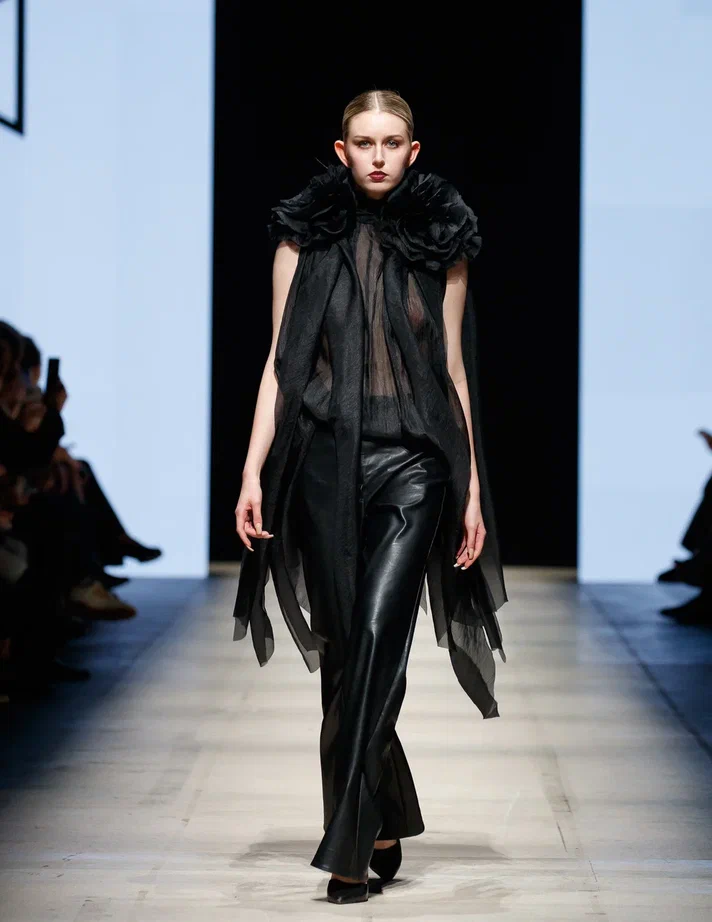
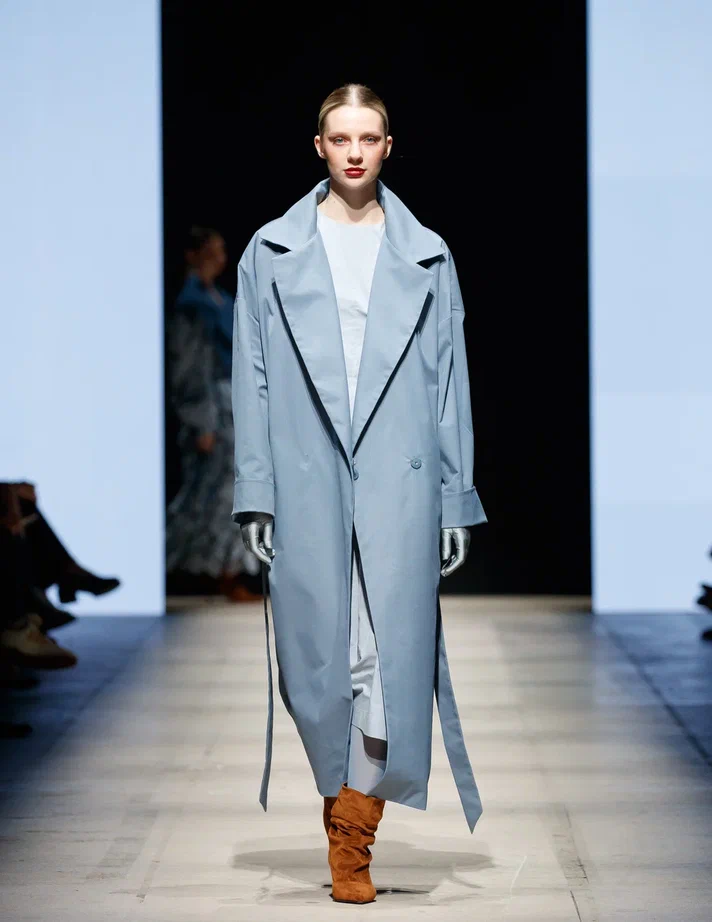
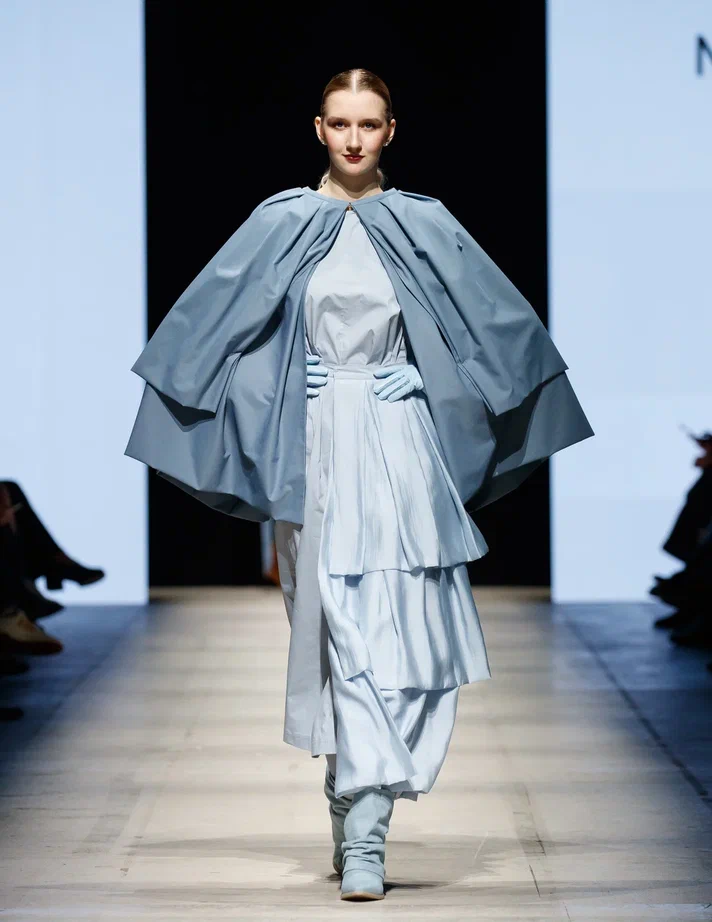
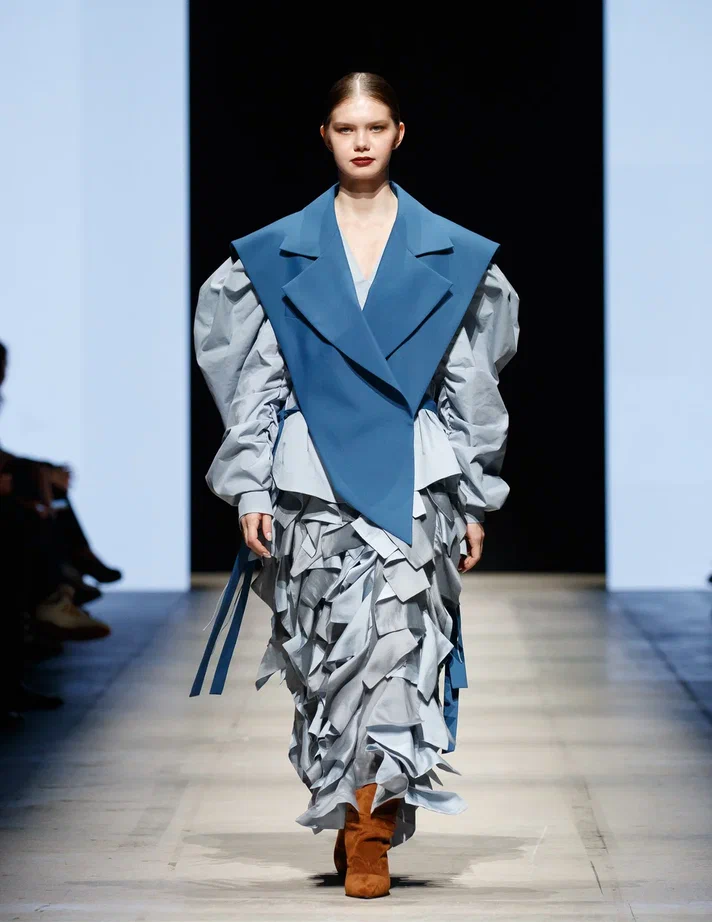
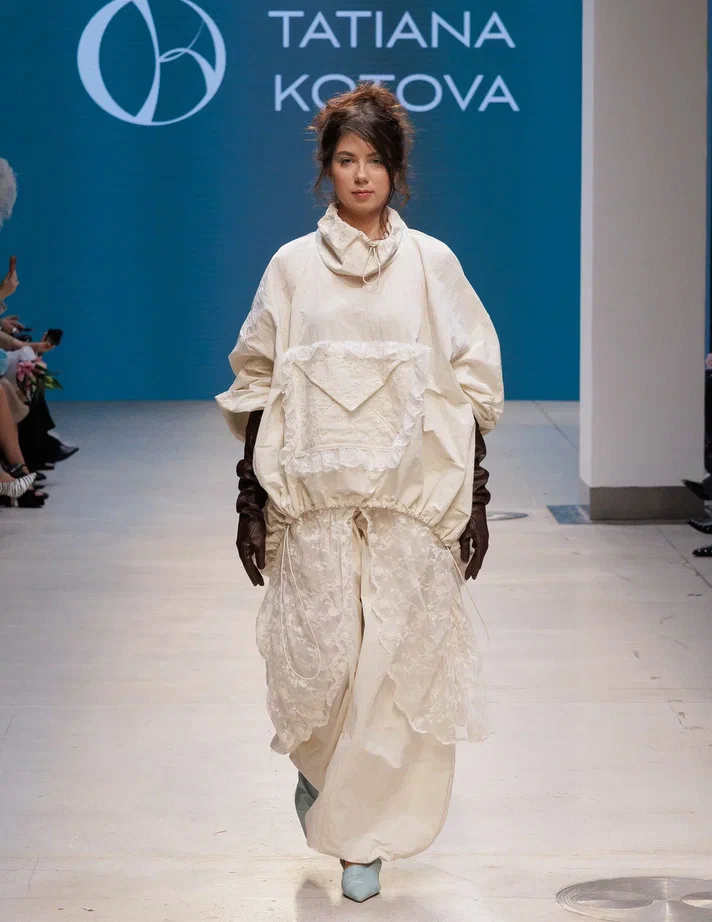
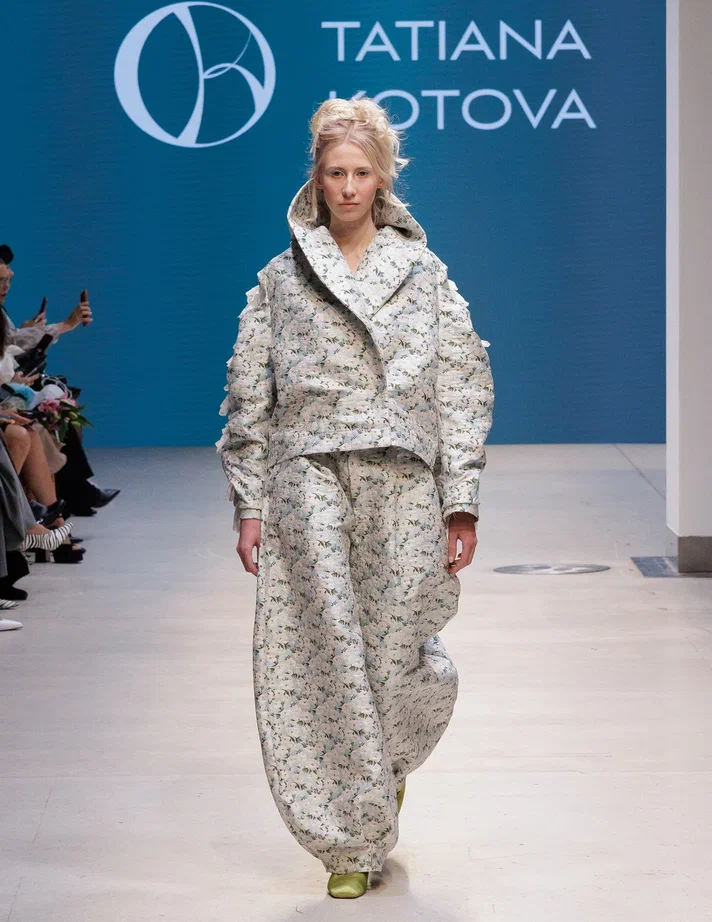
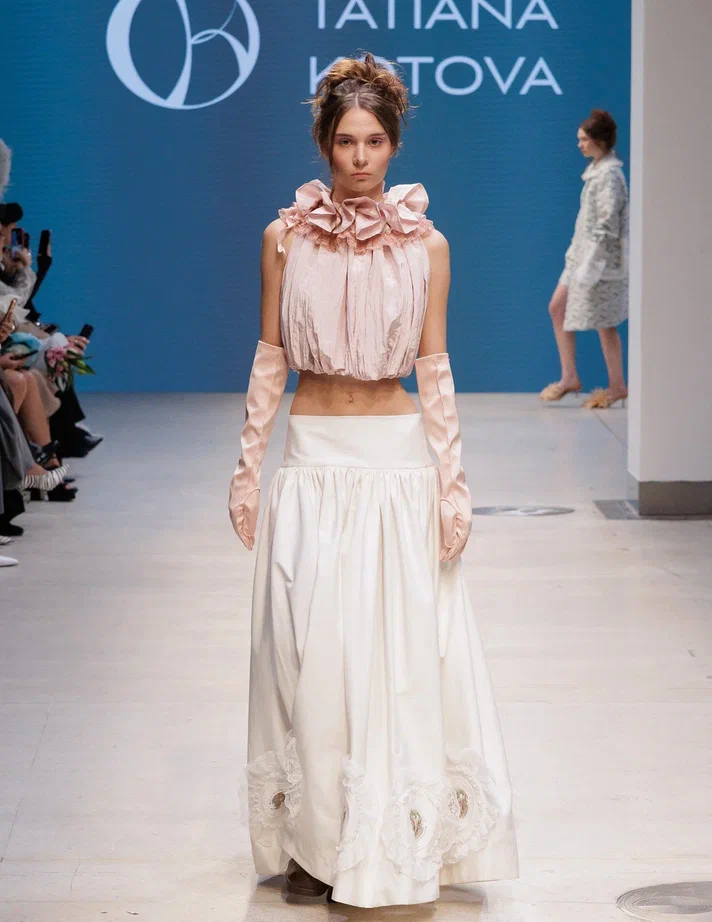
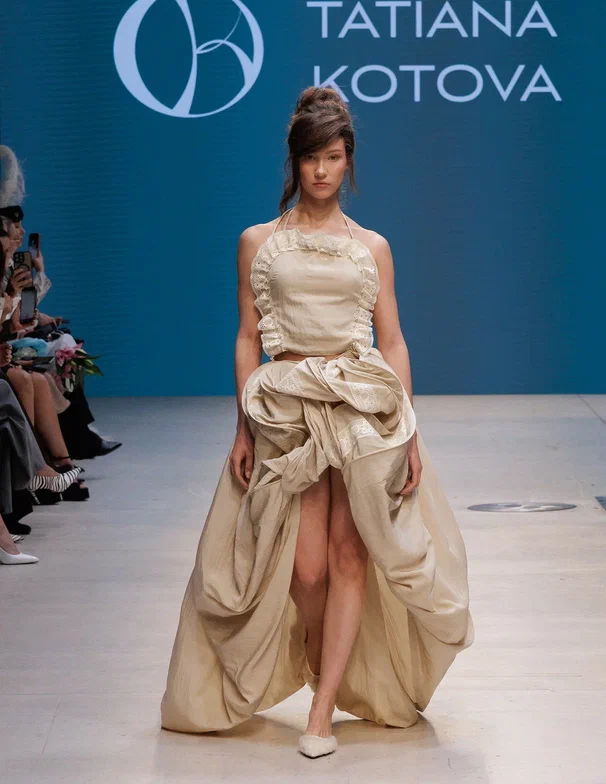
Chelyabinsk was represented at Moscow Fashion Week that day by Tatiana Kotova with her collection ‘I Write to You…’, named after the opening line of Tatyana’s letter in A.S. Pushkin’s novel in verse ‘Eugene Onegin’. The designer dedicated her new fall collection to the era of the 19th-century Russian nobility, transporting us into the past through the distinctive silhouettes of the period. Tatyana Larina herself served as the inspiration for the collection: her refinement, romanticism, and gentleness, familiar to us from Pushkin’s verse. The brand’s creative director presented dresses with elaborate royal trains and gorgets, corsets with lace inserts, skirts with voluminous ruffles, and floral motifs that also blossomed on more structured pieces – bombers with high stand-up collars and jackets adorned with lace collars. The collection was completed by distinctive details: openwork inserts, satin capes, theatrical gloves, and delicate feathers, which further emphasized its romantic mood.
Surovaya (Moscow) presented ‘Dragon’s Song’ – a manifesto centered on embracing true strength and unyielding will. The collection is defined by black, white, and graphite tones, with strict silhouettes. Yet there was no shortage of accents: a sequin-embellished cape, a sheer shimmering top, and daring cutouts became fashion storytellers conveying the collection’s central message – the resilience of women.
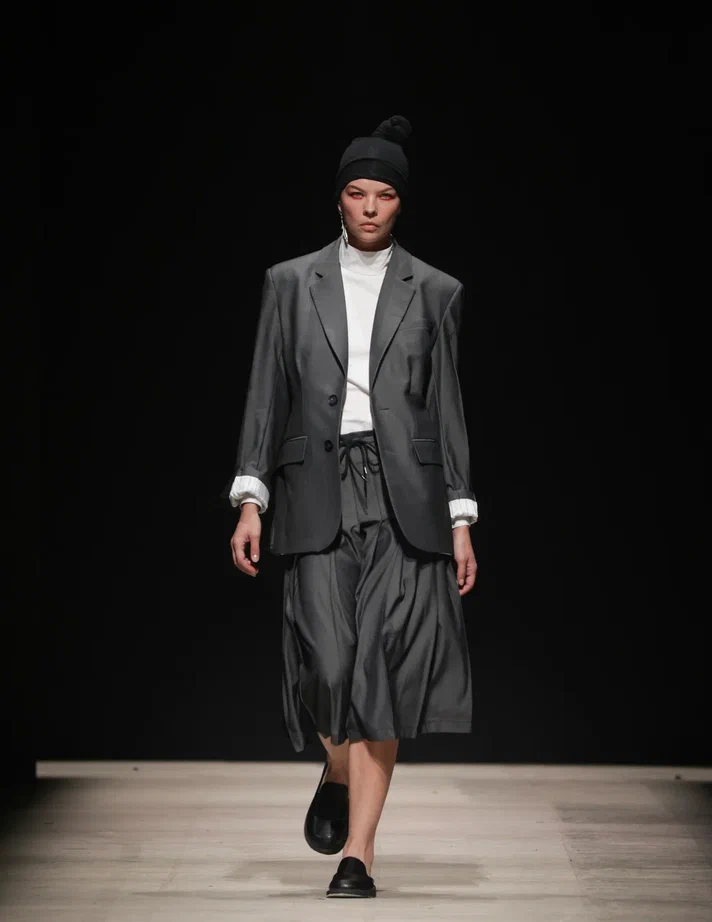
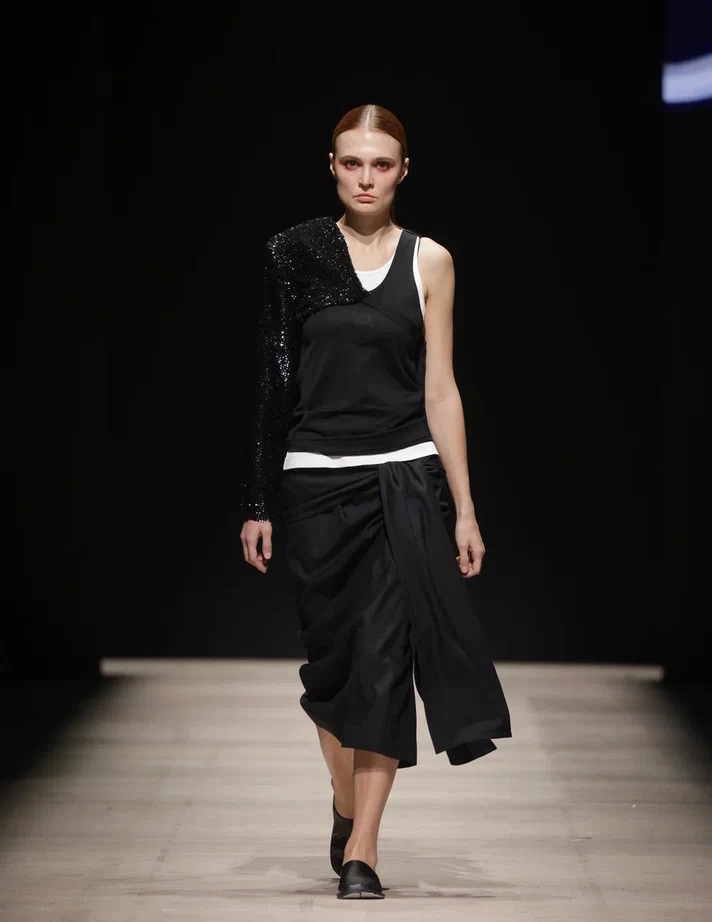
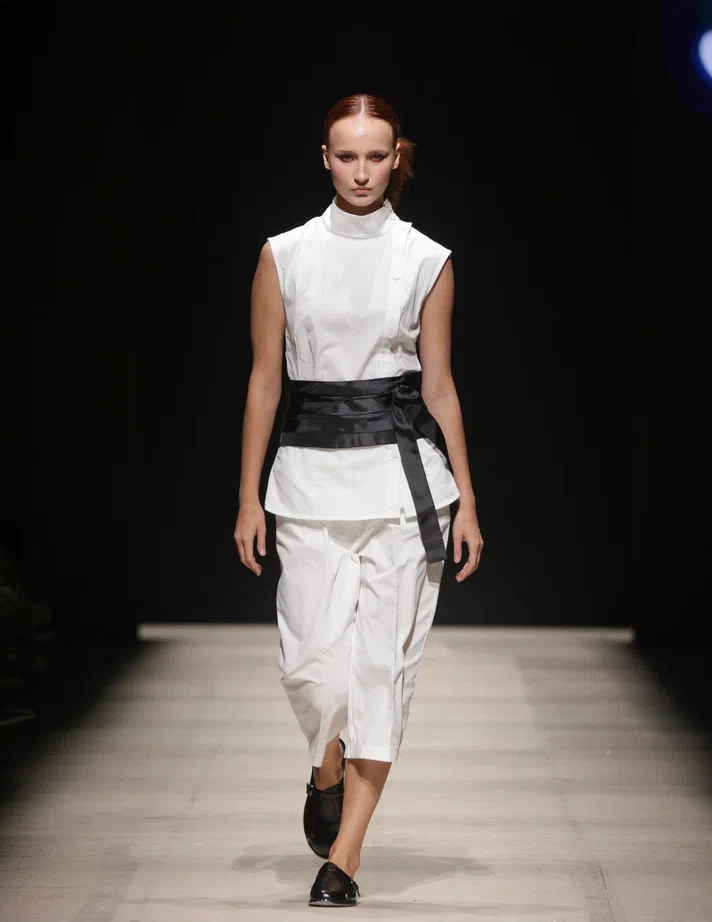
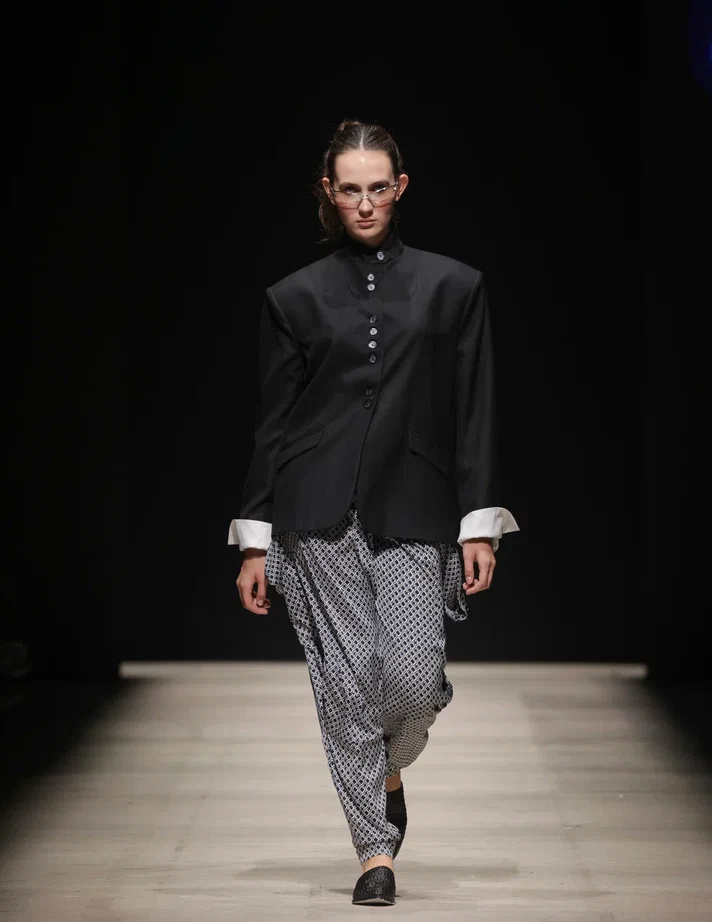
Moscow-based brand Atelier Duo (Moscow) presented its ‘Terra South’ collection as an ode to the culture of the sun-drenched South. Designed for a brief getaway, the collection combines classic silhouettes with a restrained palette, voluminous occasionwear, animal print, and denim. The collection’s color palette draws on natural motifs: a turquoise blouse with fern-inspired motifs paired with matching silk trousers, ochre denim corsets accented with orange, and a cropped velvet jacket in a rich burgundy hue. Lace and sheer fabrics emphasize sensuality, while feathers become a symbol of freedom and inner strength.
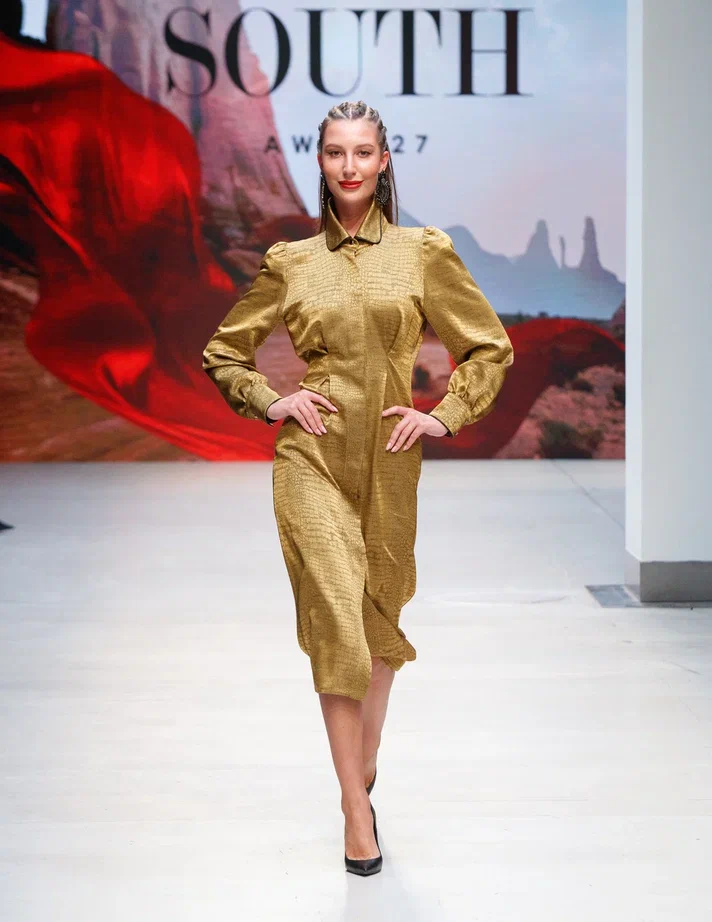
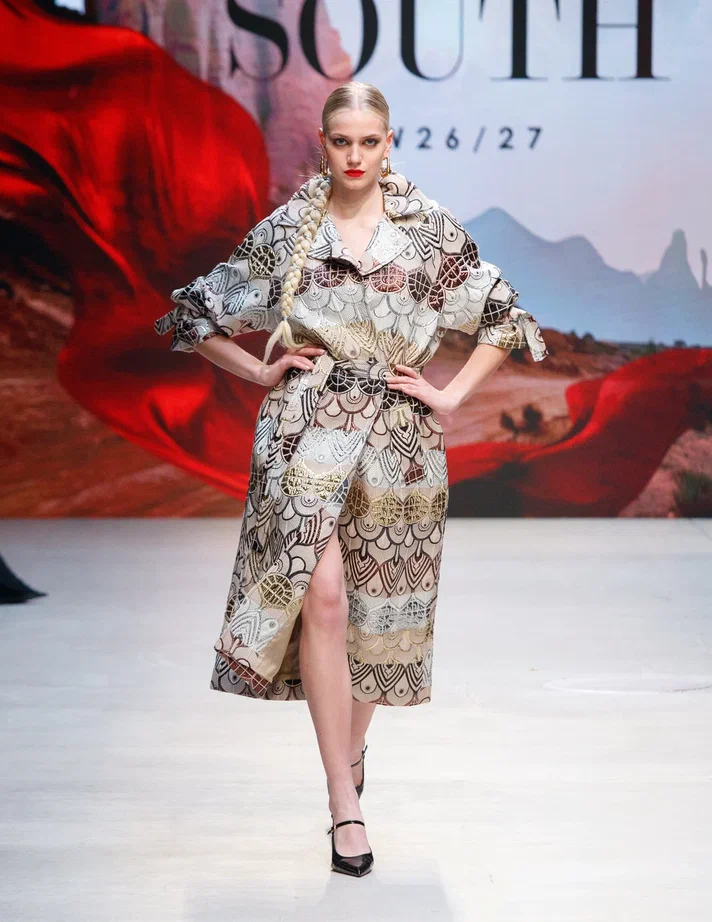
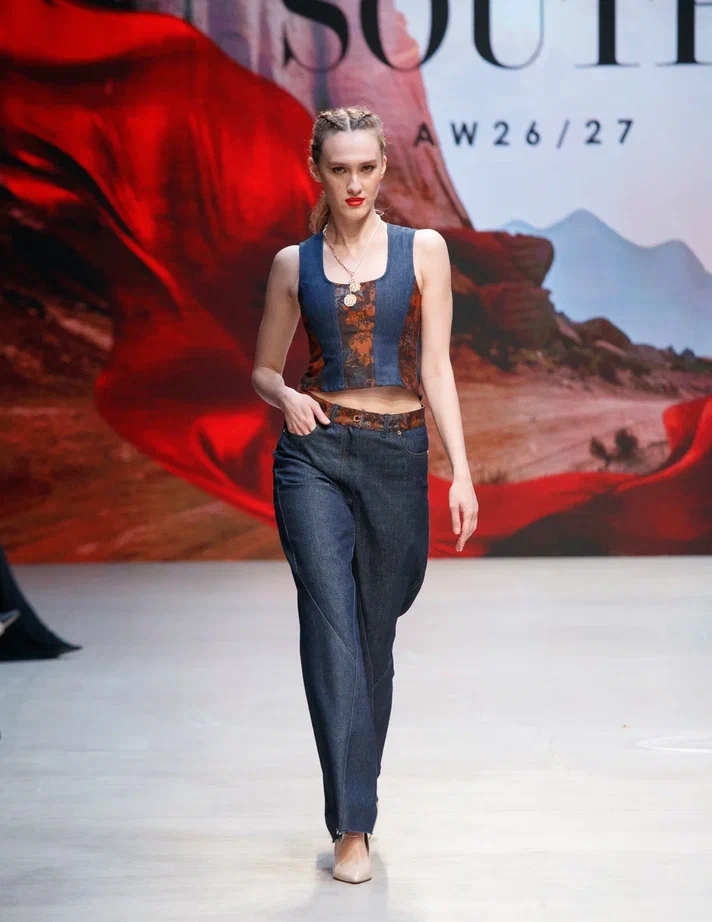
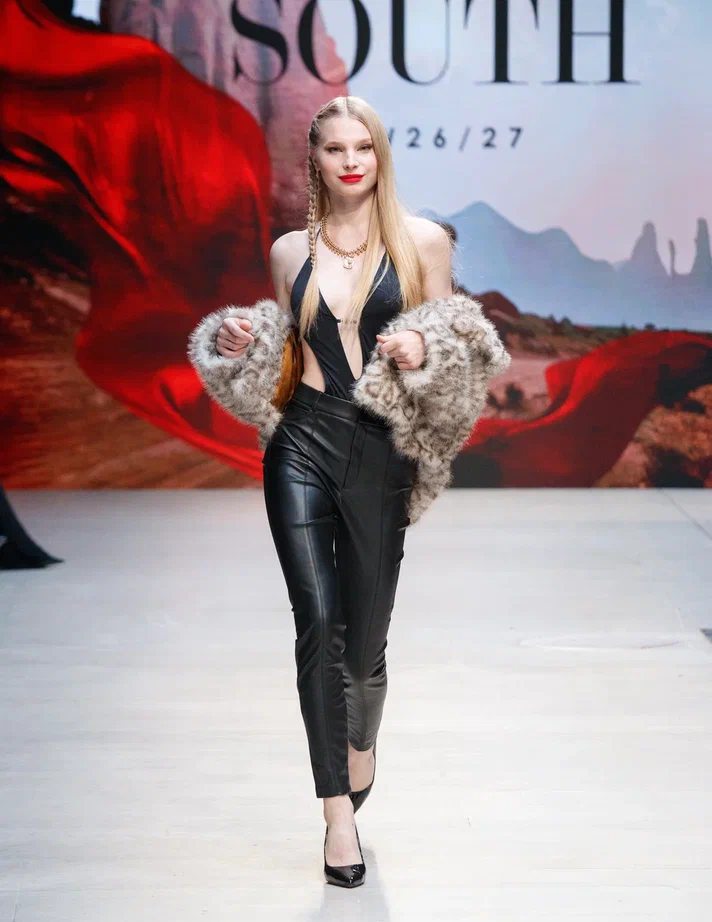
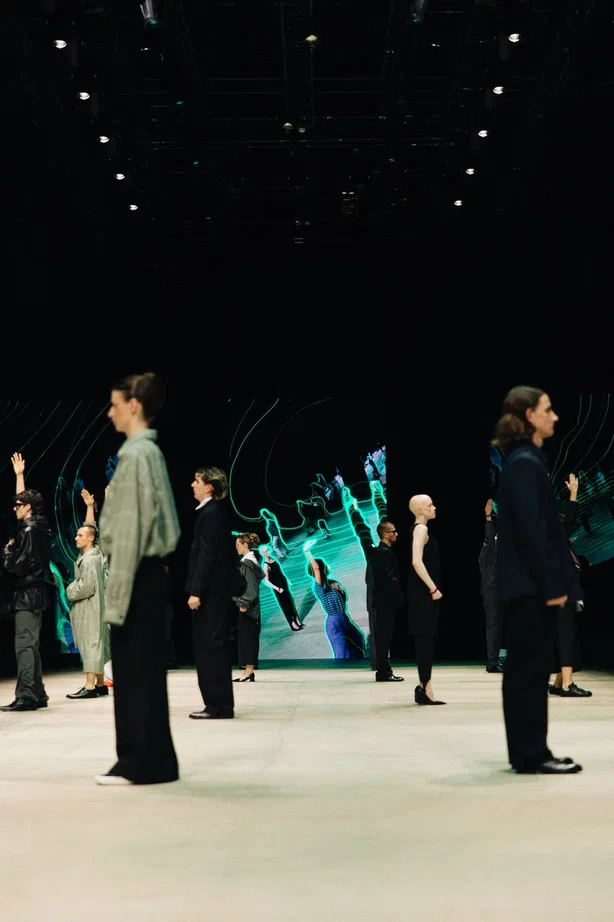
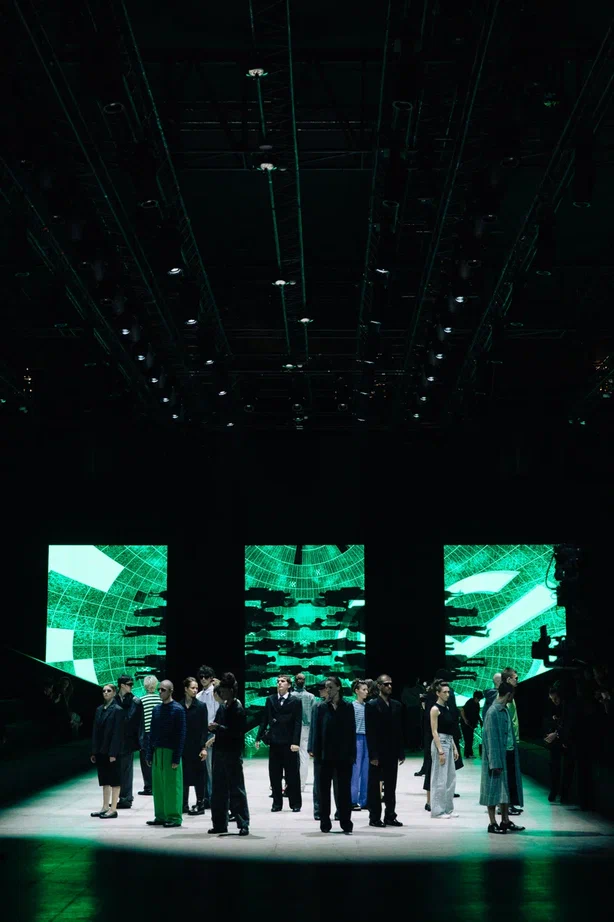
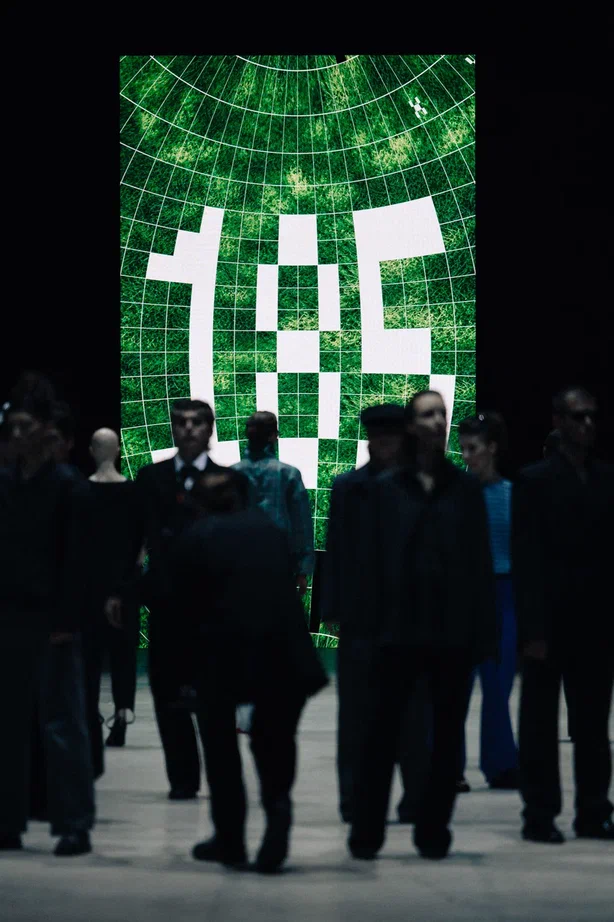
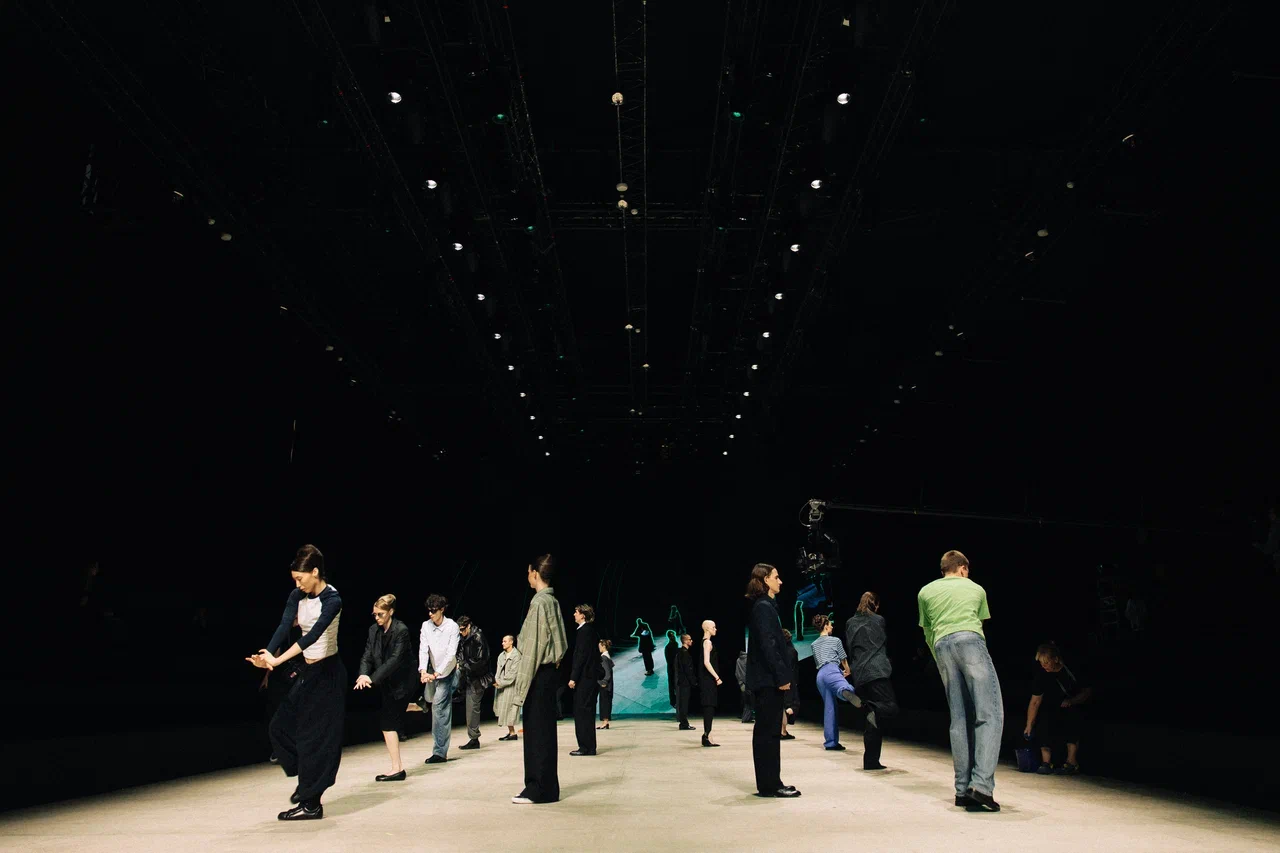
To mark Sber’s 185th anniversary, SberShop and fashion house Ushatava developed a special anniversary collection. “An important part of the project was exploring the Ushatava archive. By reinterpreting silhouettes and functional forms, we brought our own experience into the research, combining practicality and a strong visual language with Sber’s brand identity. The collection features both traditional and innovative materials – some looks are made from suiting fabric and replicated in raincoat fabric,” said Artem Shumov, Chief Designer at Ushatava.
The collection was presented at Moscow Fashion Week as a performative fashion show titled ‘Version 185.’ Director Anna Guseva and the Sber team offered a metaphorical interpretation of the bank’s evolution and transformation from the rigid structure of a traditional savings bank into a modern, flexible ecosystem. 25 performers presented the collection on the runway, with their movements captured in real time on video. The footage was instantly processed by an AI rendering platform: neural network algorithms tracked the dancers on camera, separated them from the background, and replaced their surroundings while preserving the depth and dimensionality of the image. The audience saw five unique visual effects created without post-production. The show was structured as a three-act journey set to electronic interpretations of classical music by Igor Stravinsky: the confinement of space and formalism; the merging of separate elements into a unified network, revealing the idea of the system’s growth; and unique character studies and synchronization, symbolizing Sber as a modern, technology-driven ecosystem. This directorial approach made the complex philosophy behind the corporate brand accessible and emotionally engaging for a broad audience.
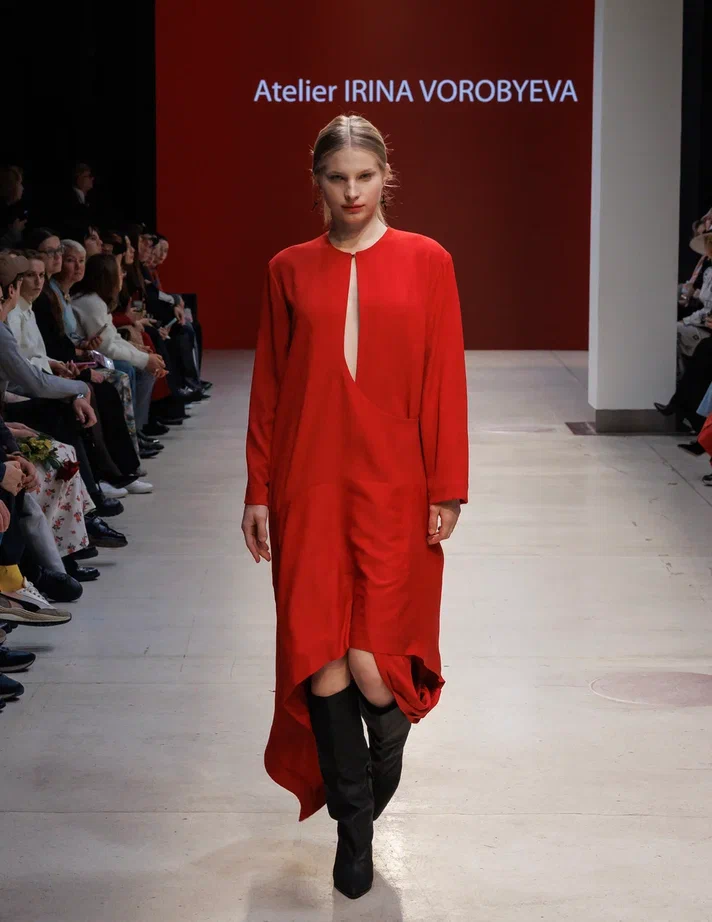
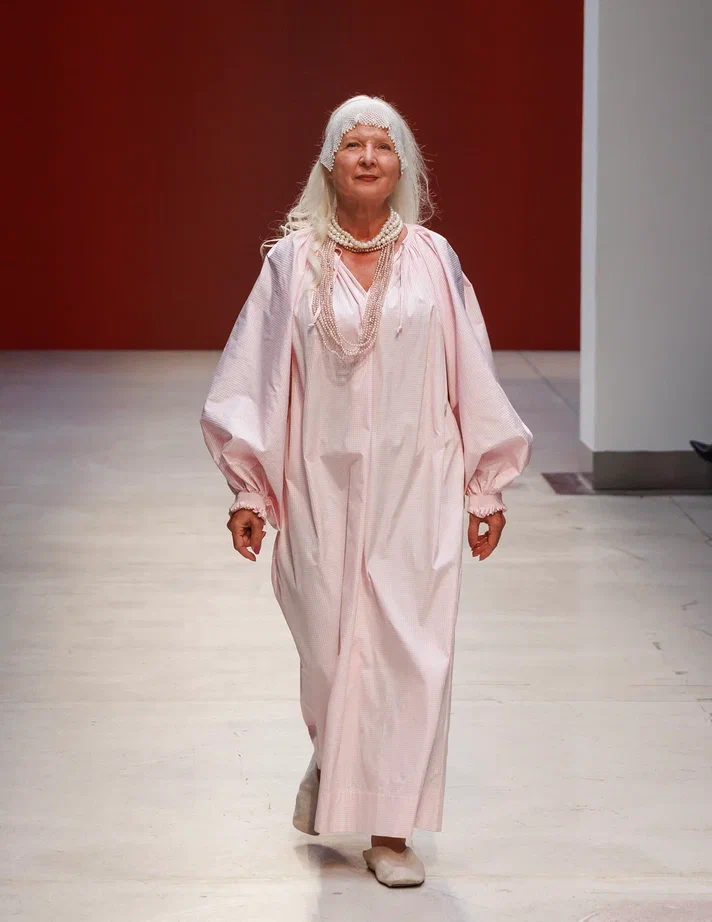
Atelier Irina Vorobyeva (Moscow) presented a collection dedicated to traditional folk costume. For the designer, it is more than simply a source of inspiration: her key mission is to give traditional garments a new life and seamlessly integrate them into contemporary wardrobes. The collection was complemented by traditional embroidered towel patterns, traditional kokoshnik headdresses in a wide variety of shapes, and knitted shawls. Despite the abundance of folk motifs, all the distinctive elements are organically combined with contemporary details, including a fringed cape-shawl with statement shoulders and architectural dresses.


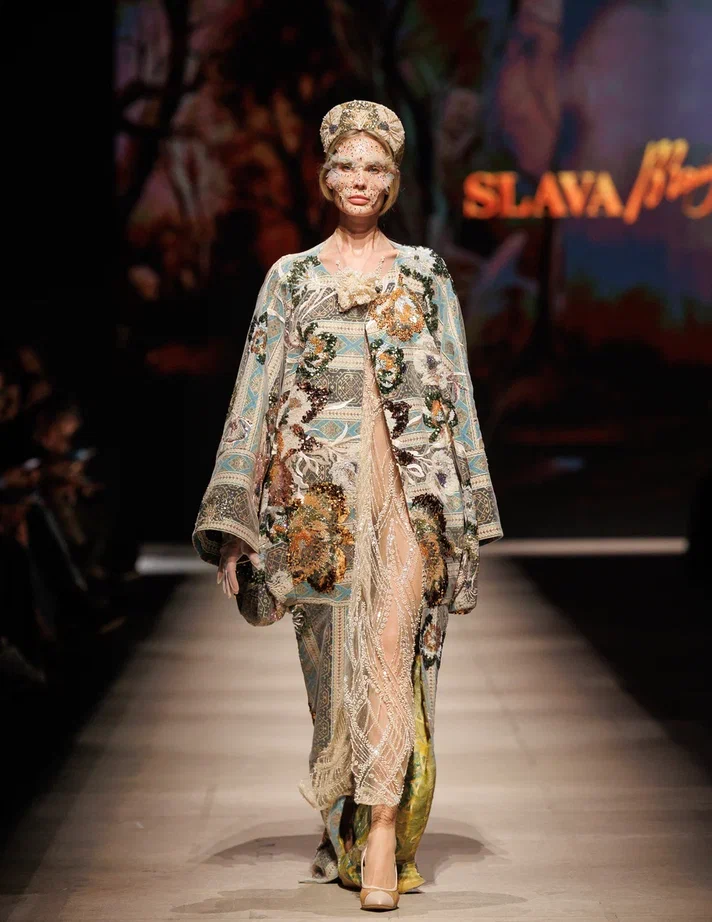
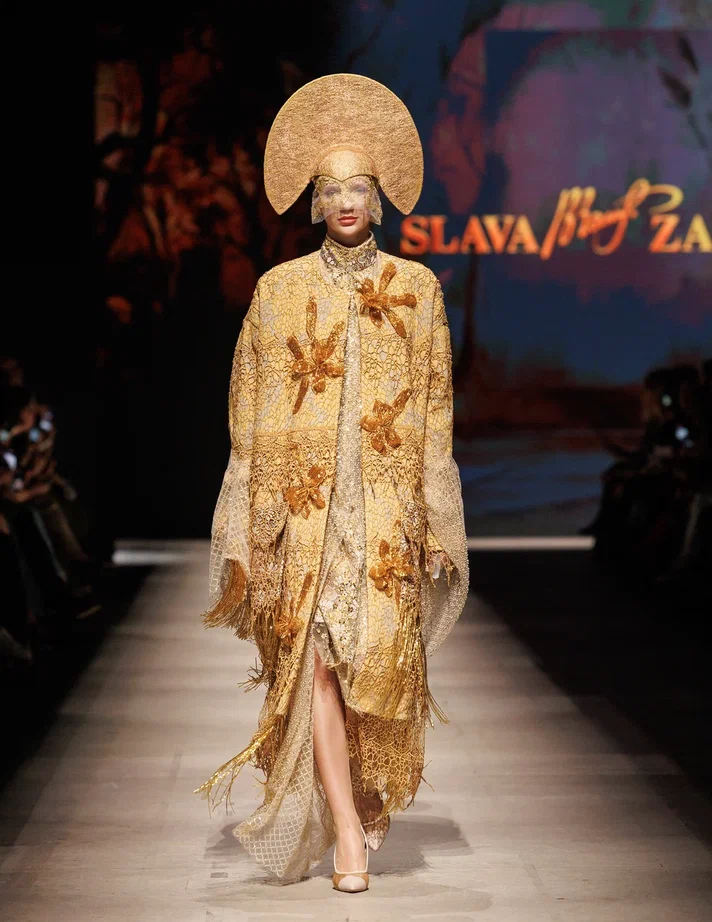
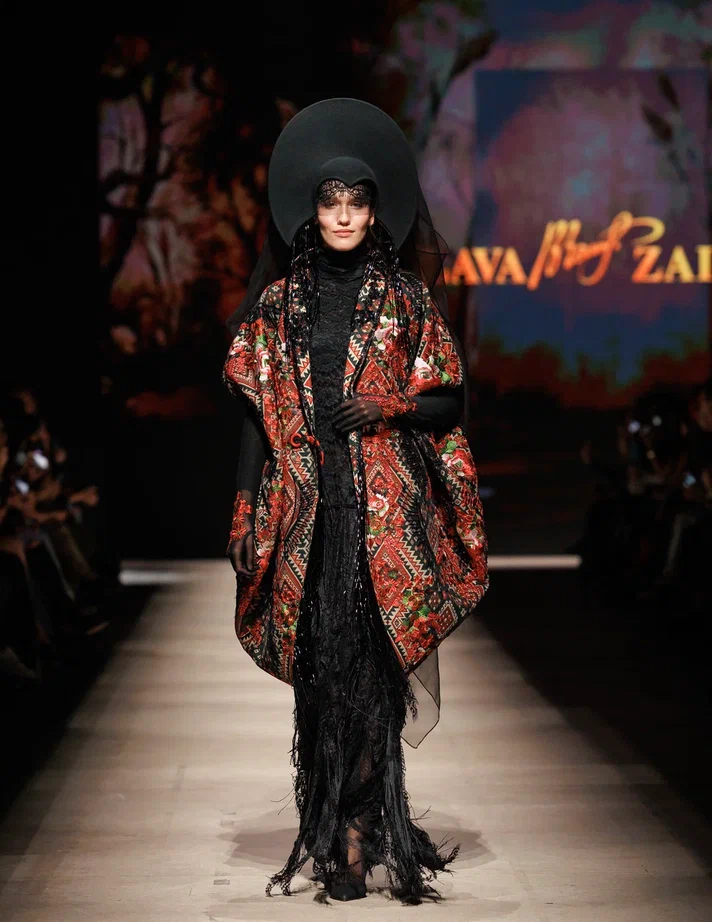
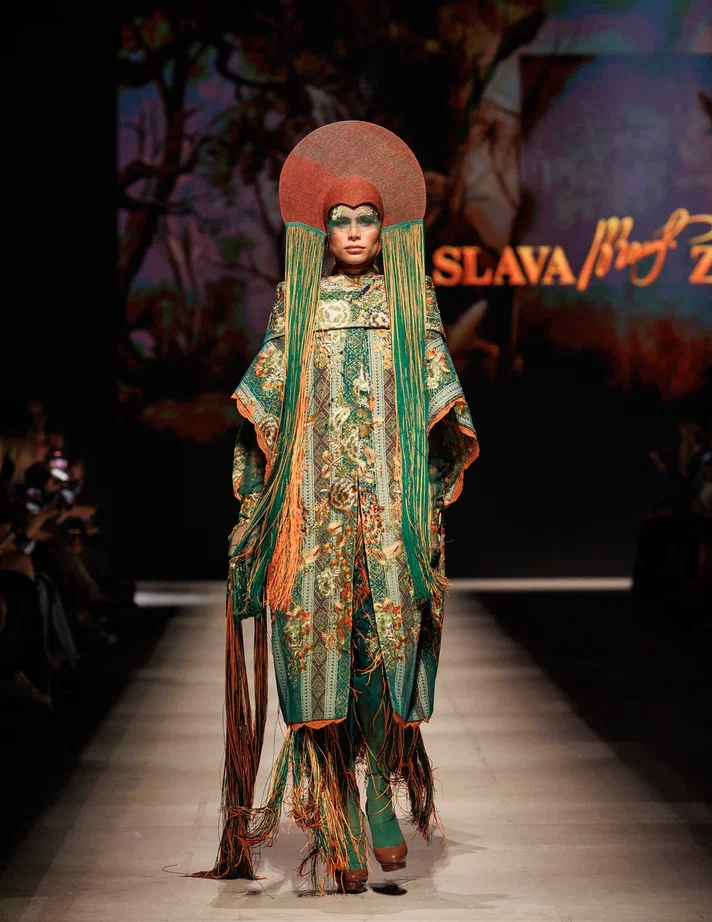
Slava Zaitsev Fashion House (Moscow), together with guest designer Nikolay Krasnikov, presented the haute couture collection ‘Dédicace au Créateur’ – ‘A Dedication to the Creator.’ This is the first couture collection since the passing of the maestro, and Nikolay was entrusted with its creation as a designer personally trained by Vyacheslav Zaitsev. The collection’s central idea was to preserve the style of the legendary designer and his Fashion House while presenting it in a new interpretation. Only antique fabrics were used to create the collection: natural silk, damask brocade, Vologda and Yelets lace, and Rostov enamel. The collection also featured intricate hand-crafted decorative techniques, with the garments embellished with hand embroidery in beads and pearls, as well as feathers from exotic birds. Drawing on the DNA of the Fashion House, traditional Russian crafts, and the ideas of Vyacheslav Zaitsev, Nikolay Krasnikov presented more than 40 meticulously considered and elegant looks, complemented by headpieces from the Lia Gureeva brand. Celebrity models Alina Ismailova, Anastasia Krivosheeva, and others took part in the show.
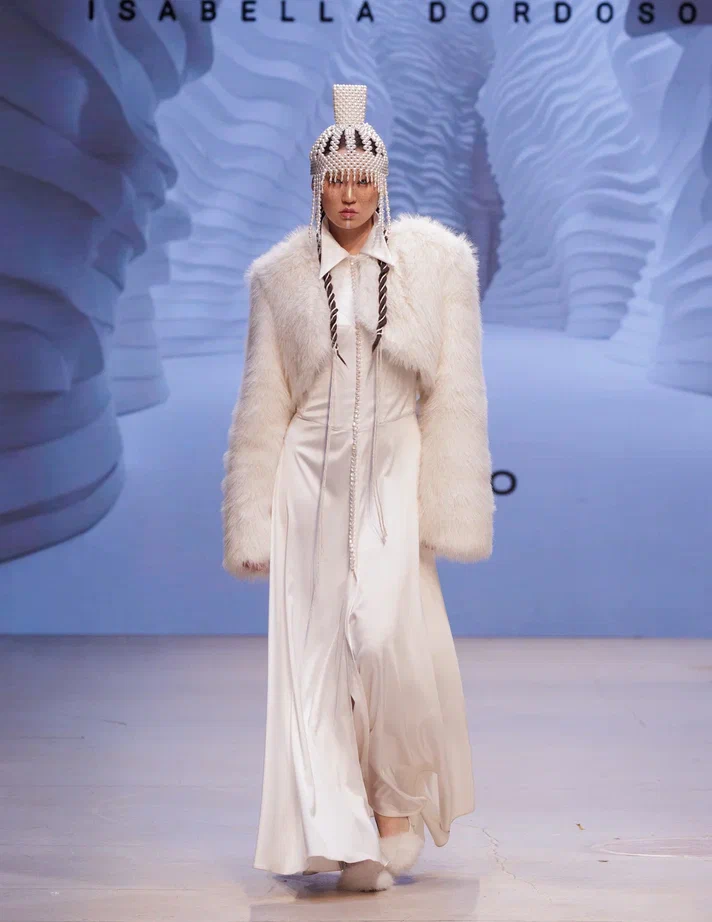
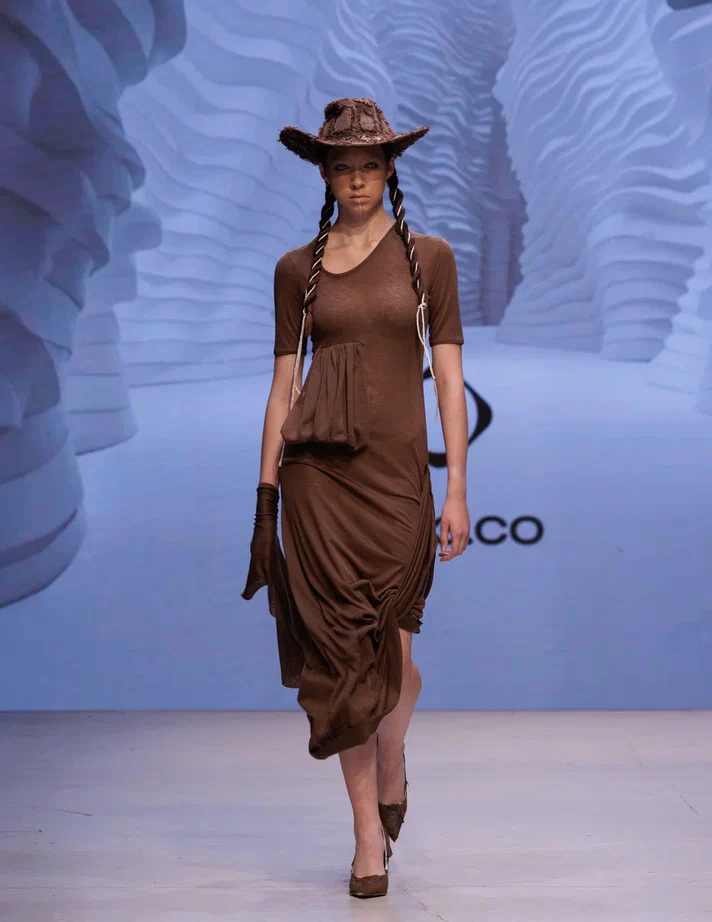
The Yakutsk-based brand Inniki presented its ‘Urban Nomads’ collection, transporting us to the cities of the future, where traditional Yakut culture becomes the foundation for a new global aesthetic. The designer explores the DNA of nomadic culture, transforming it through the lens of futuristic architecture and high-tech urbanism. The collection is rooted in traditional silhouettes – voluminous sleeves and the proportions of the Yakut khaladaay dress. The collection features winter down-filled sets consisting of cropped jackets and A-line skirts, fur capes, and sheer column dresses complemented by voluminous ruffles. Complex tailoring, deconstruction, and a combination of different textures, from high-tech faux leather to flowing chiffon and textured knitwear, create a sense of clothing from the future. Traditional Yakut motifs are reinterpreted through graphic silhouettes, geometry, and protective elements, while the palette evokes the northern sky before dawn.
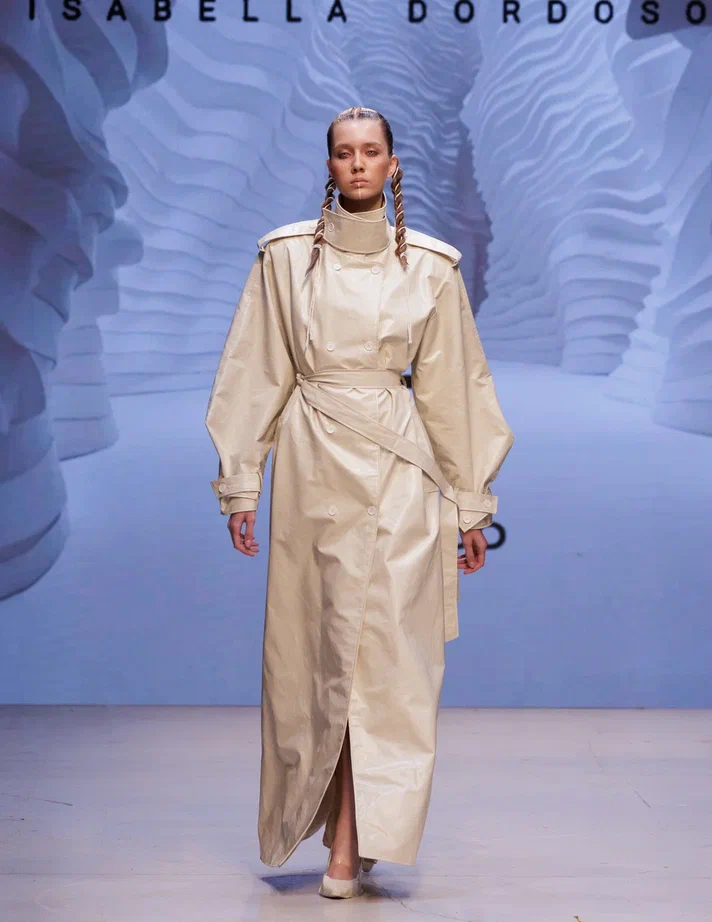
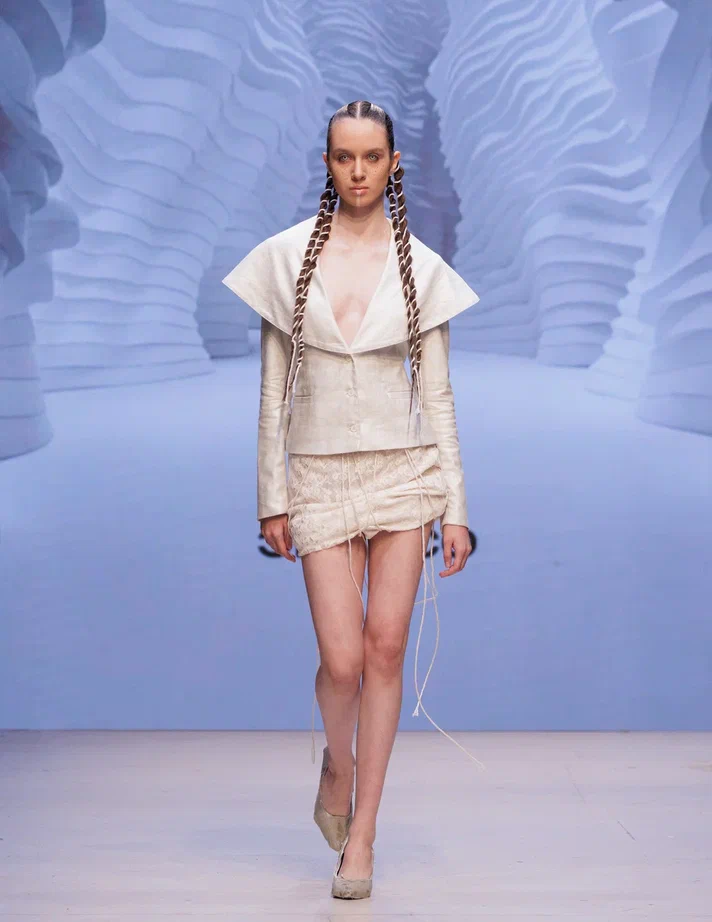
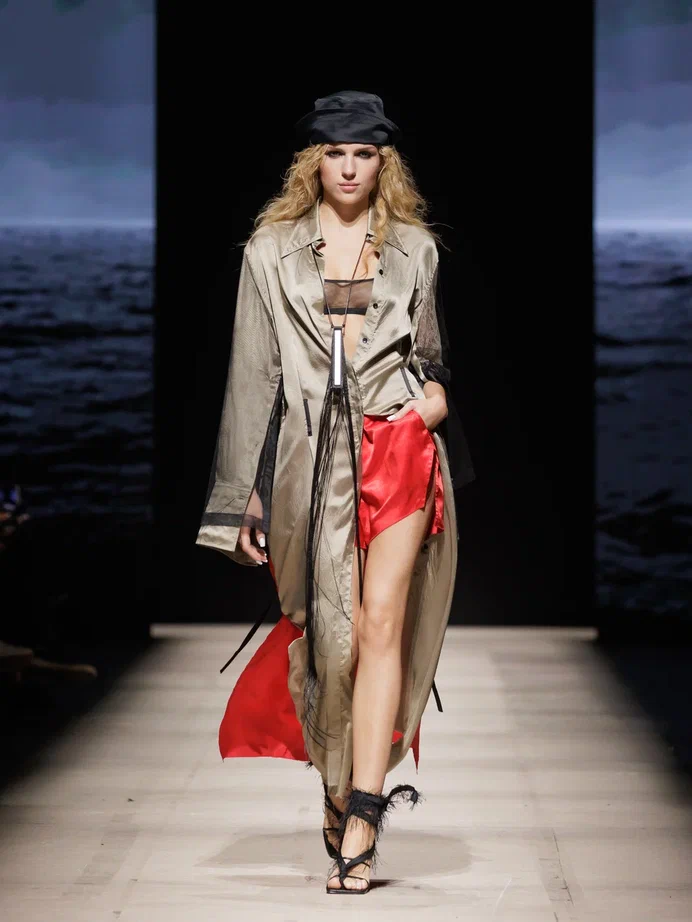
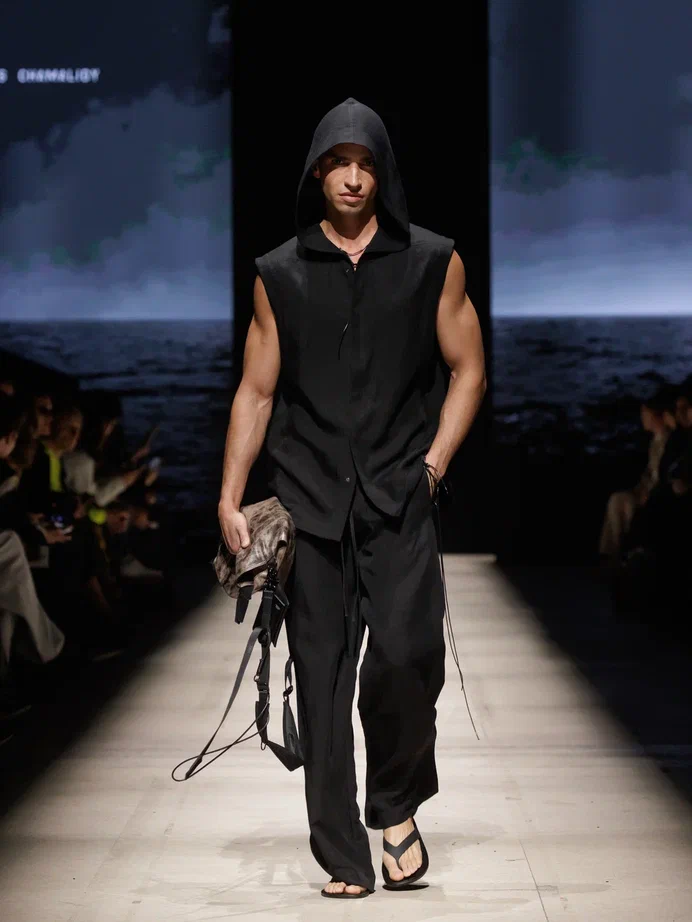
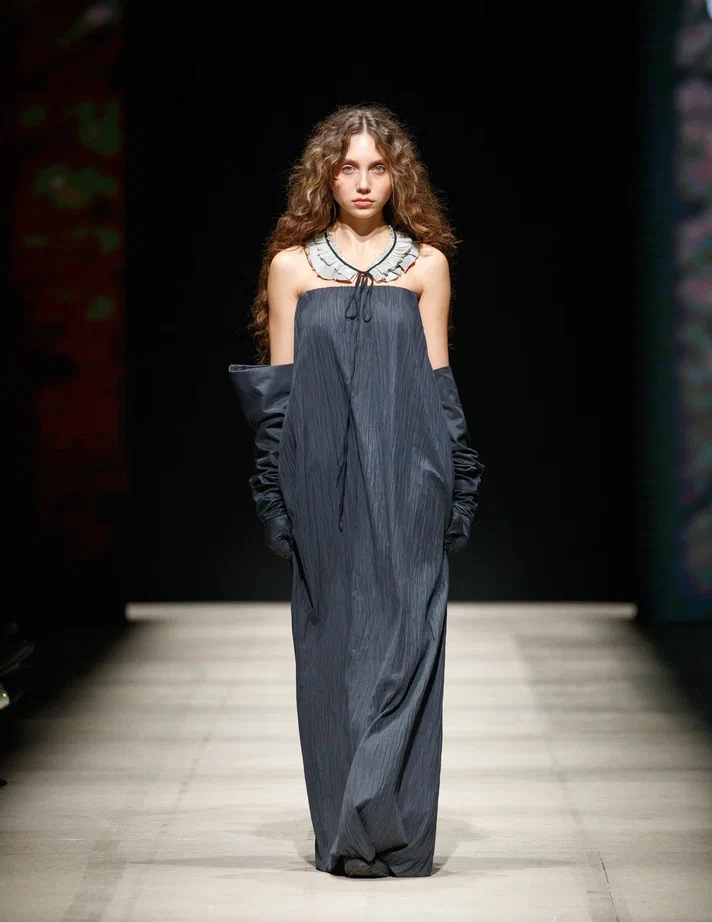
Ianis Chamalidy (St. Petersburg) closed the first day with his Spring–Summer 2027 collection, ‘Via Lucis’ – ‘Path of Light.’ Ianis draws on the archetype of Homo Viator – the image of a person in constant movement through space, time, and memory in search of inner light. Fluid draping, layering, flowing silhouettes, and architectural volumes bring together freedom and protection, physicality and spirituality in the collection. The palette evolves from deep nighttime hues and earthy tones to shades of stone, sand, and dawn sky, while white and rich red serve as accents of renewal and inner strength. Particular attention is paid to textures: crinkled surfaces, laser treatments, and handcrafted effects create a sense of pieces with a unique history. This idea is continued in the accessories, where film stock is reimagined as a textile thread for headwear and bags.
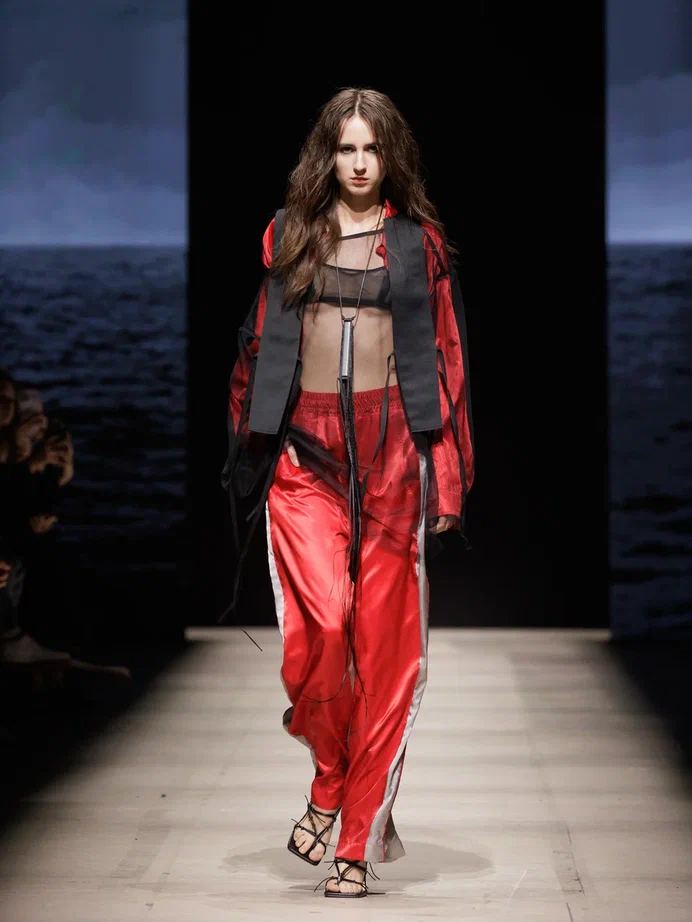
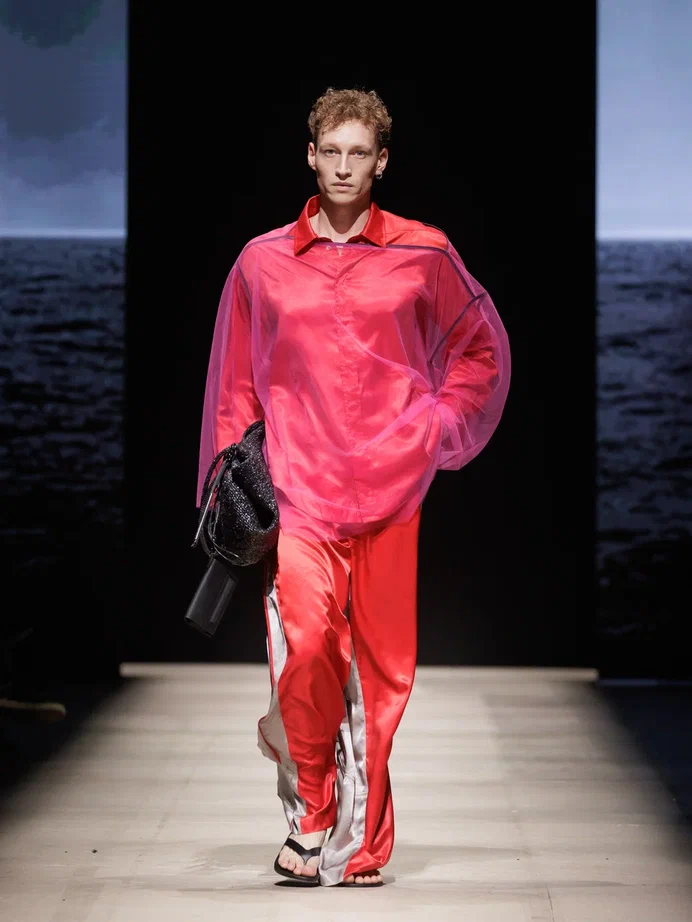
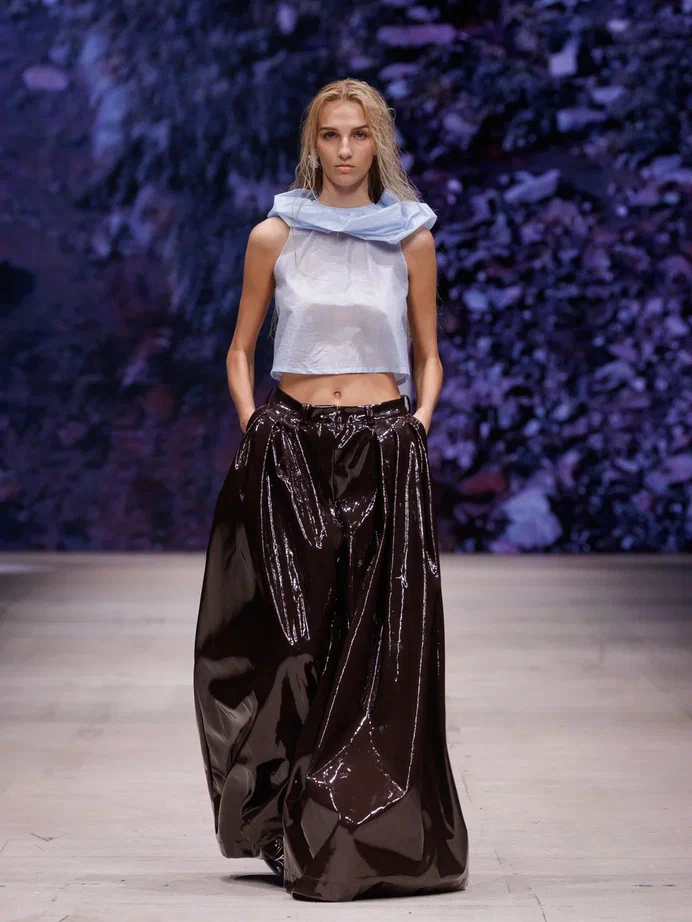
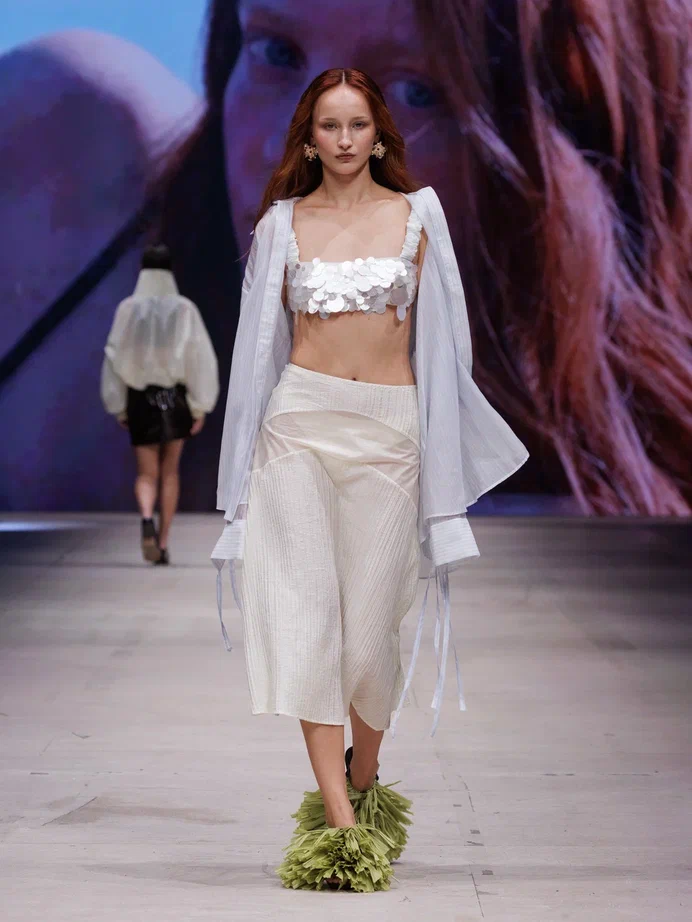
Murmansk-based brand Gapanovich brought the second day of Moscow Fashion Week to a close. The collection, Weathered Light, draws on ammonites and the traces time leaves on materials. This inspiration is reflected in asymmetrical draping, shell-like forms, oversized sequins, fringe, washed cotton and fabrics with a sun-faded finish. The Yelets lace deserves special attention: here, it is incorporated into the construction of the garments rather than used as a decorative addition. After a vibrant day, the collection provided a quiet yet remarkably precise finale. “This is the most professional platform for local designers and brands that have already carved out a niche for themselves. […] Before and after Moscow Fashion Week, I had two different creative lives. For me, it means growth and experience. My brand and its structure are evolving, the team is expanding, and I am gaining a clearer understanding that this is both a business and a creative endeavour,” said the brand’s founder, Alexandra Gapanovich.
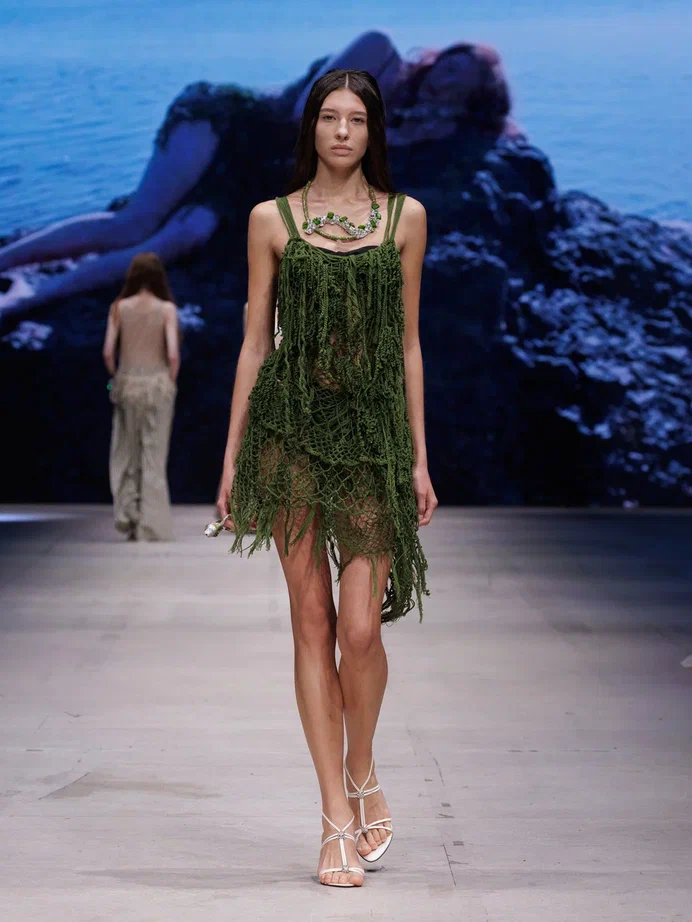
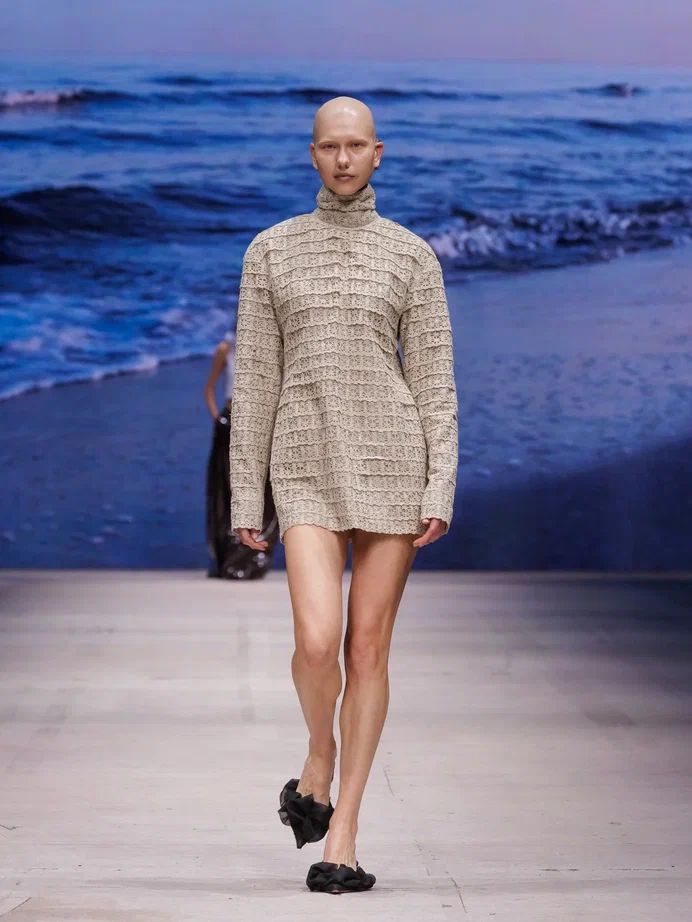
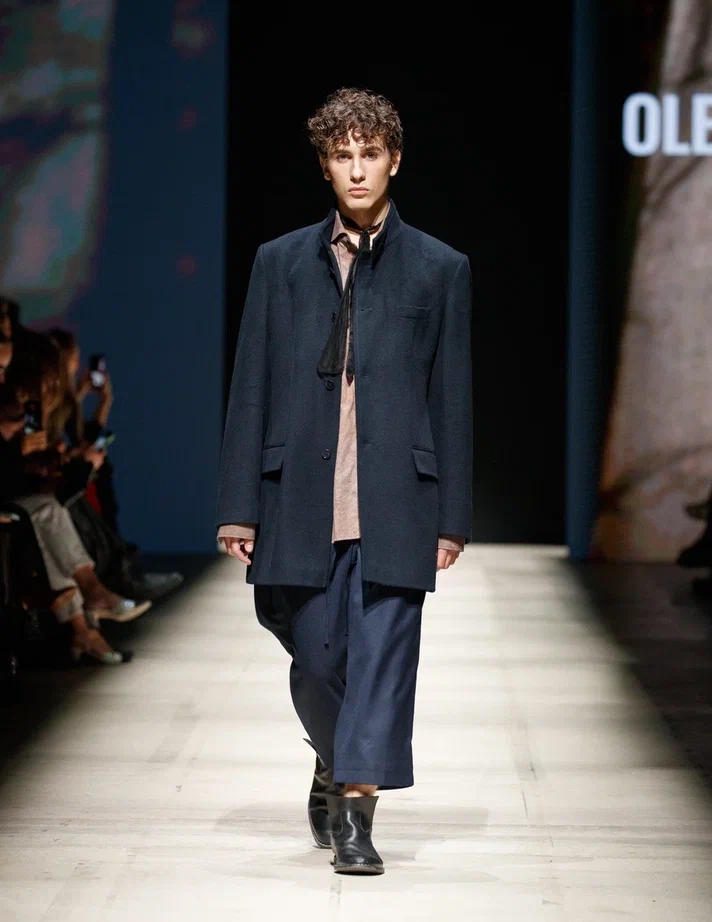
In the collection of Oleg Levitskiy (Krasnodar), everything revolved around the feeling of a garment that had already lived several lives. ‘Relic’ looked as though the clothes had been taken out of an old trunk and left largely untouched. The silhouettes were slightly askew, the fabrics seemed faded, and the creases looked entirely natural. Wool was paired with gauze, lace was scorched, and the palette ranged from black and grey to burgundy and the colour of old burlap. A highly tactile collection that rewards a closer look. “Our brand is well known in southern Russia and has also built a loyal customer base in Moscow, St Petersburg and other major cities. We have seen good results at Fashion Week: buyers like our brand, and we have signed contracts. We have also expanded, and today you can discover our brand at a showroom in Moscow. This is a major achievement for us, largely thanks to the recognition we have gained through participating in Moscow Fashion Week. We also regularly receive offers from various concept stores in cities across Russia,” said Oleg Levitskiy, designer of the brand.
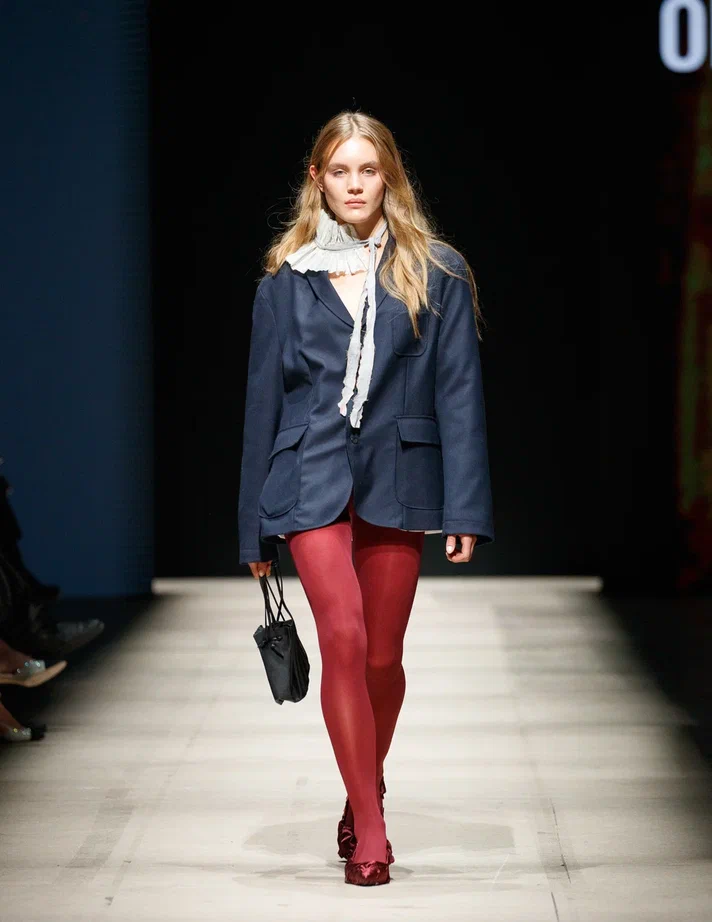
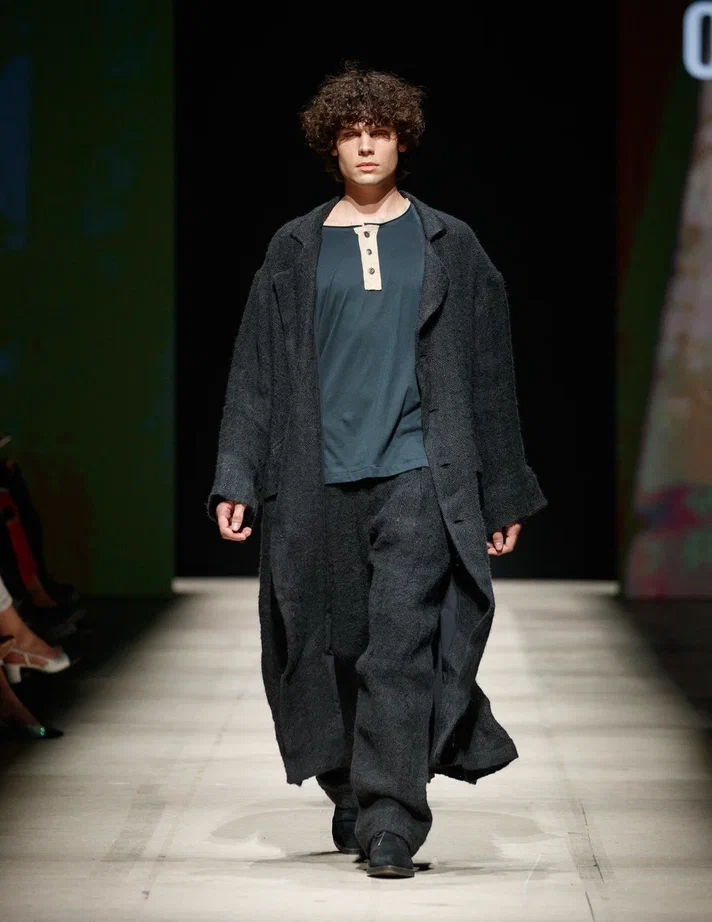
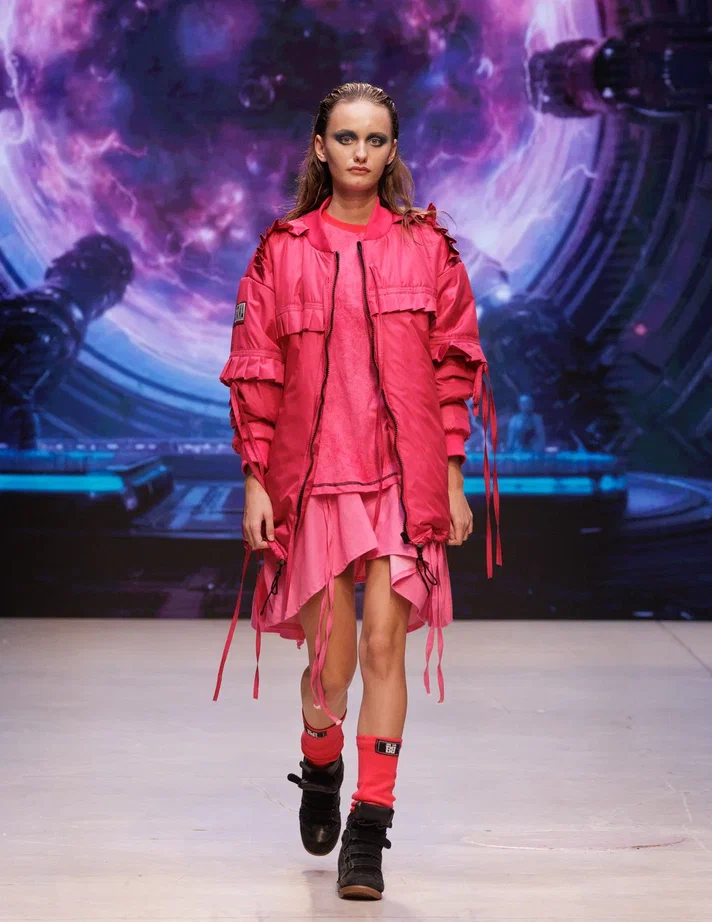
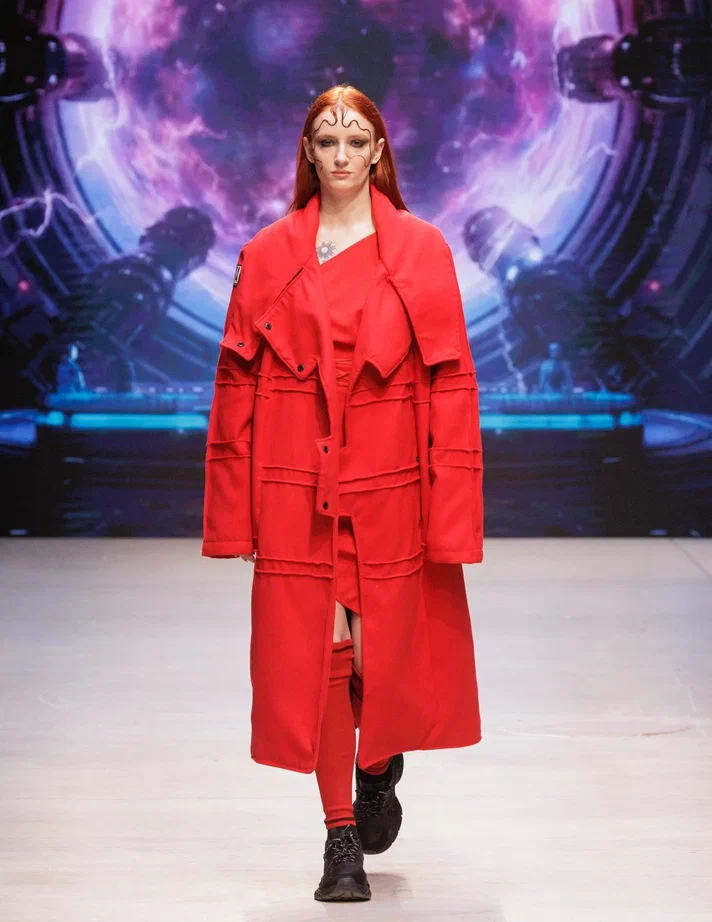
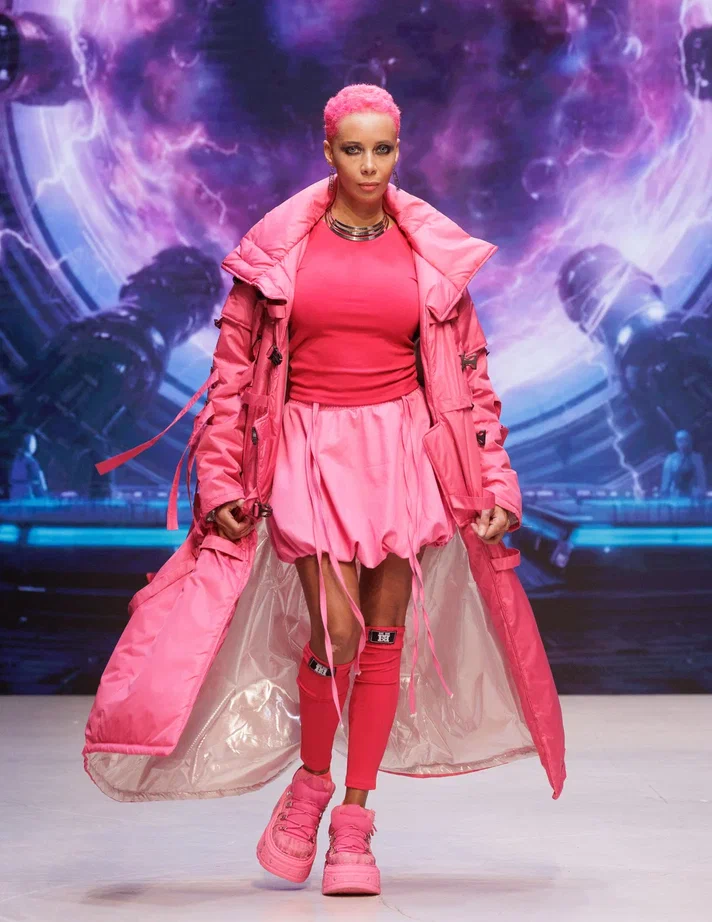
With Brand Brama (Komsomolsk-on-Amur), the mood shifted in an instant. Voluminous quilted bombers, cargo trousers, long webbing straps and woollen coats looked as though characters from a cyberpunk film had stepped out onto the streets of a big city. The collection’s colour palette ranged from vivid pinks to deep blacks. The collection Monochrome Amur was loud, at times almost audacious – and that was precisely what made it memorable. “Being selected for Moscow Fashion Week is a great honour, especially when you come from the Far East. Getting into Moscow Fashion Week is an explosion of excitement, like flying into space. Over the past year, I think my sales, advertising reach and everything else have grown threefold, all thanks to Moscow Fashion Week. And, of course, earlier this month, Moscow Fashion Week gave me the opportunity to come to Beijing for China Fashion Week. I couldn’t be more thrilled,” said Tatyana Bramaretskaya, designer at Brand Brama.
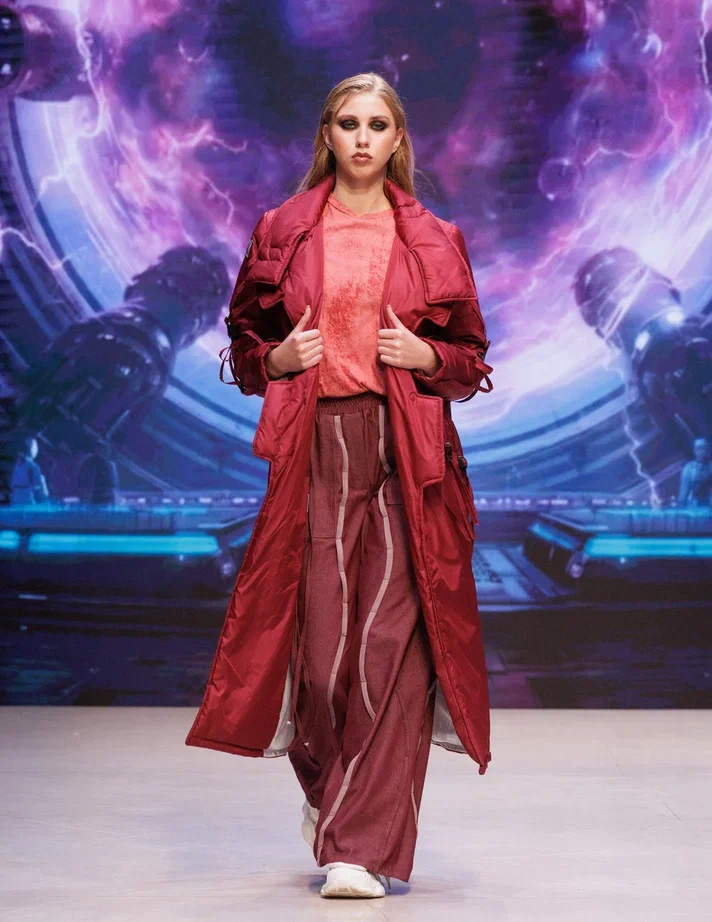
The program opened with the Project ‘Designer. Made in Siberia’ (Novosibirsk), which brings emerging and established designers together on the same runway. There was no straightforward interpretation of ethnography: Buryat-Mongolian motifs collided with cyberpunk, fur was paired with lightweight dresses and sequins, and traditional patterns took on three-dimensional form. These designs offered a different take on the North, far removed from the expected imagery of harsh conditions and severe weather. A crown of rays worn by one of the models took the collection even further from snow and cold, towards an almost pagan sun. “Moscow Fashion Week is, of course, a major step forward for small independent brands, and it is also a great way for established labels such as Ianis Chamalidy and Alena Akhmadulina to make their mark. I attended the previous Moscow Fashion Week as a volunteer, and that was a wonderful experience for me. […] Having participation in Moscow Fashion Week on my CV will be a great advantage when applying for jobs. I would definitely like to present my own label one day, with not just five models but 40 or 50, and grow it into a major brand. My collection explores Buryat patterns and how they can be transformed from two-dimensional motifs into three-dimensional forms. Taking part in Moscow Fashion Week is a tremendous source of pride for me. I never imagined that my small collection of just five looks would be featured at such a major event,” said Viktoria Molonova, a designer participating in the Project ‘Designer. Made in Siberia’.
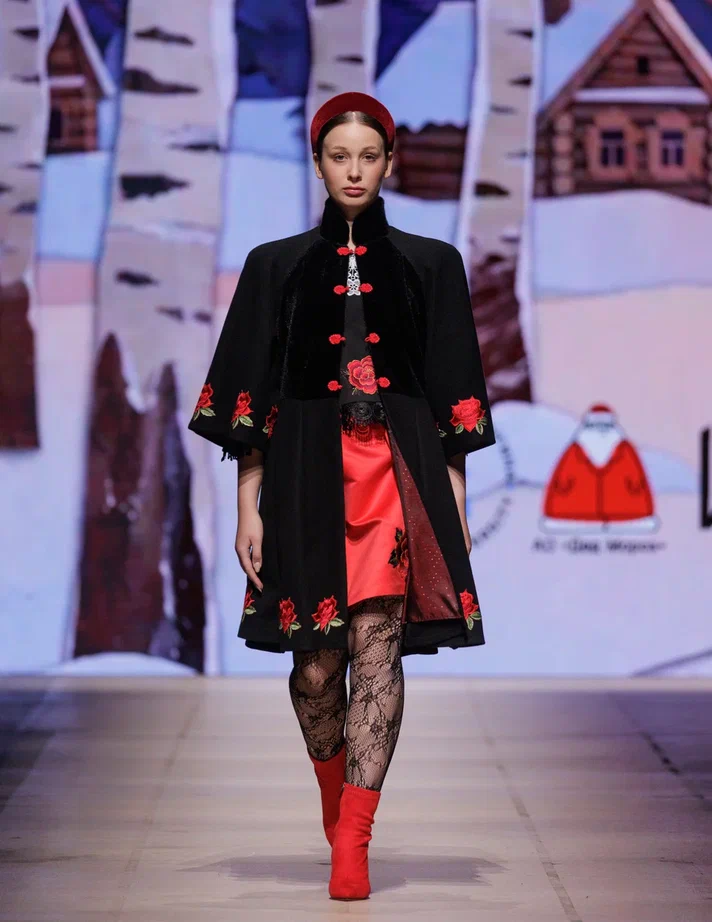
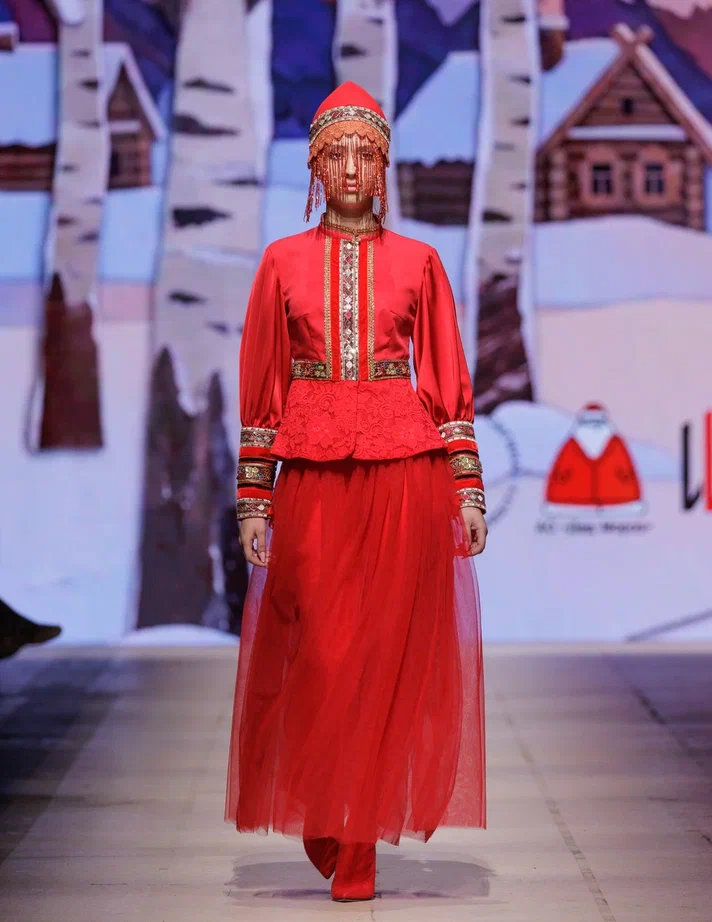
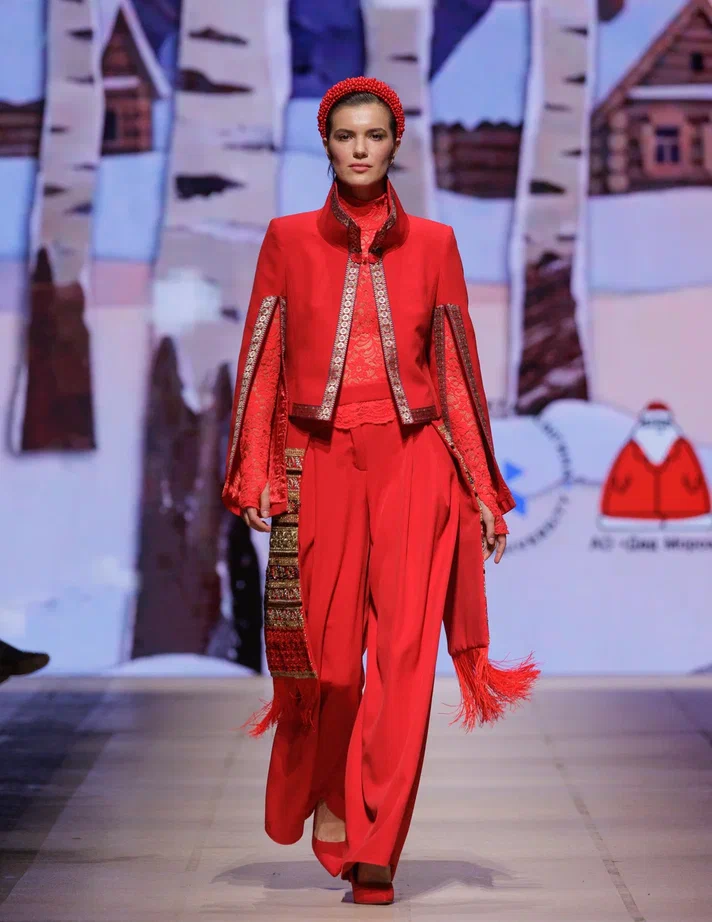
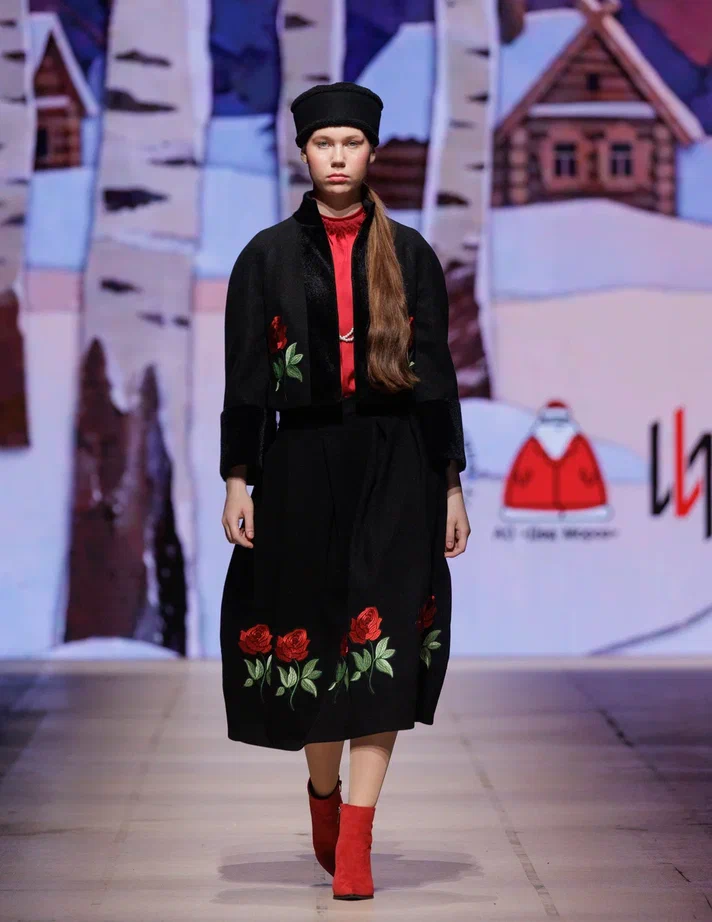
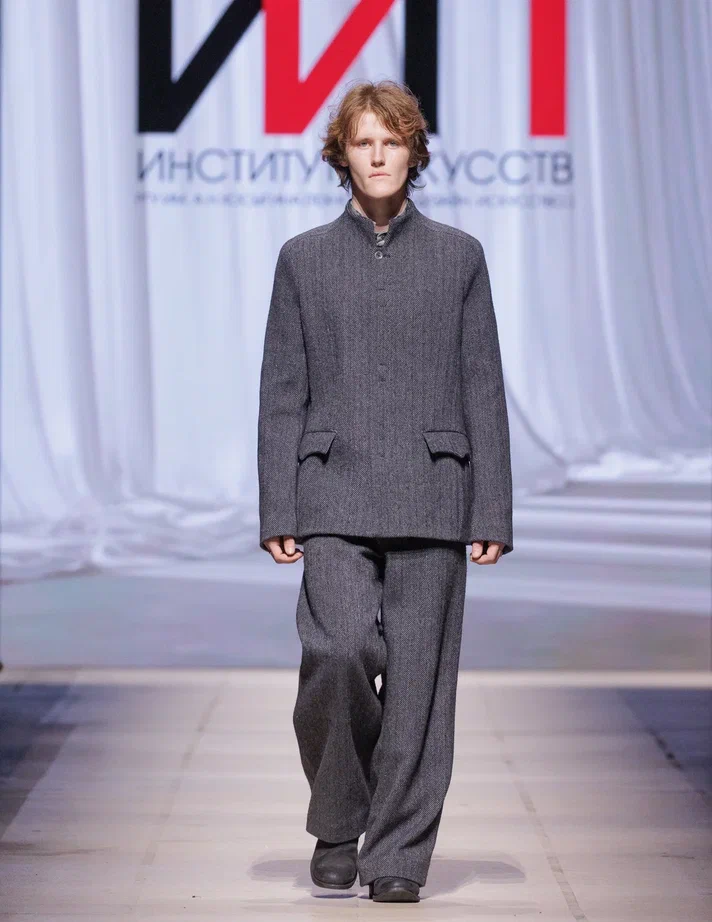
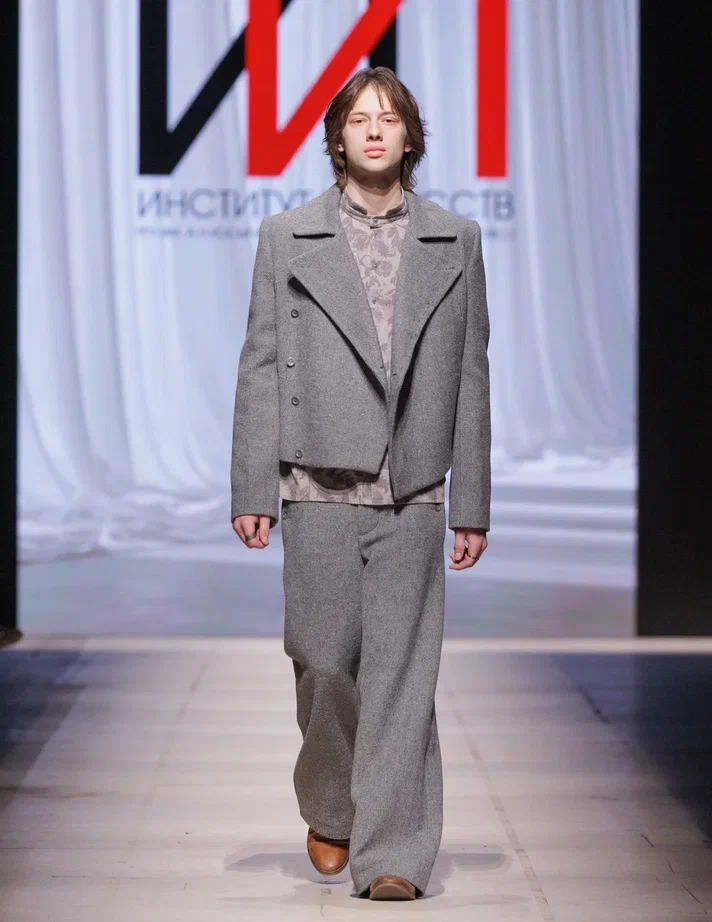
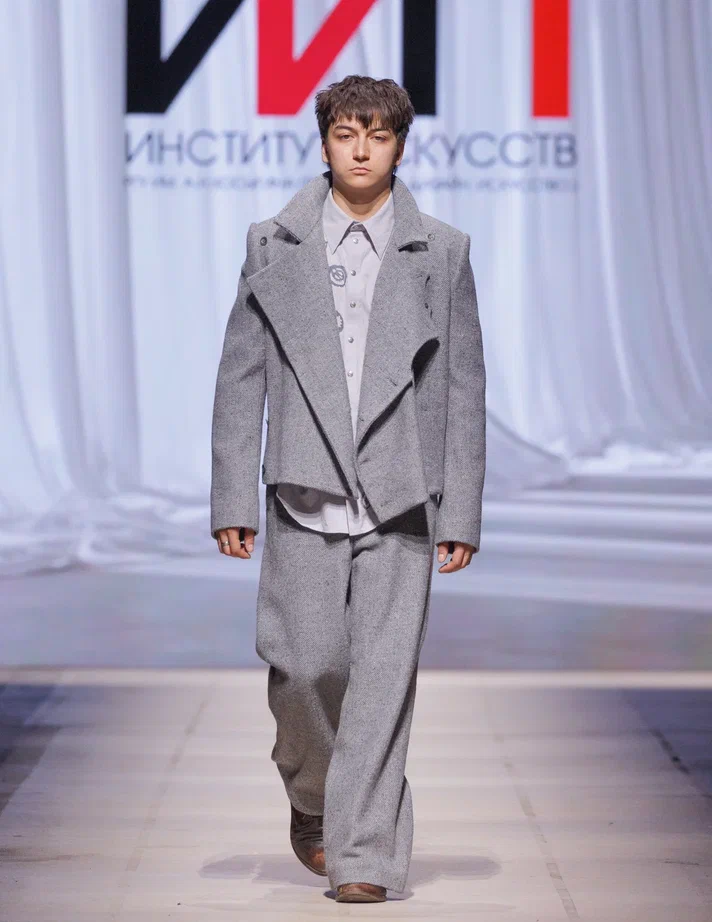
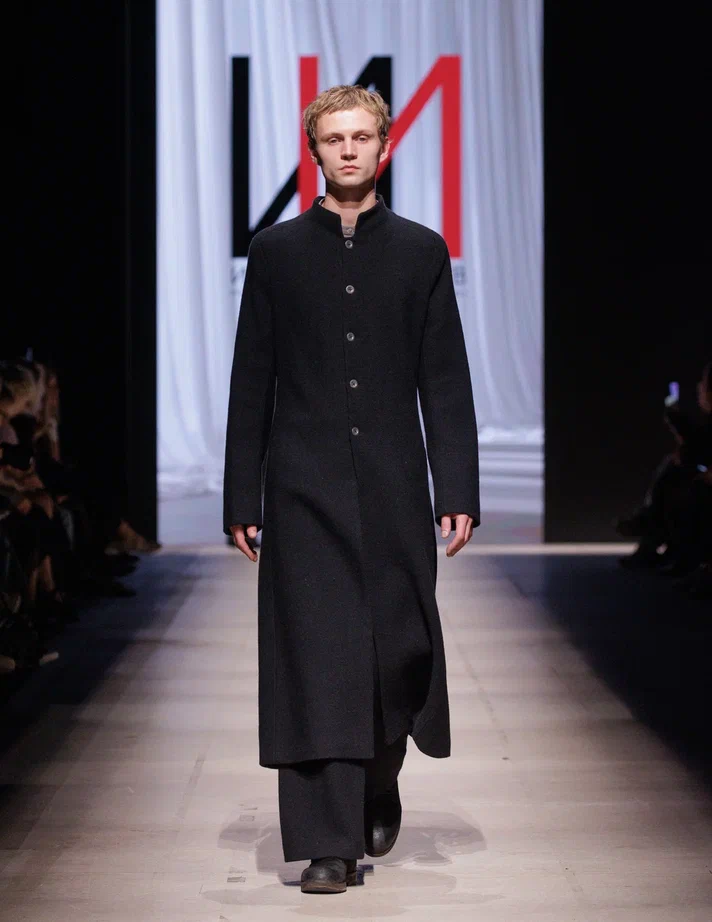
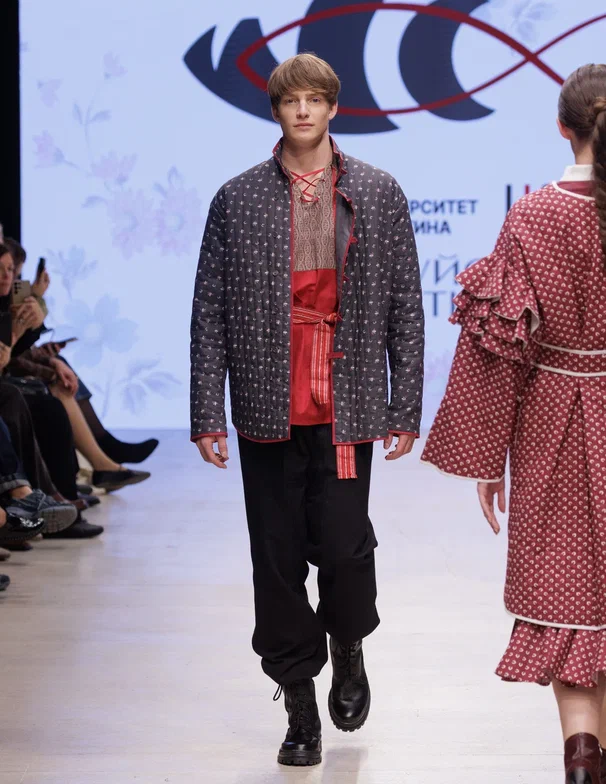
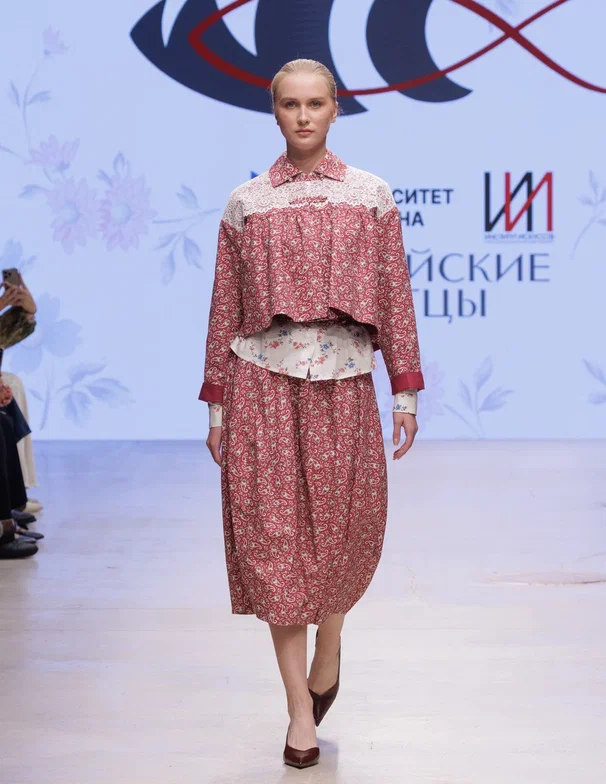
The Institute of Arts at the Kosygin State University of Russia (Moscow) also began its show on a restrained note, but recognisable Russian motifs gradually took over the runway. Grey and white looks gave way to red, kokoshniks and sarafans appeared, and the show culminated in Legends of Veliky Ustyug, a collaborative collection by the department and Ded Moroz JSC. The most compelling aspect was seeing familiar elements of traditional folk costume shed their museum-like associations and take on a new role in contemporary silhouettes.
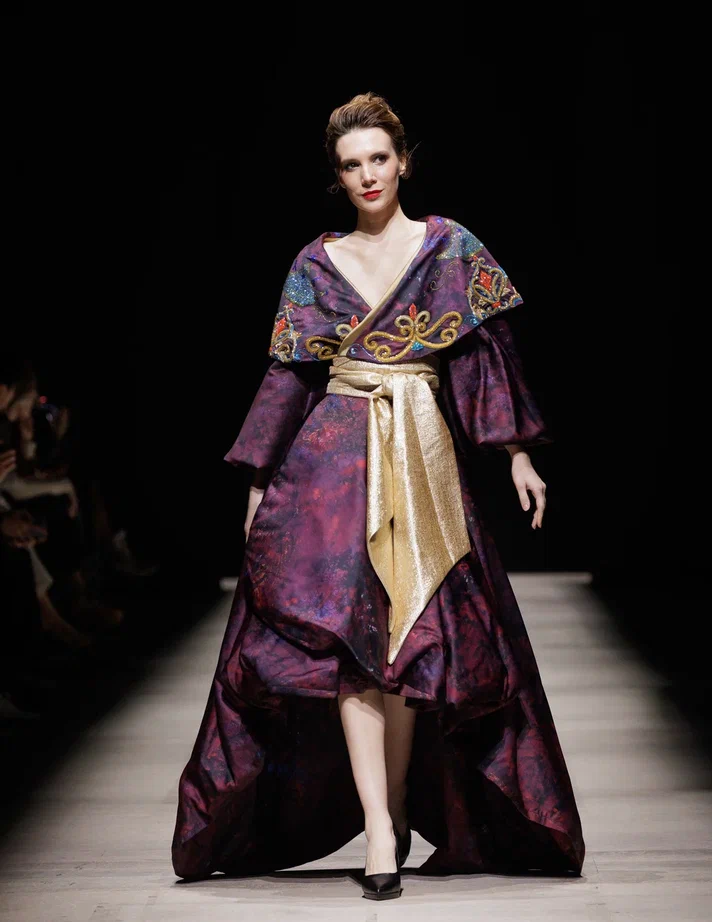
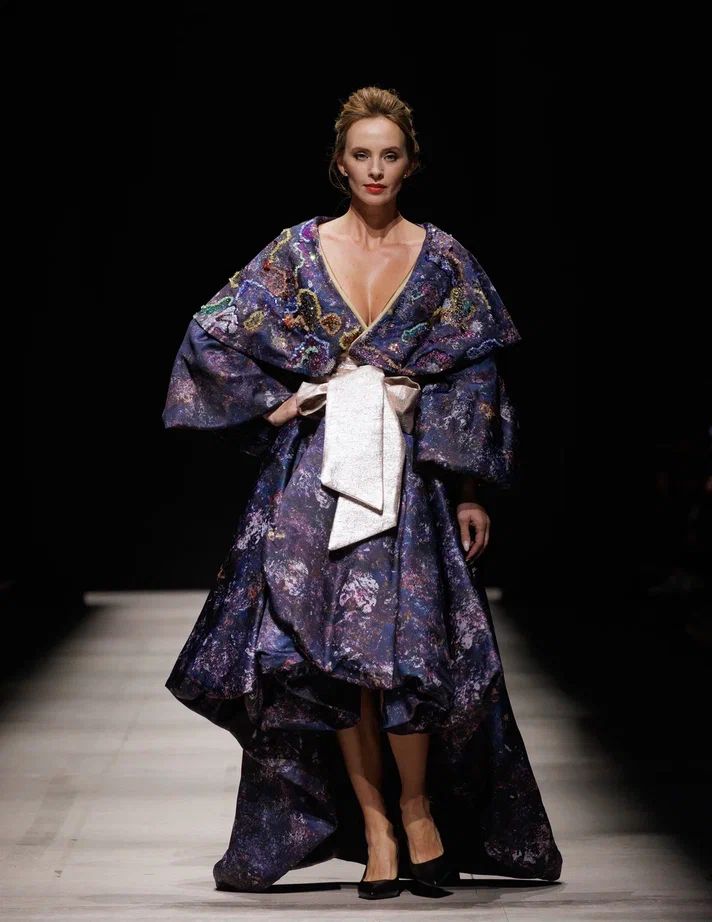
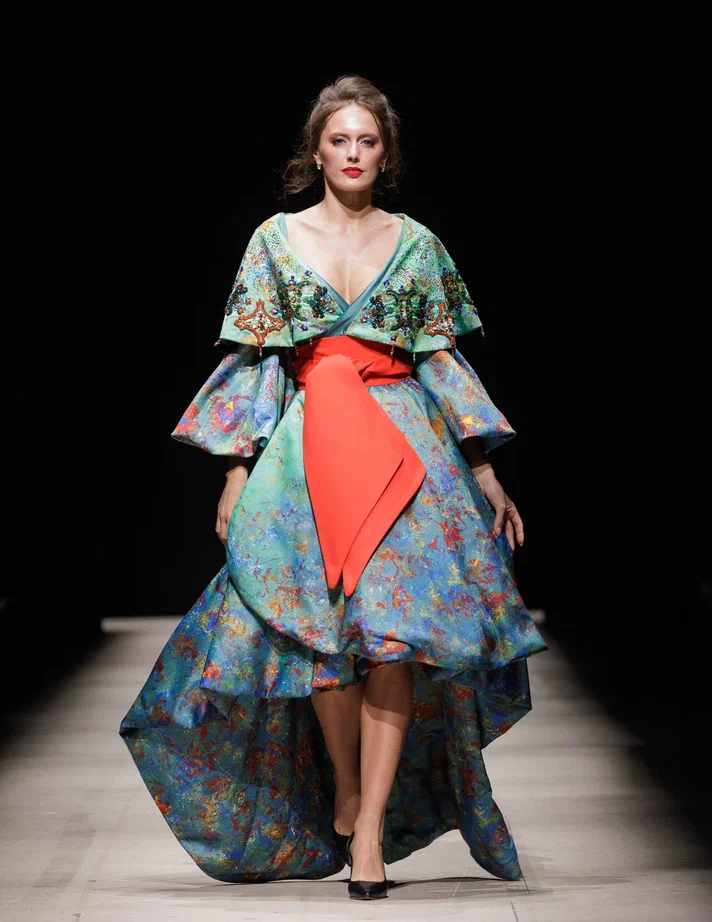
Black Crown Label (UK) brought looks to Moscow, inspired by Iraqi musician Naseer Shamma. The collection featured long kimono-like dresses, rhinestones, oversized belts and theatrical hemlines. The garments were at their best in motion.
“Russia is a market I would be proud to explore for Black Crown Label. This visit has encouraged me to learn more about its customers and to build the right relationships with experienced local advisers and partners. My ambition is to establish a lasting presence here, and I would be delighted if the brand’s first official boutique could one day open in Russia. I hope this show marks the beginning of that journey,” said Nohad Al Samarrie, designer and founder of Black Crown Label.
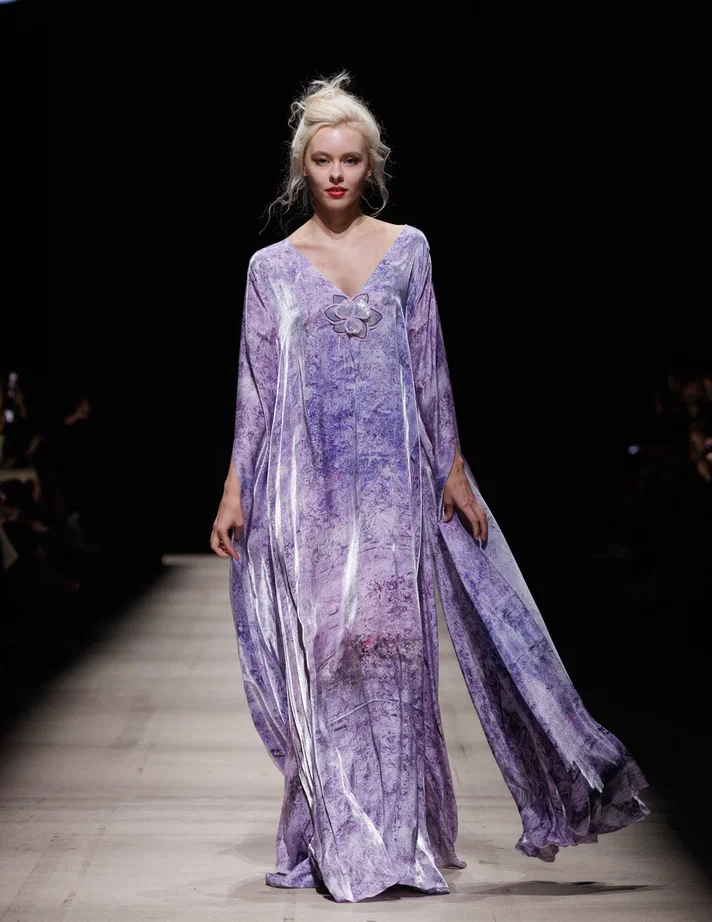
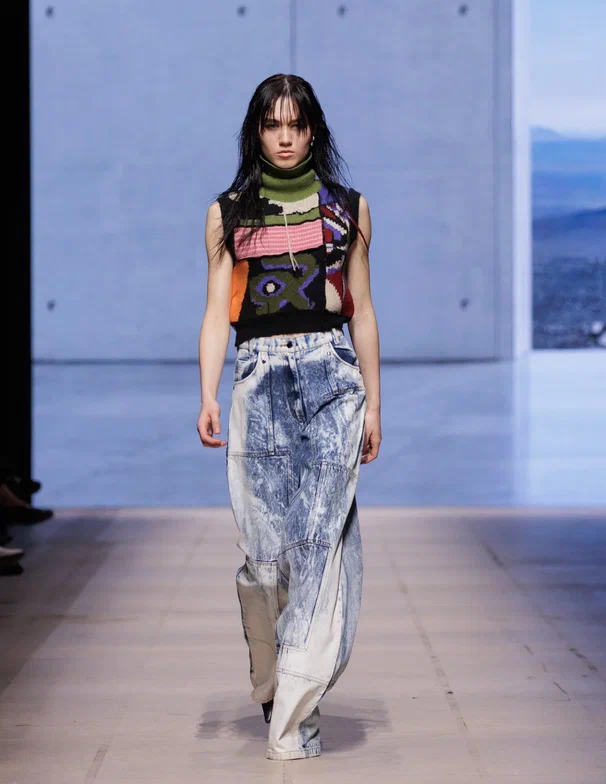
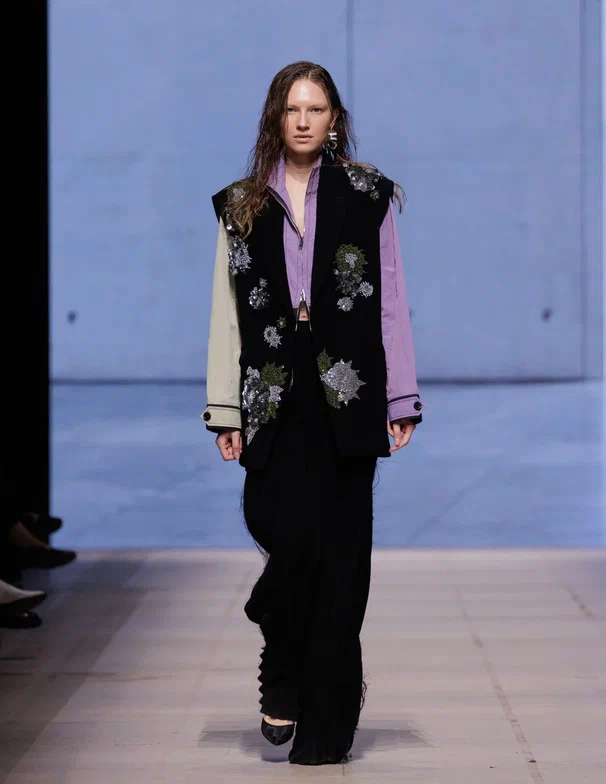
Kanika Goyal brought the Indian label KGL to Moscow, presented by the Fashion Design Council of India. The brand boasts a star-studded fan base, including everyone from Priyanka Chopra to M.I.A. In her Arc Echo collection, the designer explores the effect of déjà vu: woven denim, hybrid jackets, mosaic knitwear and bold colour combinations seem to come together from fragments of memory. The result is a vibrant, graphic collection that captures India’s distinctive feel for colour without resorting to folkloric references. “It is my first time here, and I’ve been backstage since morning. Everything I’ve been seeing from other designers looks great. The scale is incredible. And there is so much potential: emerging talents, including those from India, now have many opportunities to present the collections globally, and Moscow Fashion Week is one of them,” said Kanika Goyal, founder and designer of KGL.
“The Fashion Design Council of India (FDCI)’s collaboration with Moscow Fashion Week has been hugely beneficial for the fashion industry. We look forward each year to welcoming Russian Designers who are a big hit with their creations on the runway in New Delhi and Mumbai,” commented Sunil Sethi, Chairman of the Fashion Design Council of India (FDCI).
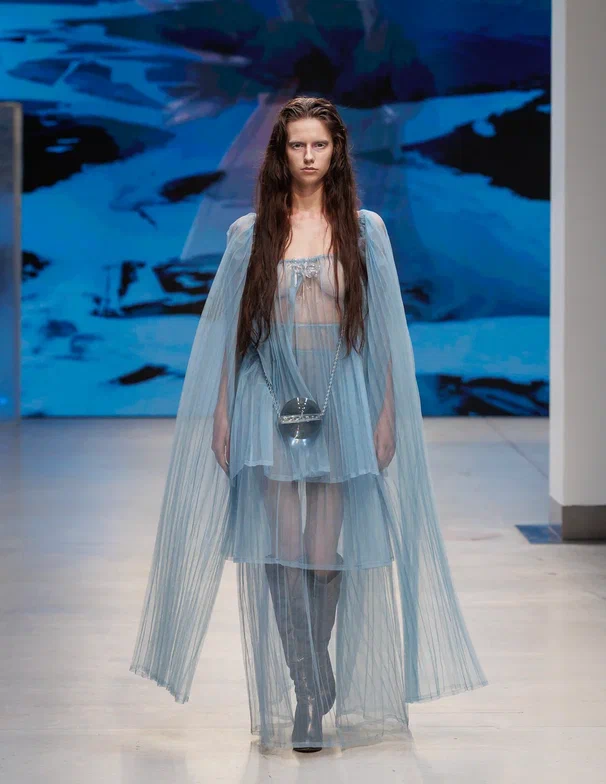
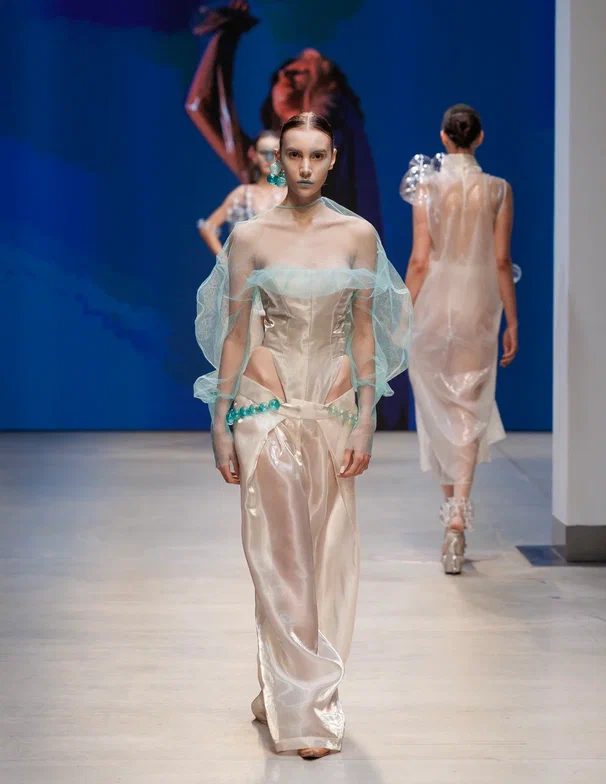
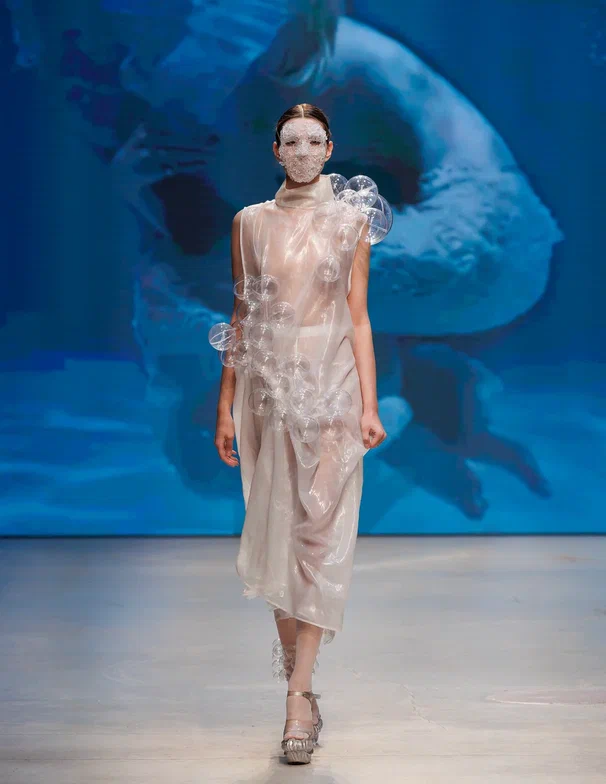
The show by s e n sus (Irkutsk) brought a sudden chill to the runway. Victoria Istomina and Alyona Gulenko dedicated their collection to water and its different states. Translucent dresses evoked vapour, rigid shapes suggested ice, while glass details and jewellery by Irkutsk-based brand Bright Me added a touch of sparkle. White, turquoise and transparent masks worn by the models made the theme immediately recognisable. The most successful pieces were those in which water influenced not just the mood but the actual cut of the garments. “This is our first time participating in Moscow Fashion Week. All our expectations ahead of the show have been met – we have already received offers of collaboration, including requests to rent runway looks for photo shoots. Our brand awareness and sales have also increased,” said Victoria Istomina, designer at s e n sus.
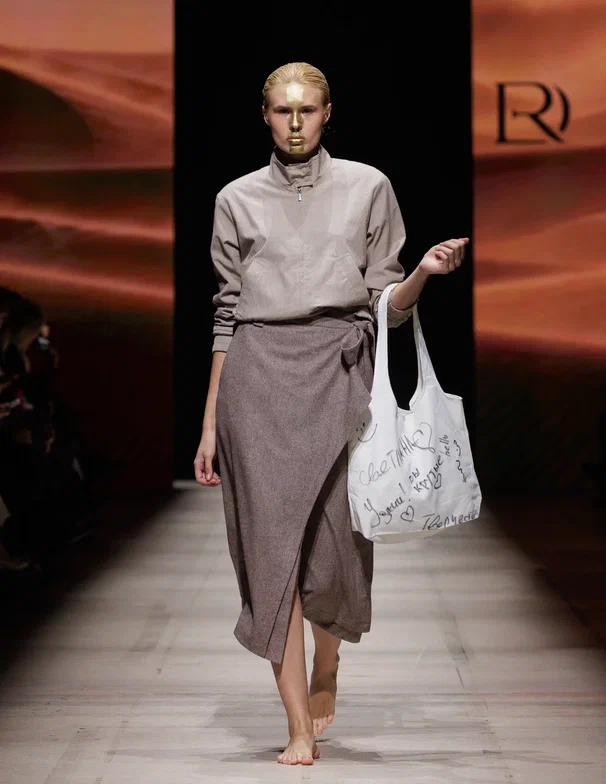
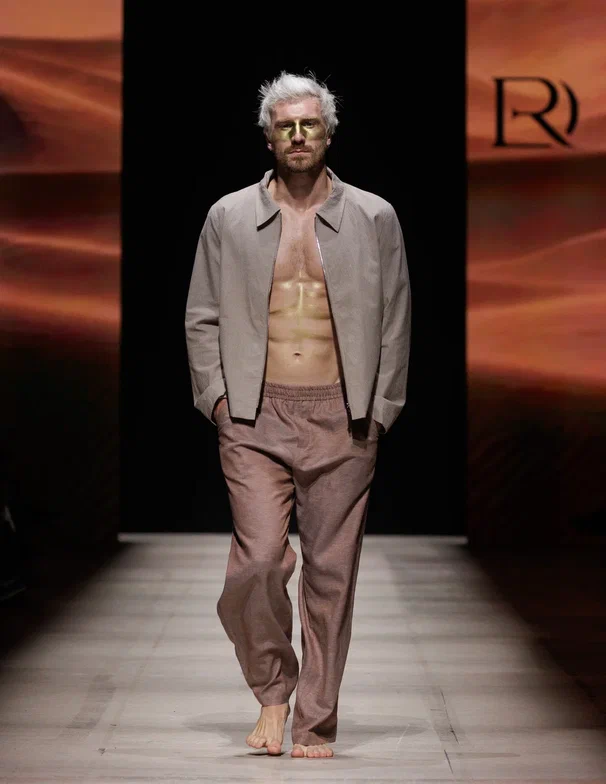
Moscow-based Edder demonstrated how a subtle shift in the signature style can refresh a brand without compromising its identity. For the first time, its SS’27 collection included a cruise line: suits became looser, shirts more relaxed, and womenswear more fluid. The brand neither ventured into beachwear nor softened its aesthetic beyond recognition. It simply let in more air. “Participating in Moscow Fashion Week has been an important milestone in Edder’s growth and an opportunity to take our engagement with the industry and professional community to a new level. The show allowed us to present the brand to a wider audience and attract attention from buyers, stylists, media and potential partners. We particularly value the fact that taking part in Moscow Fashion Week has helped strengthen Edder’s positioning as a Russian brand with its own aesthetic, production facilities and commitment to quality. The show also provided a platform for testing new ideas and collections: we saw how the professional community responded and gained additional motivation to develop our designs and experiment with shapes. Following Moscow Fashion Week, Edder has established new business contacts and opened up opportunities for further collaboration. For us, this is more than just a fashion show – it is a tool for growing the brand and reaching a broader professional market,” said Svetlana Tkachyova, designer at Edder.
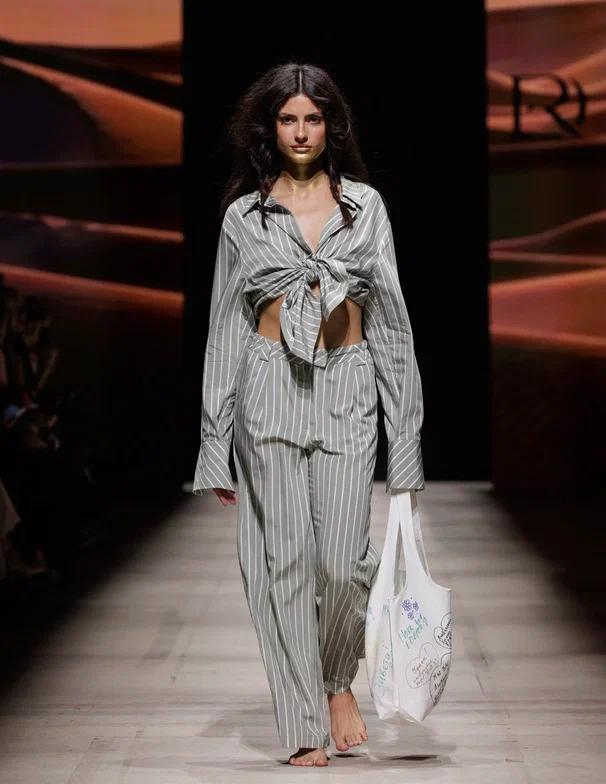
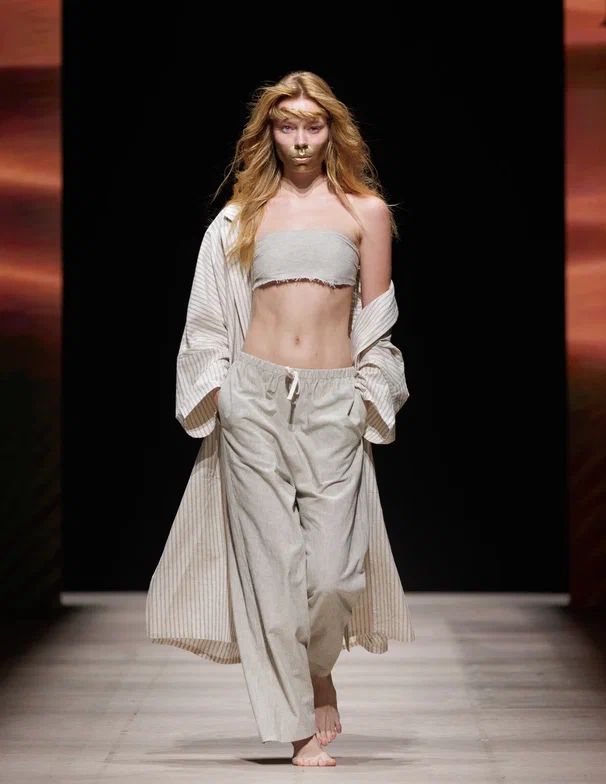
Moscow-based SOL Selivanova Olga created its collection in collaboration with artist Adele Levitova. The starting point was her painting ‘Flights in a Waking Life’, although the image itself was rarely transferred directly onto the garments. What remained from the original artwork was its color and sense of movement. Bright blouses, bombers, dresses, long fringes and shimmering threads made a particularly strong impression on the runway, where the clothes came alive with every movement of the models.
According to the designer, participating in an event as large-scale as Moscow Fashion Week gives brands a powerful boost for growth: “Moscow Fashion Week certainly helps brands establish a solid foundation. It is easier for both clients and consumers to engage with and recognise Russian manufacturers when they receive such strong support through a platform like this. I think the event makes it much easier for brands to connect with their audiences.”
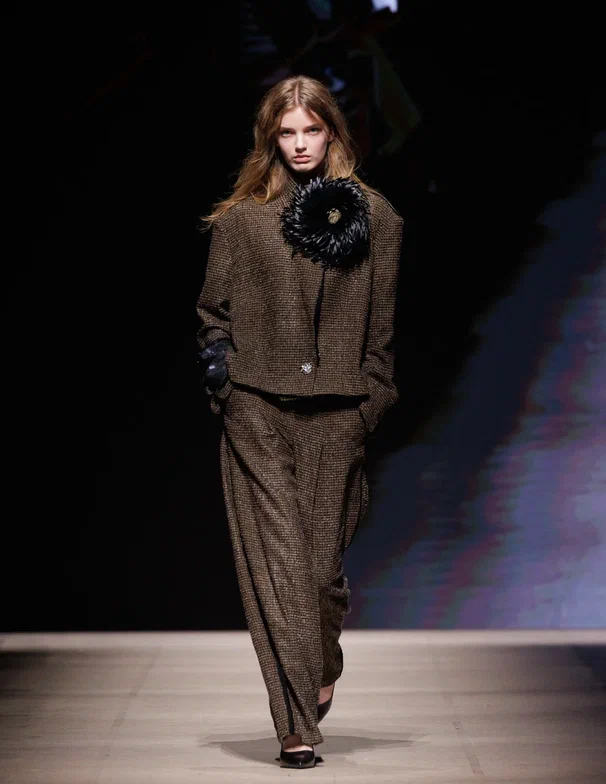
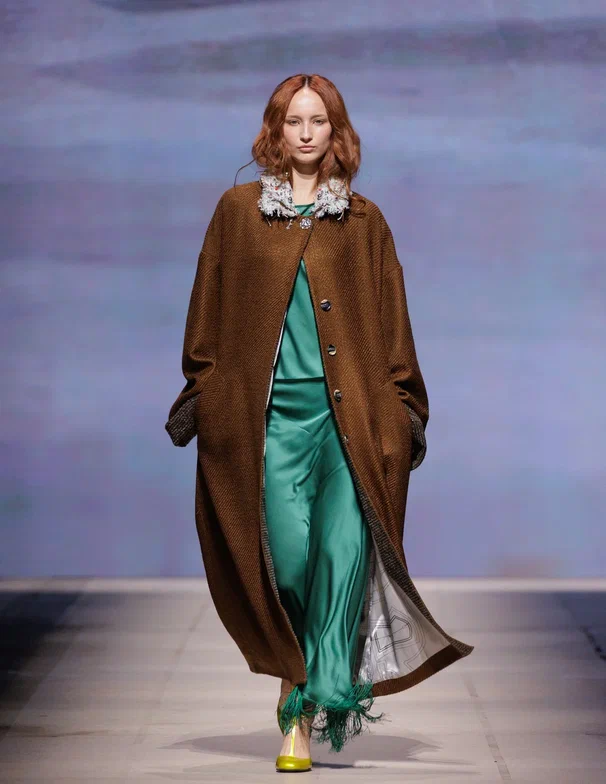
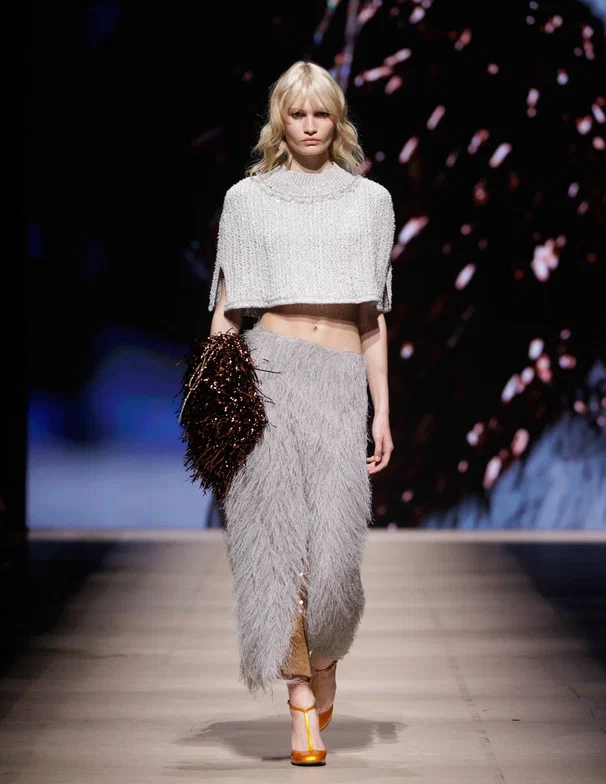
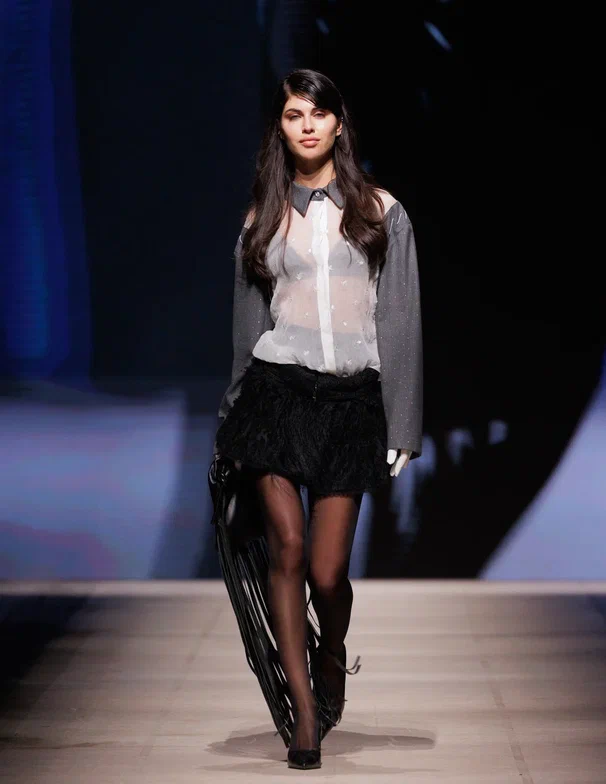
Kartashova (Kemerovo) travelled back to 18th-century France. The Boudoir collection featured corsets, lace, sheer dresses, voluminous skirts, fur collars and plenty of Rococo influences. Yet the most compelling looks were those that reinterpreted historical references: a corset became part of a contemporary outfit, lingerie-inspired layers were brought to the surface, and ruffles stopped short of turning the garments into ball gowns. Marie Antoinette, reimagined for the modern world.
The designer emphasises that participating in Moscow Fashion Week has been a defining moment for the brand: “Moscow Fashion Week has made my brand more recognisable. I want to point out that I’m from Kemerovo – if you’re not familiar with it, it’s a very long way from Moscow. For me, this is a fantastic opportunity to make myself known and tell people about my work. Moscow Fashion Week is the best platform for bringing together fashion industry professionals. It is the most important platform for building brand awareness and prestige: people start to see your brand differently, and it takes you to another level. After Fashion Week, I signed contracts with major stores where I now sell my clothing.”
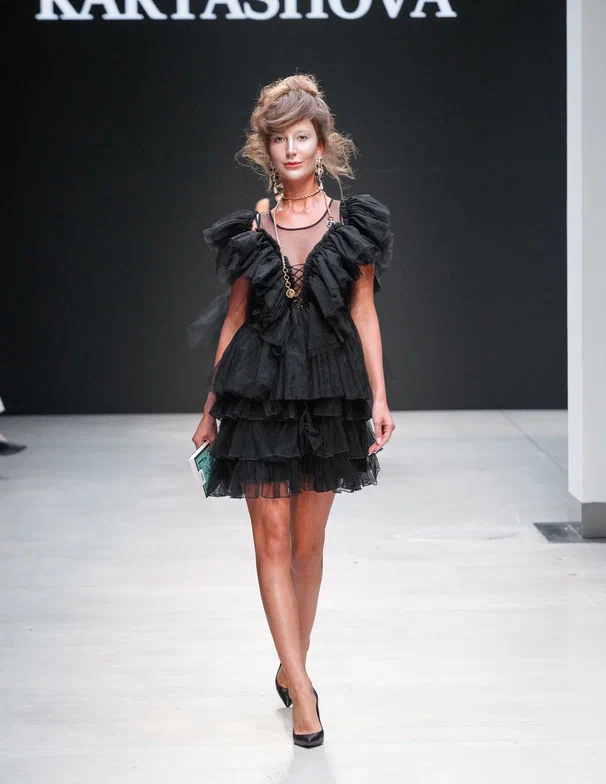
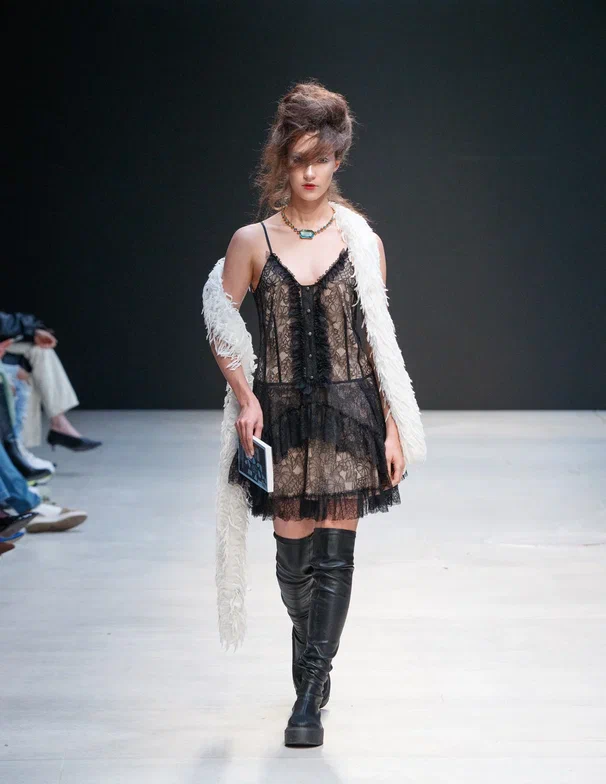
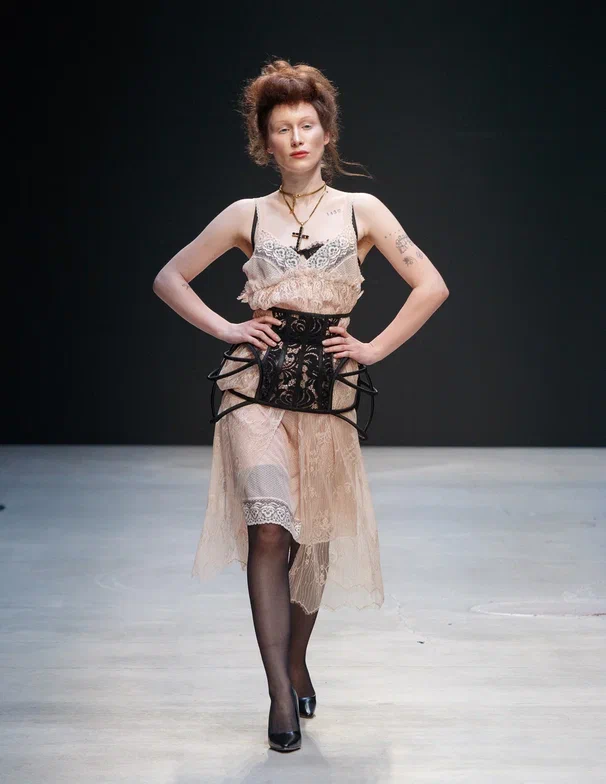
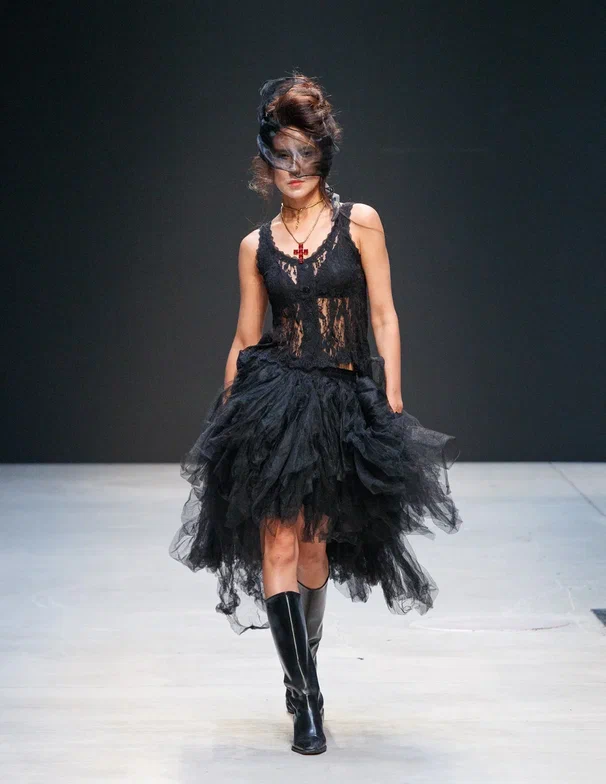
Anna Kropotova (Rostov-on-Don) found inspiration literally beneath her feet – in a frozen puddle. Cracks in the ice were translated into crinkled textures, transparent silicone, organza and chiffon. The collection featured generous volumes, multiple layers and sheer fabrics. Some dresses looked as though the ice had frozen mid-motion. One of the day’s simplest references also proved to be one of the truest.
The designer notes that this year has brought the brand several opportunities at once: “This year, we were selected for both the pop-up shop and the fashion show. We’re waiting to see what comes next. We’ve already made sales: customers bought pieces straight after the show. It’s really good – truly wonderful.”


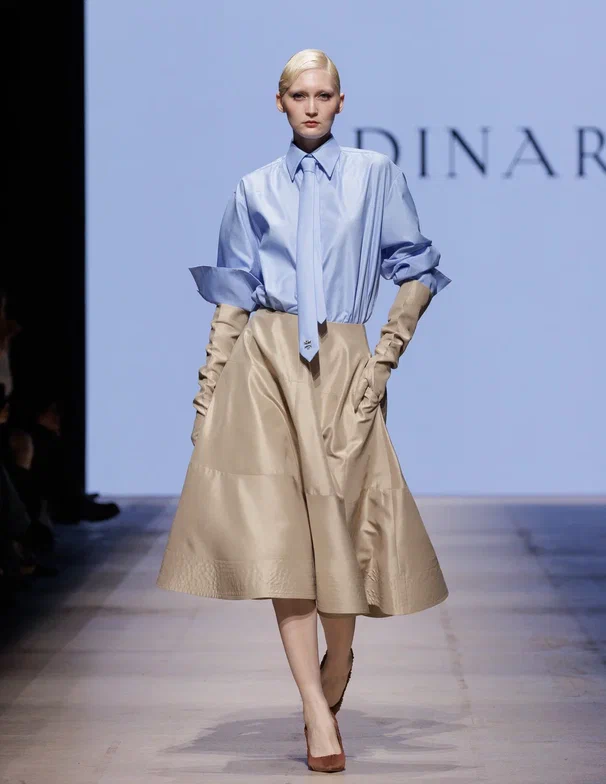
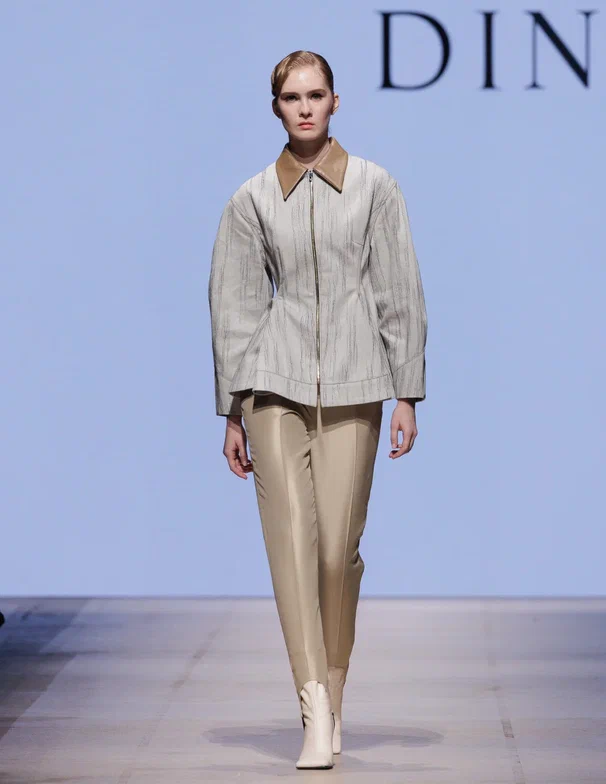
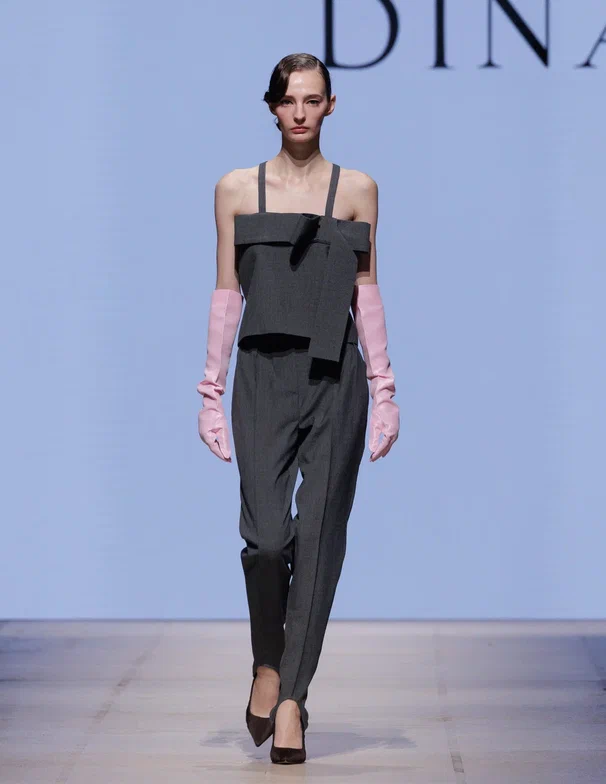
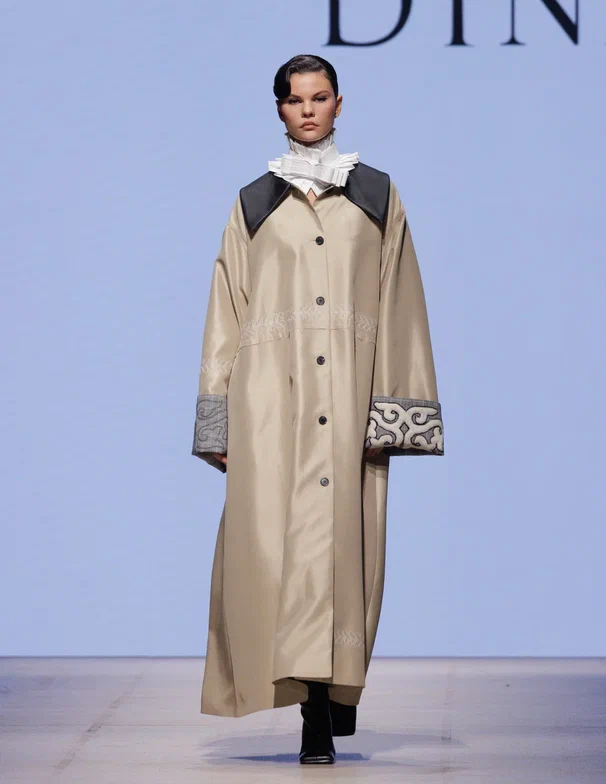
Next, Kazakhstan Fashion Week presented Dinara Satzhan (Kazakhstan). The designer explores the history of Kazakh costume without direct quotation: lace-up dresses, evening gloves, and rugged leather are paired with airy silk, satin, and floral motifs. Traditional ornament appears in the details and textures, while a subtle punk note gives the collection a bolder edge.
“Moscow Fashion Week is more than just a platform for showcasing collections. It is a place to build professional connections, see the work of fellow designers, and understand the direction in which the industry is moving. I also see it as an opportunity to expand the boundaries of my creativity and reach a new audience. Moscow Fashion Week helps emerging designers gain recognition not only at the regional level, but also on the global stage,” said Dinara Satzhan, designer and founder of the brand.
Antalya Fashion Week presented Gokhanyavas and Murat Aytulum (Türkiye). In the Armored Silence collection, Turkish culture is combined with the Korean landscape, with Naejangsan Mountain serving as the main reference. Black and graphite gradually give way to almost white, as if the eye were moving toward a snow-covered peak. Gold and rhinestones add a touch of sparkle, while textured shearling brings the collection back to Turkish tradition.
“Participation in Moscow Fashion Week has actually become our biggest project in 2026. Therefore, being able to execute such a major project before closing out the year 2026 is a great source of pride for us. Just like Gökhan, I am very happy and proud to be here. […] We are both very happy and proud of this achievement, and we send our warmest greetings to all fashion lovers in Moscow from here,” said Murat Aytulum, designer and founder of the Murat Aytulum brand.
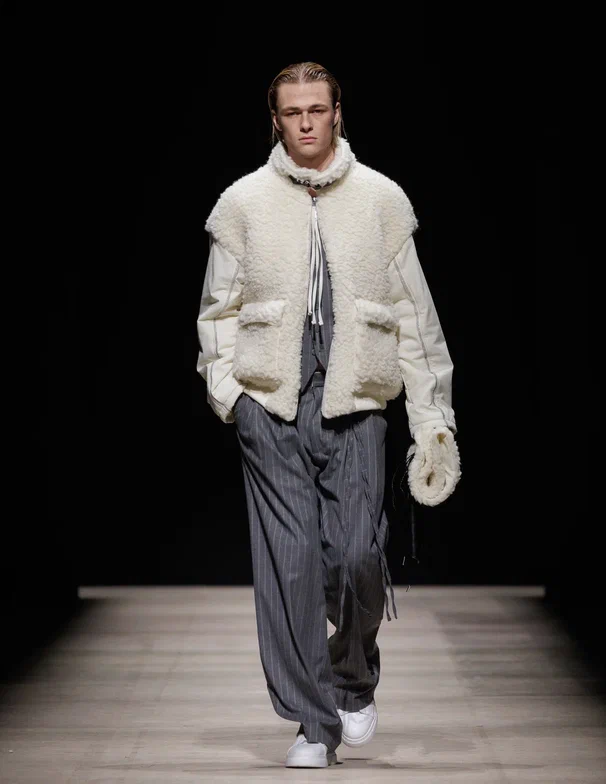
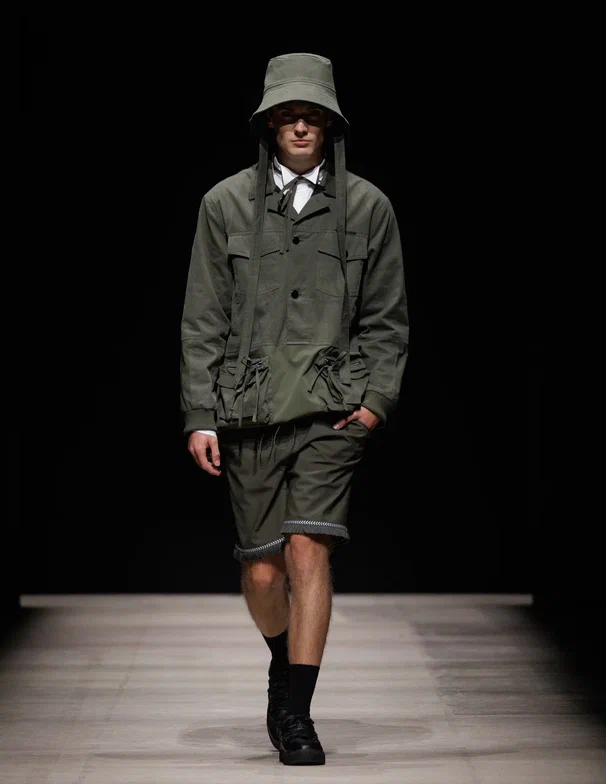
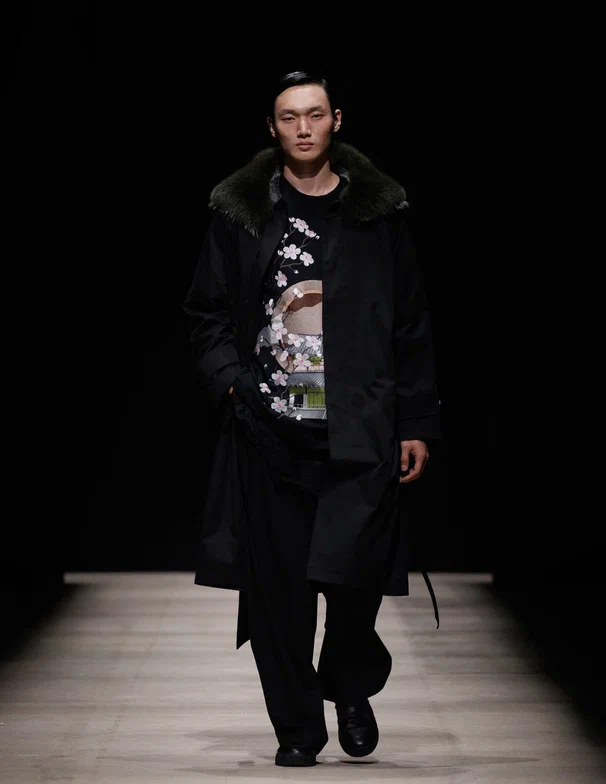
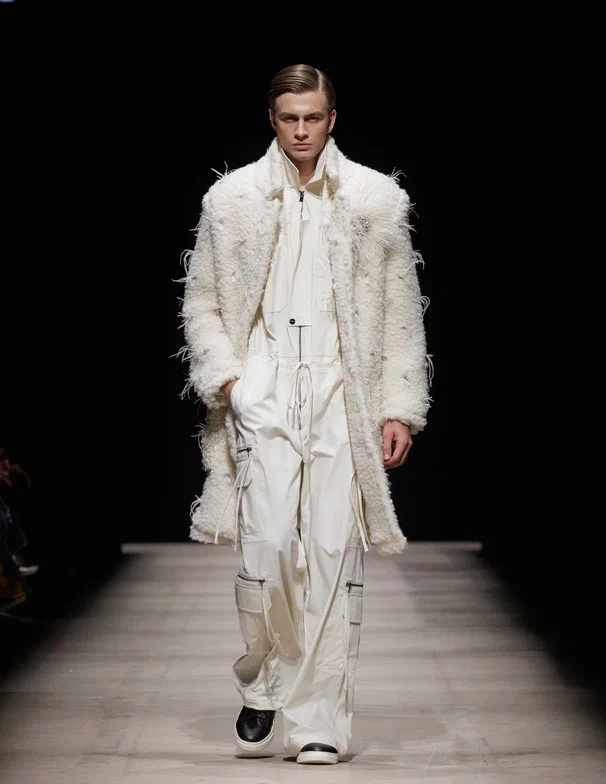
Next, viewers were transported to Nicaragua. Brisa Hernández presented her debut collection in Moscow, offering her own interpretation of Central American art. Dried roots, natural elements, and sculptural forms appear directly on the garments, while the human body becomes part of the composition. Color played a particularly strong role: purple, yellow, and red gave way to white and deep black. Satin shirts, corsets, loose capes, and dresses made the collection resemble a still life in motion.
“Participating in Moscow Fashion Week this year has impacted my brand in an impressive way, as we managed to transcend borders and present my collection to a new audience. Most importantly, the Russian audience welcomed my collection with open arms; it was warmly received,” said Brisa Hernández, designer and founder of the Brisa Hernández brand.
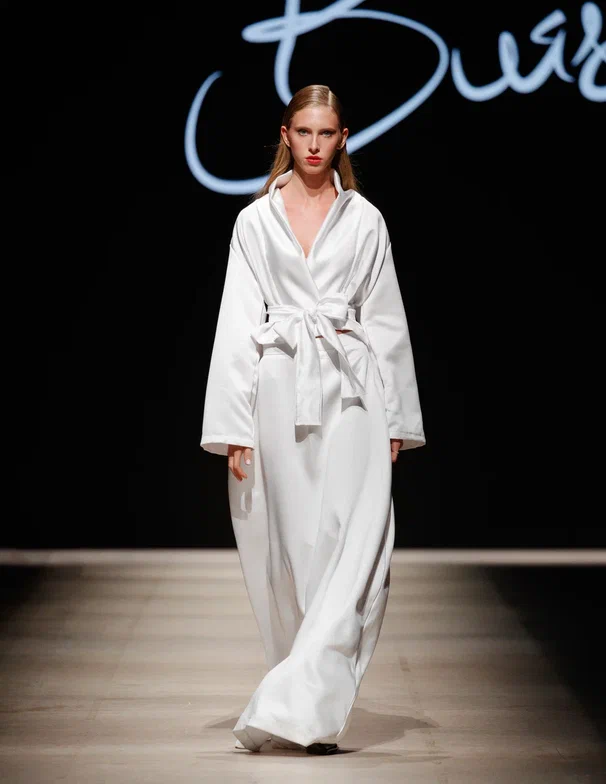
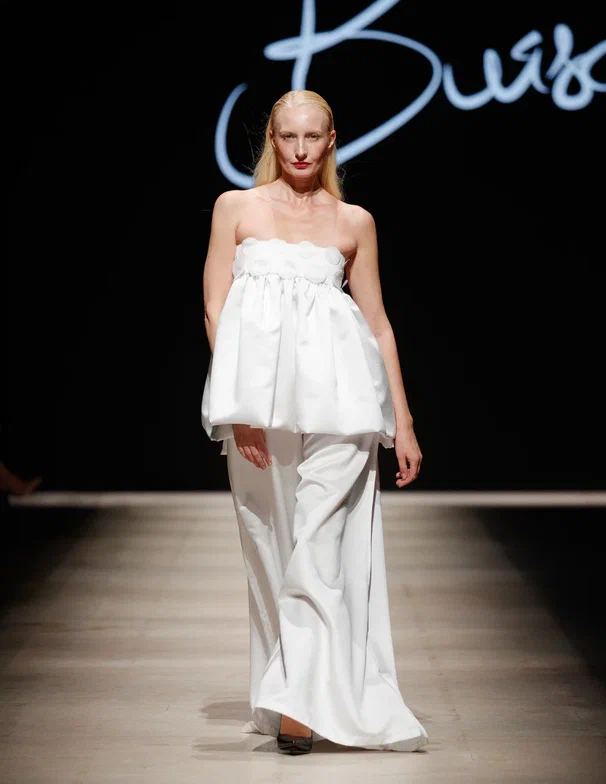
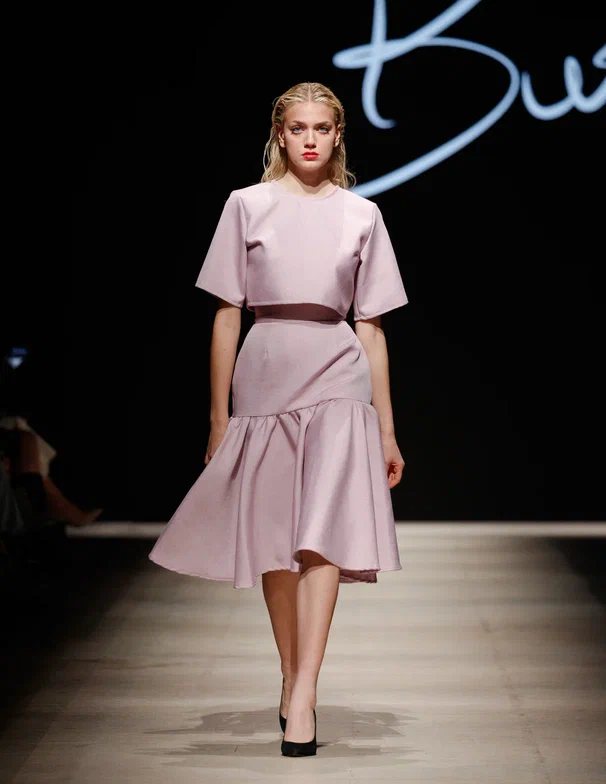
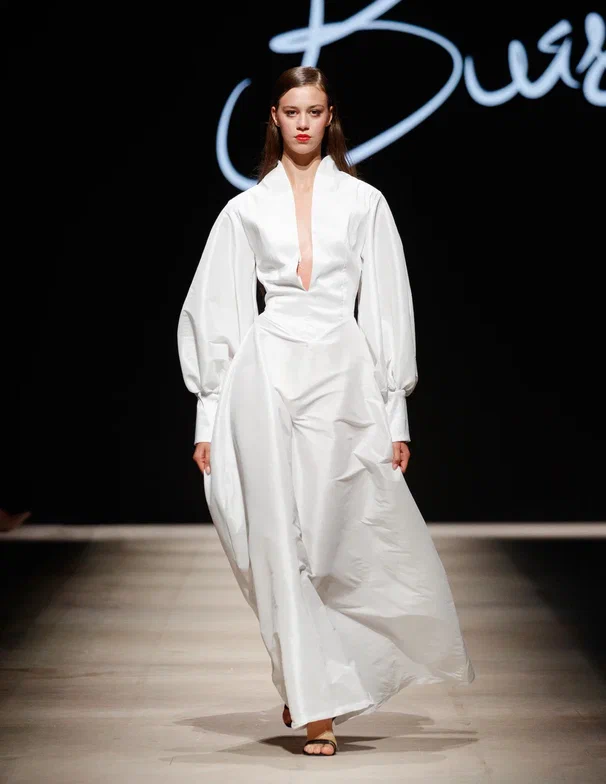
For feelatto (Nizhny Novgorod), the journey took a completely different turn – this time, it was historical. Olga Filatova turned to the ruins of ancient Samarkand and named the collection “Meeting in Afrasiab.” Sand, chocolate, and moss green evoked the colors of the ancient city, while corsets, robes, bras, and jackets combined Eastern motifs with contemporary forms. Natural pearls, vintage Uzbek silk, silk velvet, and Russian mattress ticking added texture. Hand weaving, embroidery, and painting added further detail – there is truly a lot to discover here.
“Participating in Moscow Fashion Week has helped the brand gain recognition. Our project developed within a single city for a long time, and last year we expanded to St. Petersburg. This year, Moscow. And, of course, we are very happy about it, because this is a very significant event for us. We had been working toward it and wanted it to happen,” said Olga Filatova, designer of the Feelatto brand.
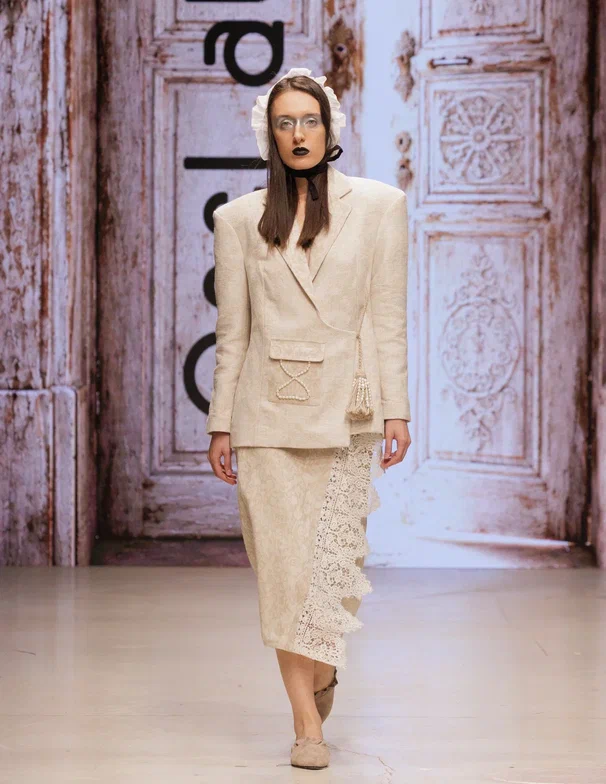
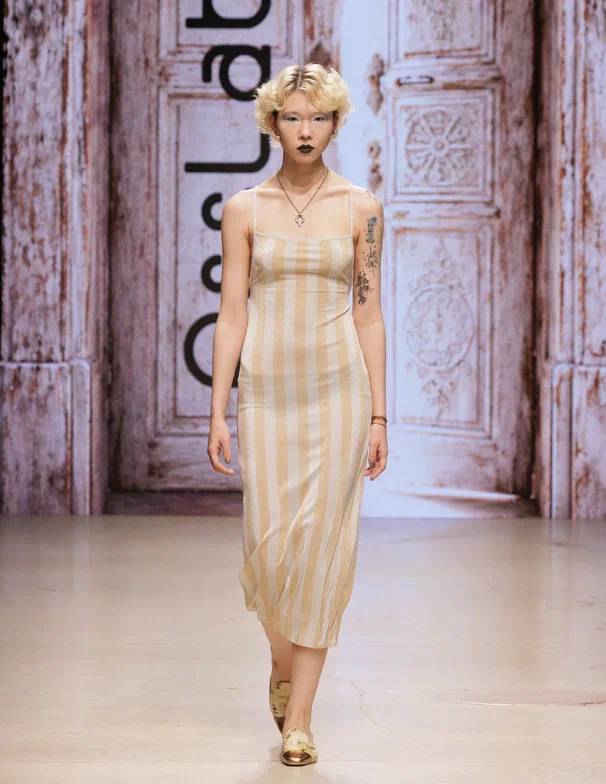
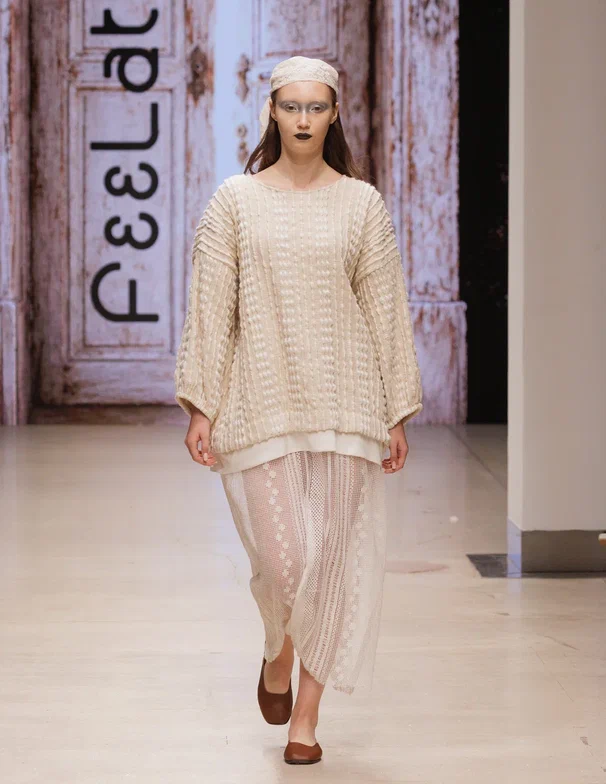
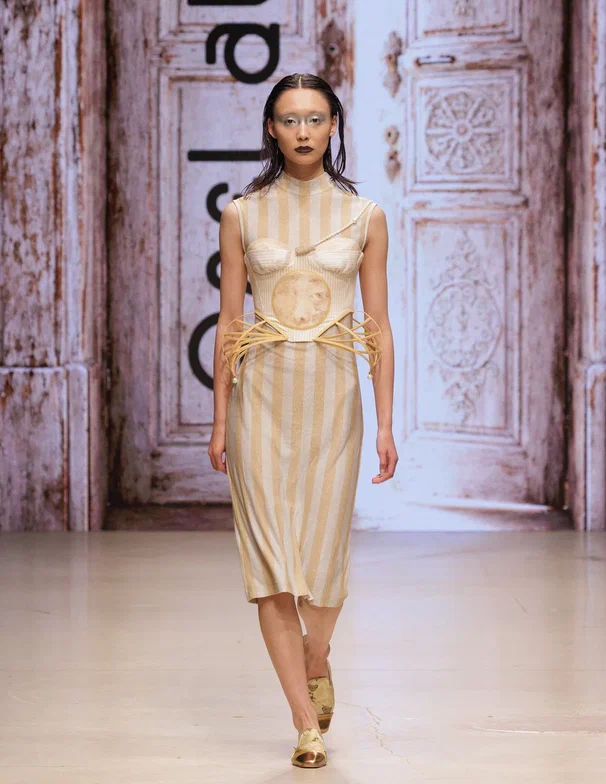
For Lesel (Moscow), the story became personal. “Time Capsule” explores the memories that clothing can hold. Wide-leg trousers were paired with fitted jackets, quilted suede with openwork knitwear, sheer layers with dense fabrics. Even sequins appeared on classic pinstriped suit fabric. The final section of the show shifted toward refined eveningwear, with renowned model Elena Kuletskaya gracing the runway.
“Through our participation in Moscow Fashion Week, we opened a store in St. Petersburg, which was a big step for us. […] We are optimizing the business and, most importantly, organizing and structuring it in our own minds. It really is a year of transformation, moving from purely intuitive design toward a more systematic approach to design,” said Larisa Vladimirova, founder and designer of the Lesel brand.
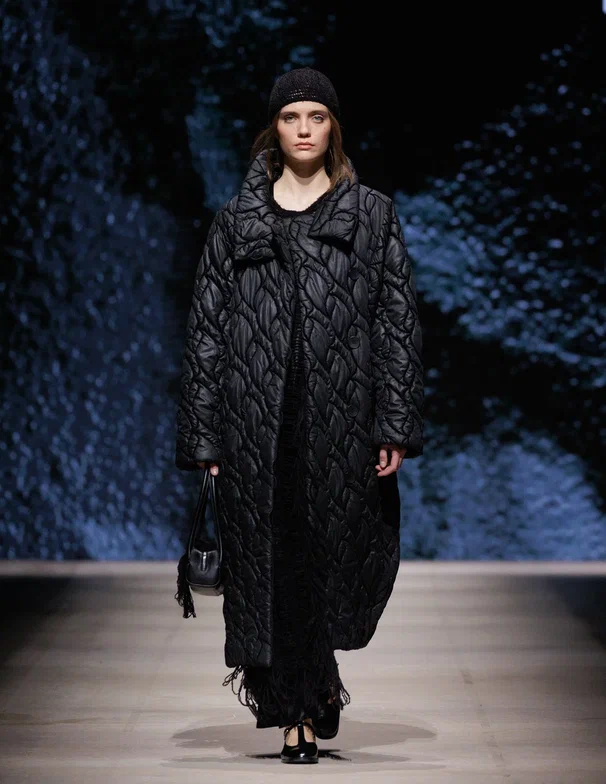
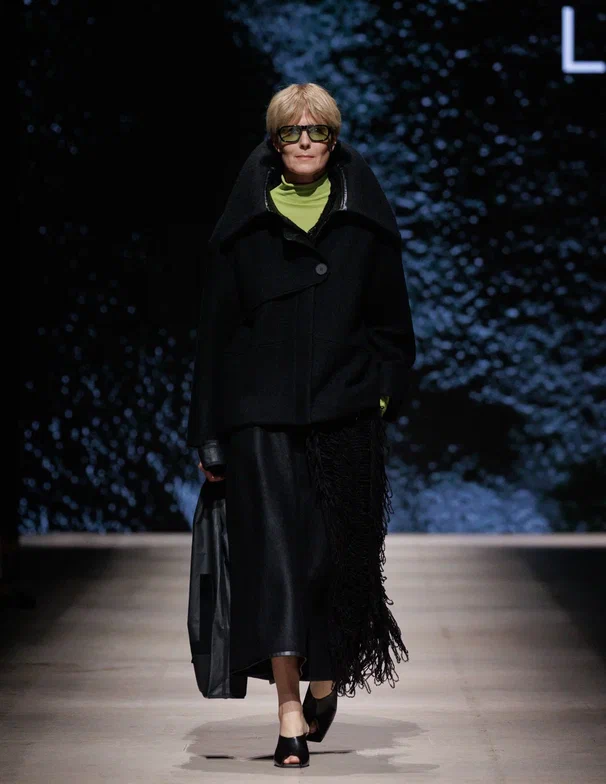
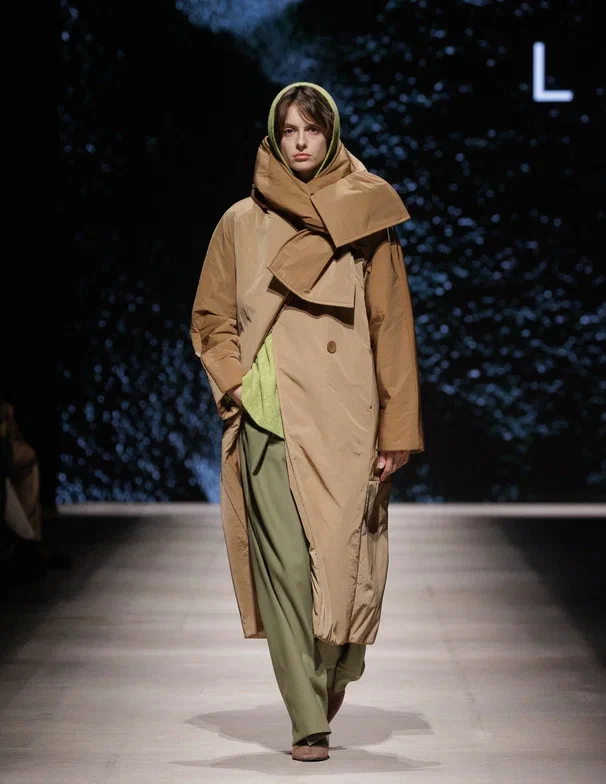

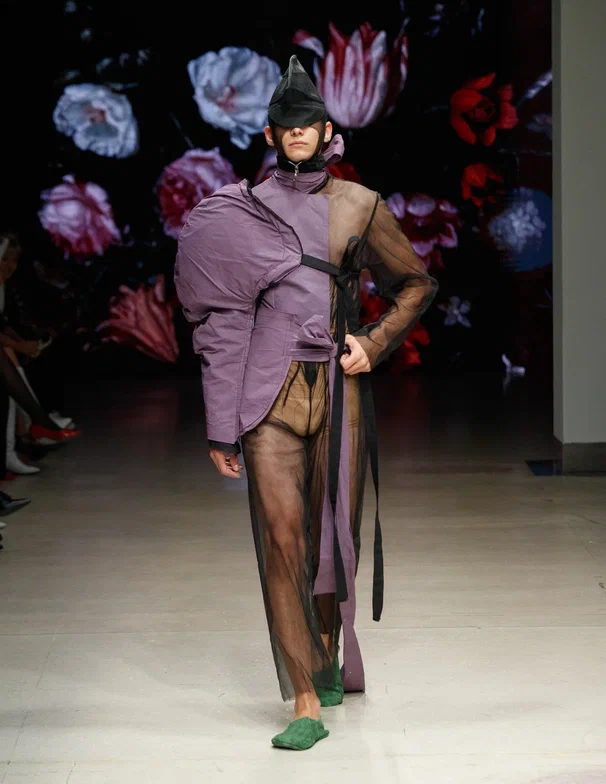
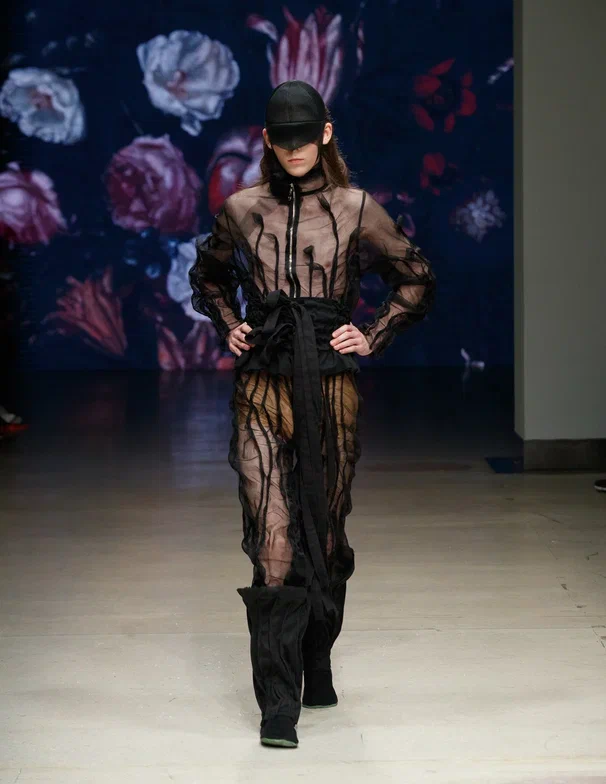
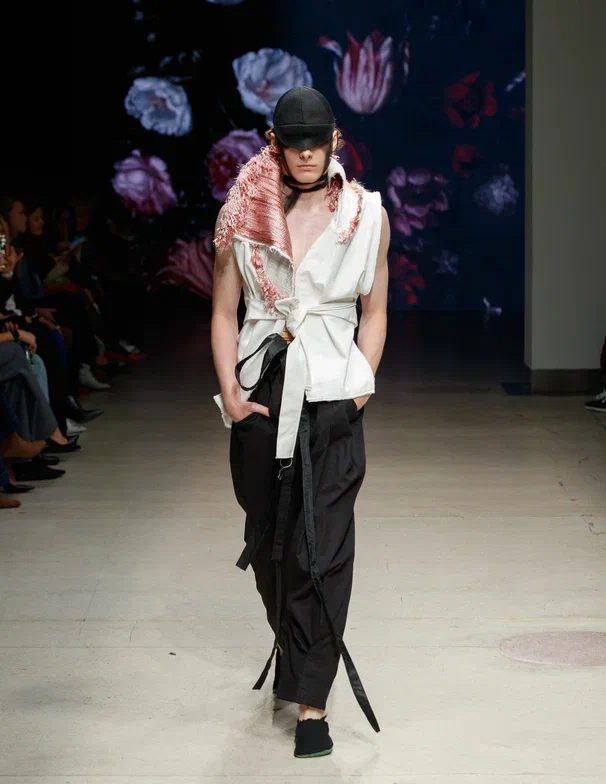
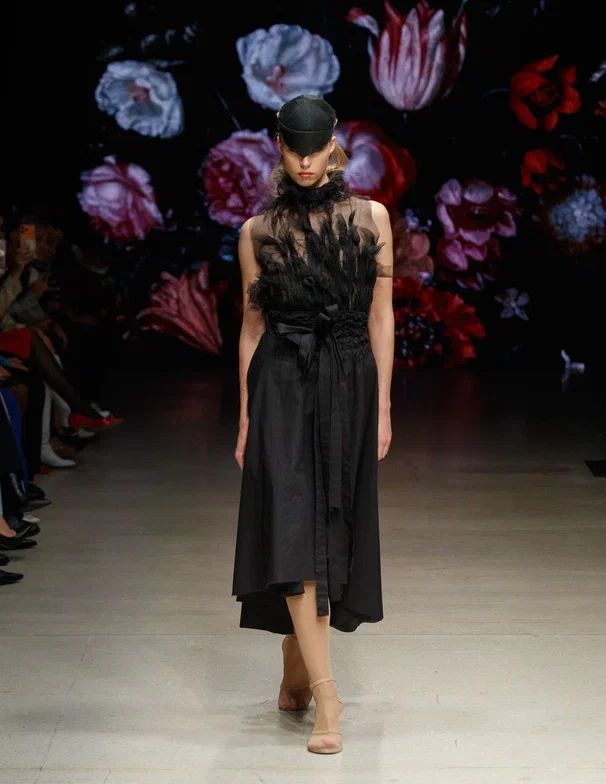
Next came 17th-century Flemish painting. Evgeniy Sinitsa (Chelyabinsk) drew inspiration from a painting titled “Flowers” by an unknown artist and named the collection Vanitas, after the genre devoted to the transience of life and beauty. Hence the futuristic outerwear, intricate dresses and jumpsuits, a decadent mood, and deep shades of blackberry, black, and graphite.
“This is our first time participating in Moscow Fashion Week, and we are already receiving offers of collaboration. Tomorrow, for example, while we are still in Moscow, we have a shoot with a stylist scheduled. We have seen an increase in our social media reach and sales,” said Elena Maslova, a representative of the Evgeniy Sinitsa brand.
Li Lab (Moscow) turned the color dial all the way up. The “Venus in Aquarius” collection is dedicated to an astrological placement associated with freedom, sensuality, and creative independence. On the runway came candy pink, scarlet, azure, lavender, blueberry, zebra print, and bold lettering. Long-sleeved tops were paired with pencil skirts and capri pants, satin blouses with ultra-short minis, while some looks were completed with fur coats and feather boas.
“We are participating for the seventh time now, and every season has been bright and unforgettable. Over these years, the brand has scaled up rapidly. We have participated in Fashion Weeks in Spain and South Africa and been featured in various international and Russian magazines thanks to our participation in Moscow Fashion Week. We have secured placements in major department stores in St. Petersburg and Moscow, and the geographic reach of our brand has expanded. Participating in Moscow Fashion Week gives the brand greater scale and helps increase its recognition,” said Ivetta Makarova, founder and designer of the Li Lab brand.
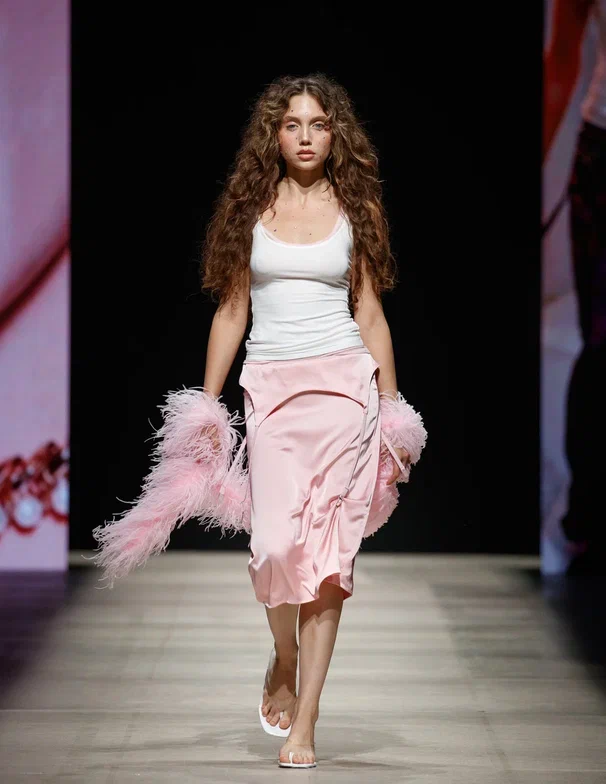
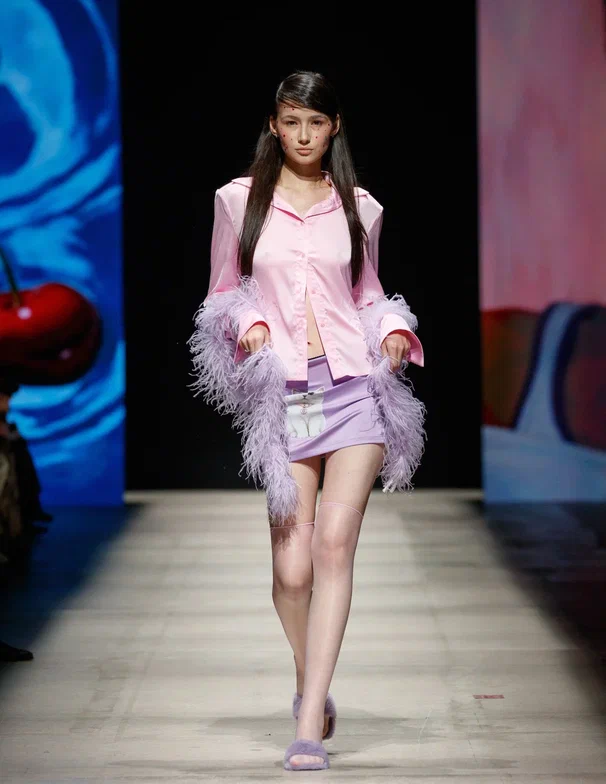
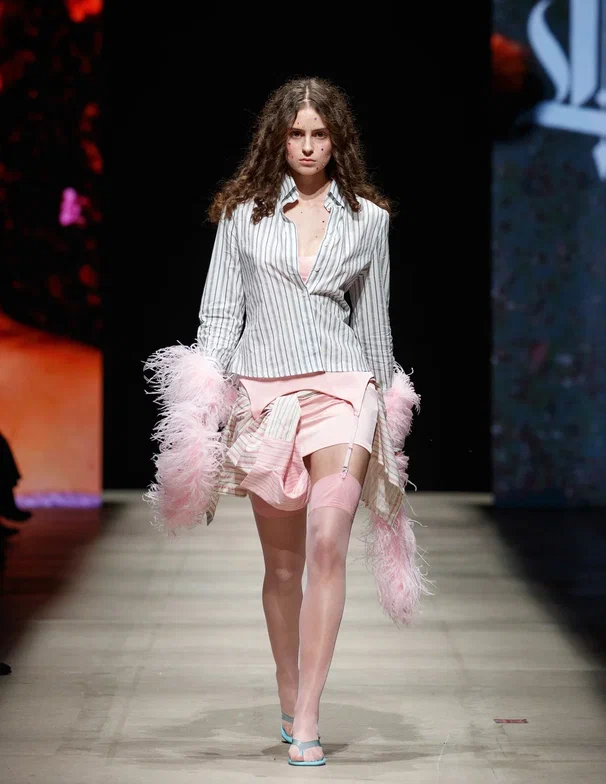
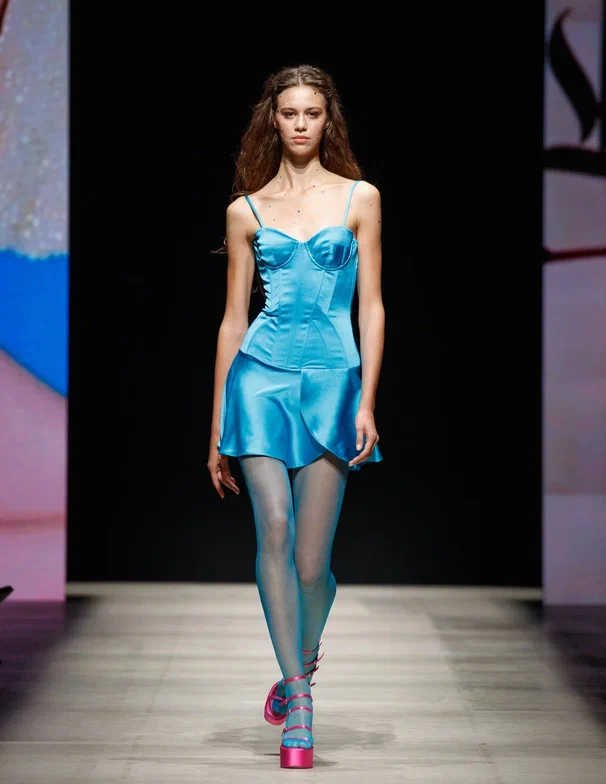
Sergey Sysoev (Moscow) draws on Russian art archives, traditional crafts, and architecture. But color is the collection’s main tool: the designer makes active use of color blocking, combining several different shades in a single look. Asymmetry and a mix of textures help avoid a direct reconstruction, leaving historical motifs as merely a foundation.
“I think Moscow Fashion Week is the only unique opportunity to showcase what you do live to such a large audience. There are no other events of this level in Russia, so it is always a highly anticipated date, the date of the show, when you invite the media and your followers. At Moscow Fashion Week, we presented our Imperial Porcelain collection last season, which is now sold in all our stores, but it was at Moscow Fashion Week that this collaboration received attention,” said Sergey Sysoev, designer and founder of the Sergey Sysoev brand.
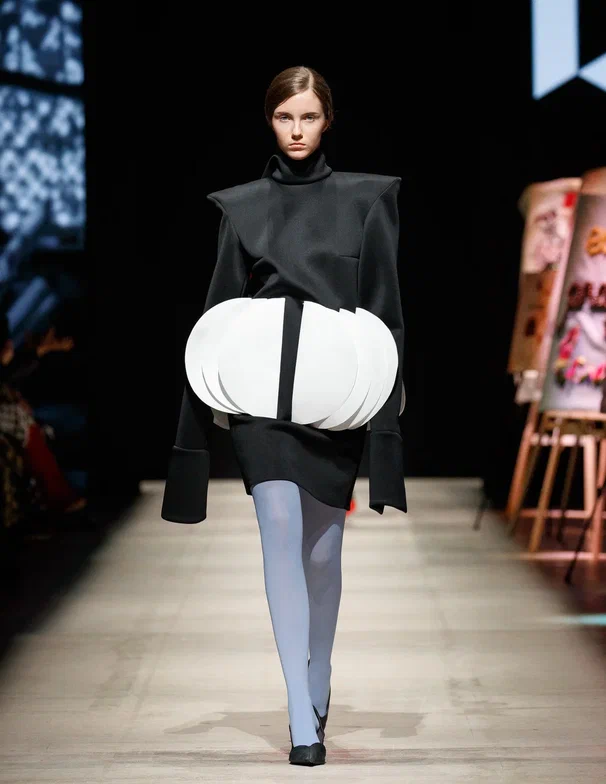
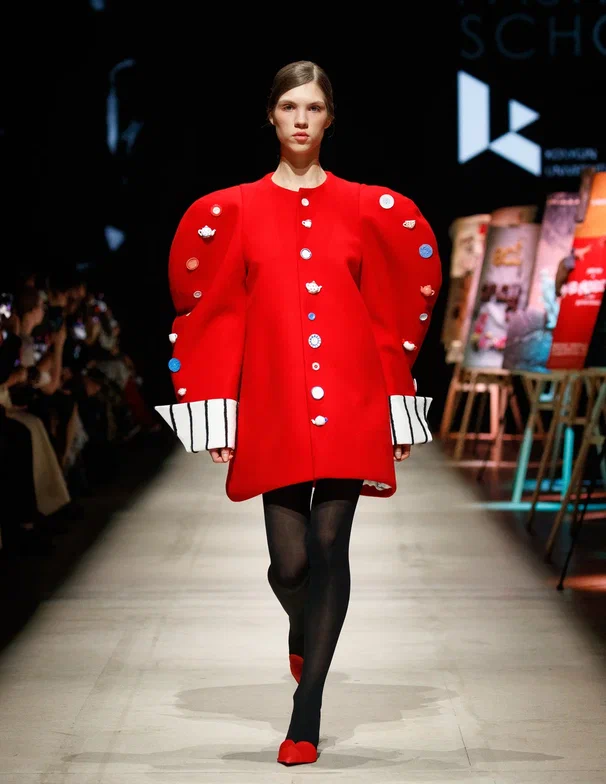
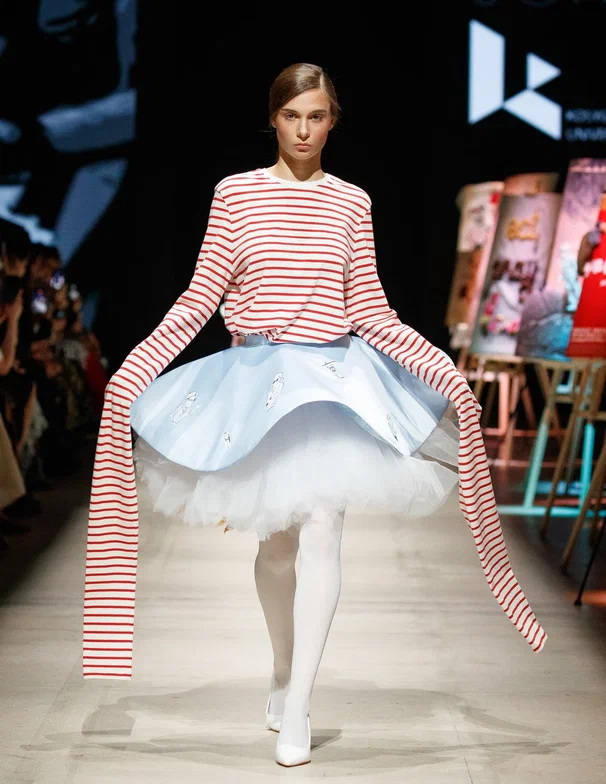
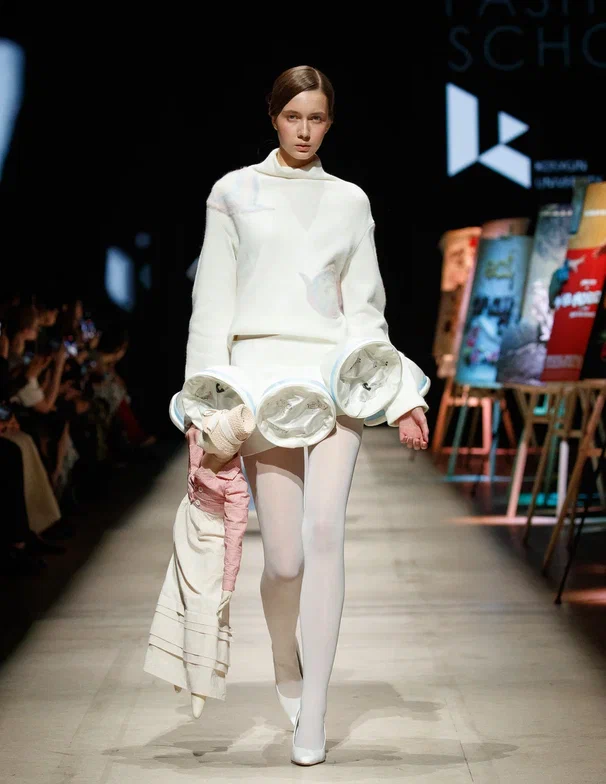
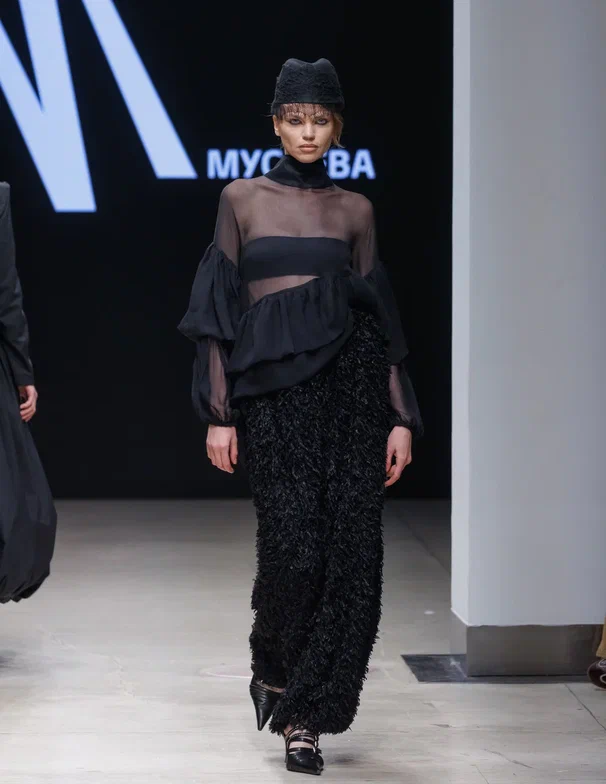
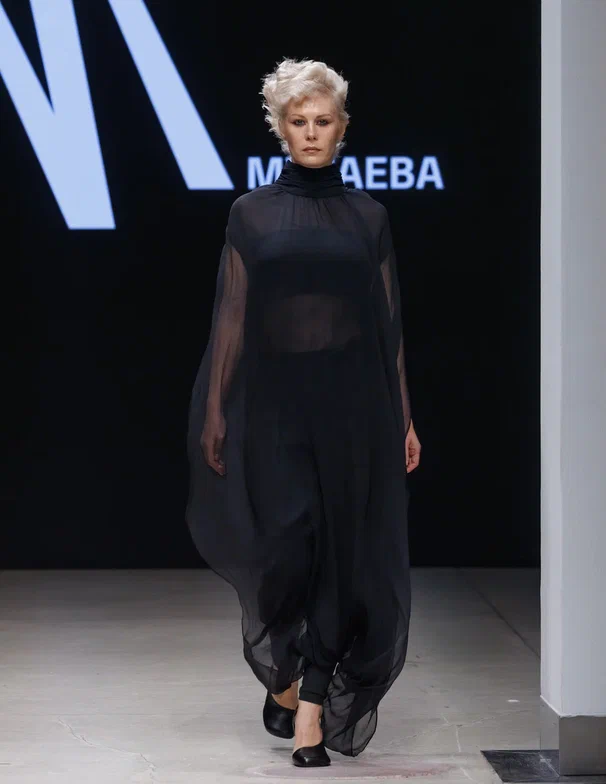
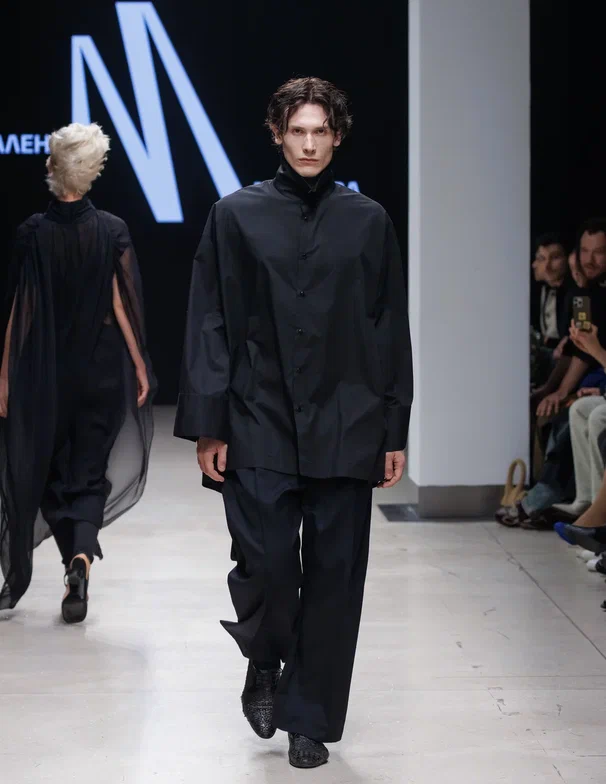
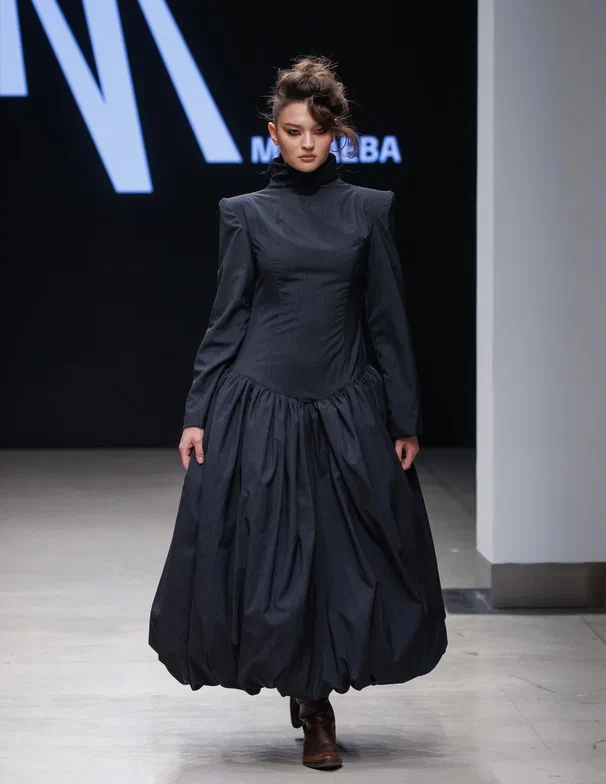
The theme of Russian culture continued with Alena Musaeva (Volgograd). This time, the designer turned to her own cultural roots, folklore, and traditional way of life, all familiar to her since childhood. The collection featured shirts, lace skirts, and sarafans, while Russian motifs were once again combined with Eastern ones – a pairing that has already become part of the brand’s signature style.
“Moscow Fashion Week has contributed to my business development. We started working in Moscow and presenting our collections at a showroom,” said Alena Musaeva, designer of the Alena Musaeva brand.
The day concluded with Vereja (Moscow). On September 28, as part of Moscow Fashion Week, Vereja presented “Guardians of Reia” at the Manege – the brand’s first concert-fashion show and a large-scale retrospective marking seven years of the Vereja universe.
For one evening, the exhibits from the Vereja exhibition “Beyond the Window Frame,” presented at the All-Russian Museum of Decorative Arts, left the museum and came to life on the Manege’s main runway. The show attracted more than 1,000 spectators and continued the story of Reia – the fictional world created by Igor Andreev, which was presented for the first time not only through clothing and installation, but also through music and performance.
“Guardians of Reia” served as a retrospective of Vereja: archival pieces from different years, iconic characters, and new looks came together on the runway. The muses of the brand – people who had become part of the Vereja world at different points over the years – became Reia’s characters for the evening.
The cast included Karina Murashkina, Sasha Teslond, Olga Parfenyuk, Katya Golden, Arina Danilova, Irina Gracheva, Ray, Irina Petrakova, Polina Favorskaya, Renata Kharkova, Sasha Sulim, Olya Monastyrskaya, Vika Chuma, Masha Chervotkina, and other muses and friends of the brand. A separate part of the show was the collaboration between Vereja and DOUBLE.STAFF, founded by Rodion Bashkevich. The designer also walked the runway as a model.
For the first time, Vereja’s clothing shared the runway with music written by the brand’s founder. Igor Andreev, together with singers Chloe, Diza, and Nastya Spiranskaya, performed his own compositions, including “Tuk-Tuk,” “Guardians of Reia,” “Batkota,” “Chih-Pauk,” and “Golden Hook.”
Thus, the show became a concert journey through Reia: models moved along the runway to songs directly connected to the characters, stories, and mythology of Vereja. The evening concluded with Igor Andreev performing “Tuk-Tuk” live – a song about a door behind which another world begins.
Ten knitters and one Golden Hook – participants in the Vereja reality show “Raspustilis” – held a special place in the story of “Guardians of Reia.” The project, which accompanied the preparation of the exhibition and show, also became part of the wider universe and received its own musical track, “Golden Hook.”
A large team worked on the show. Olga Charandaeva and her team were responsible for the makeup. Ivan Petrov prepared the show’s music track, while Ira Bobyleva was responsible for the casting. The lighting design was developed in collaboration with the technical team of Moscow Fashion Week.
For Igor Andreev, “Guardians of Reia” became a point of connection between several directions that had previously existed separately within Vereja: fashion, art, music, performance, and the brand’s own mythology.
The collection was not built around a single season. Instead, Vereja brought its own story together into a single work – from early pieces and characters to works created specifically for the exhibition “Beyond the Window Frame.”
The exhibition “Beyond the Window Frame” will be on view at the All-Russian Museum of Decorative Arts through the end of October.
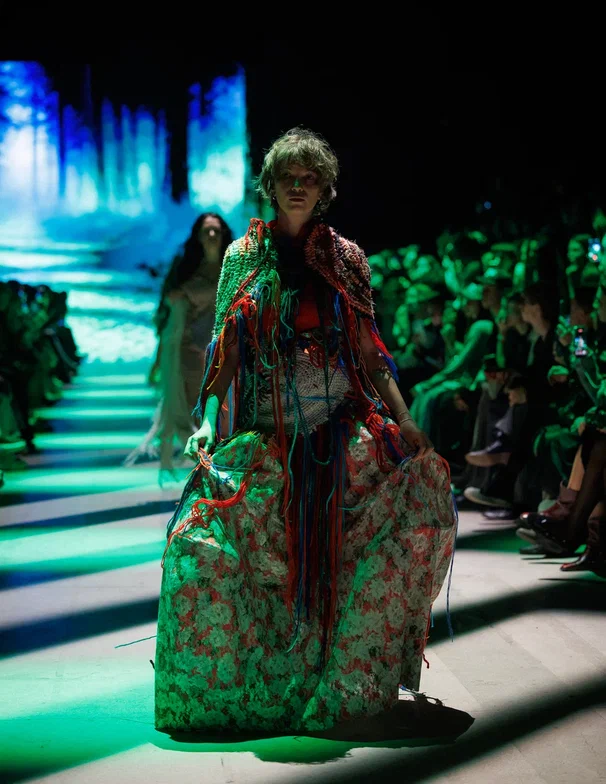
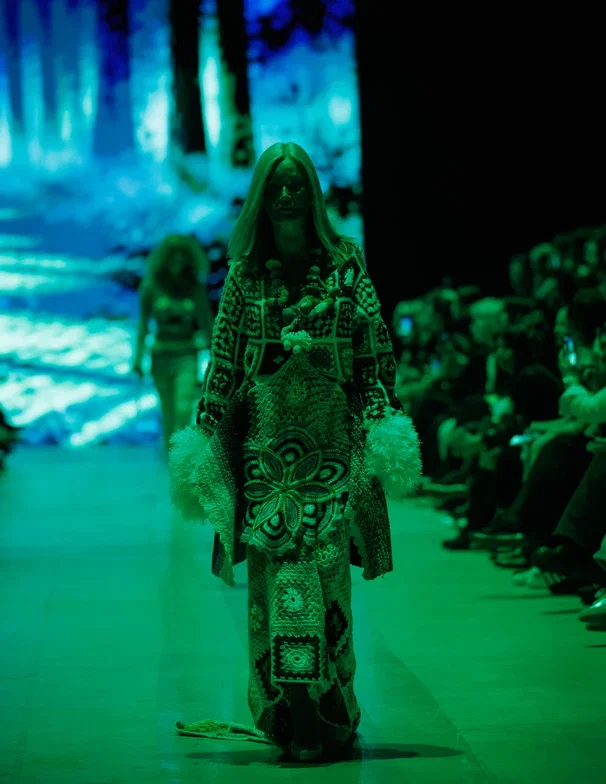
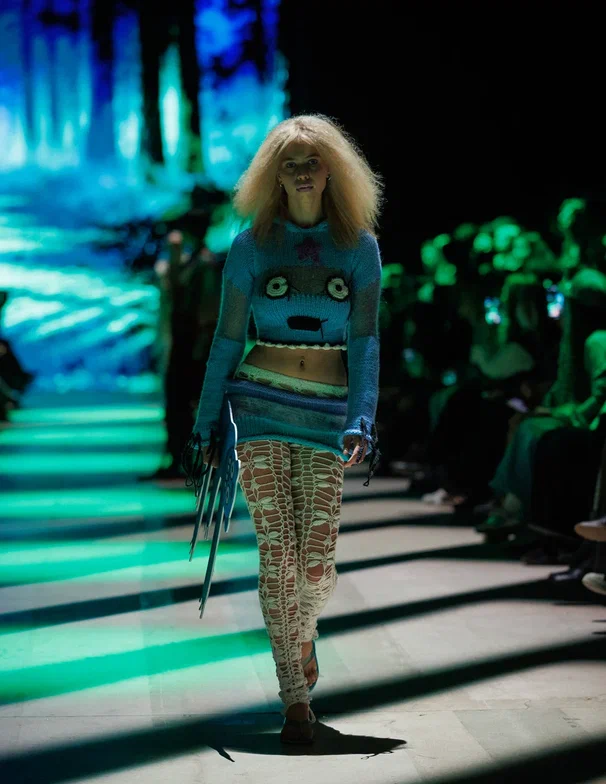
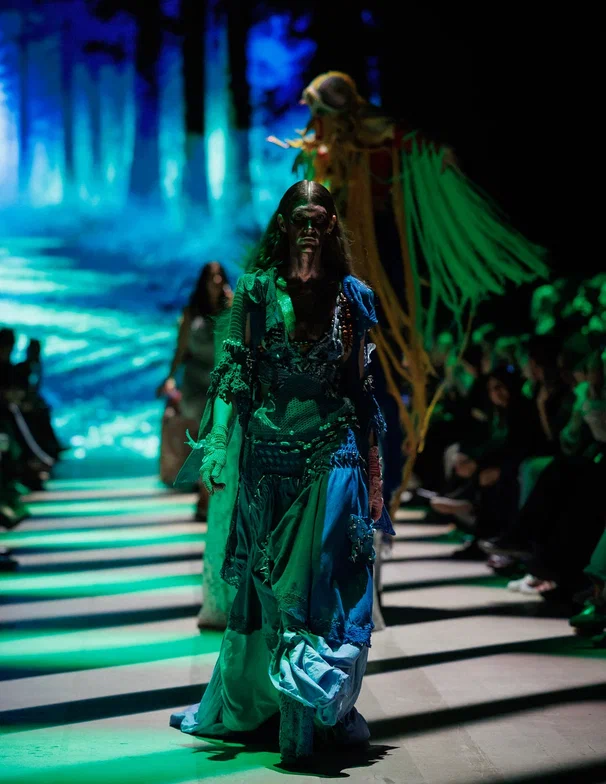
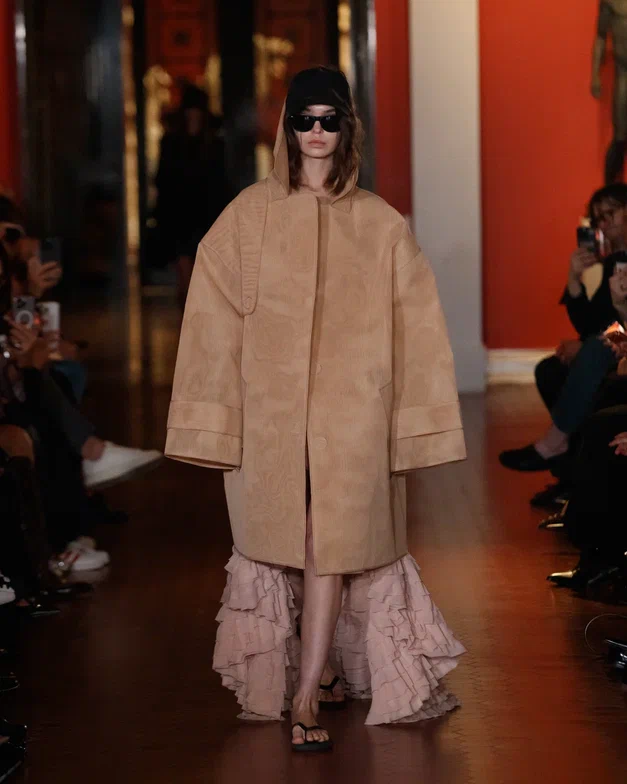
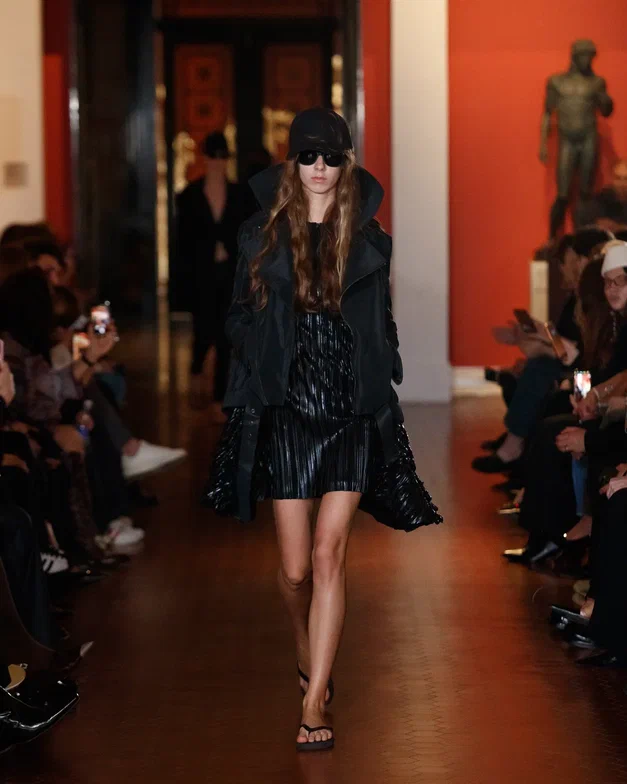
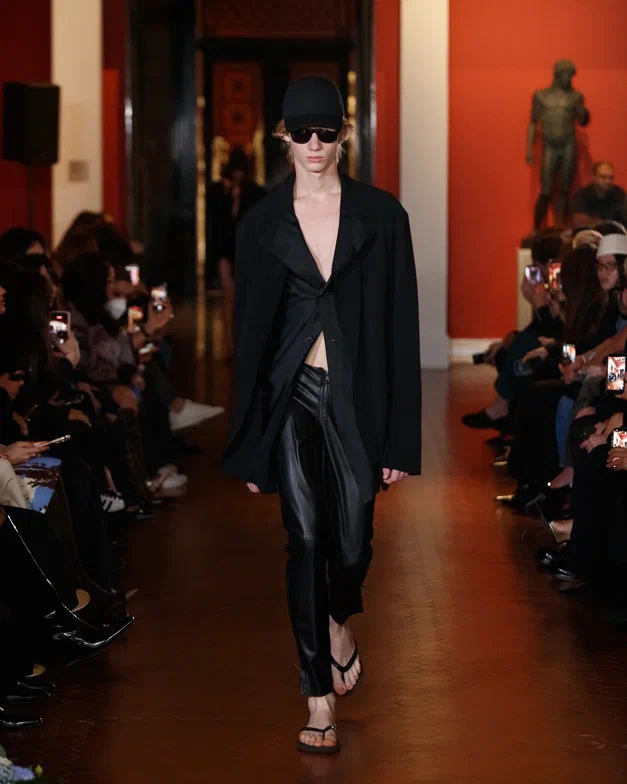
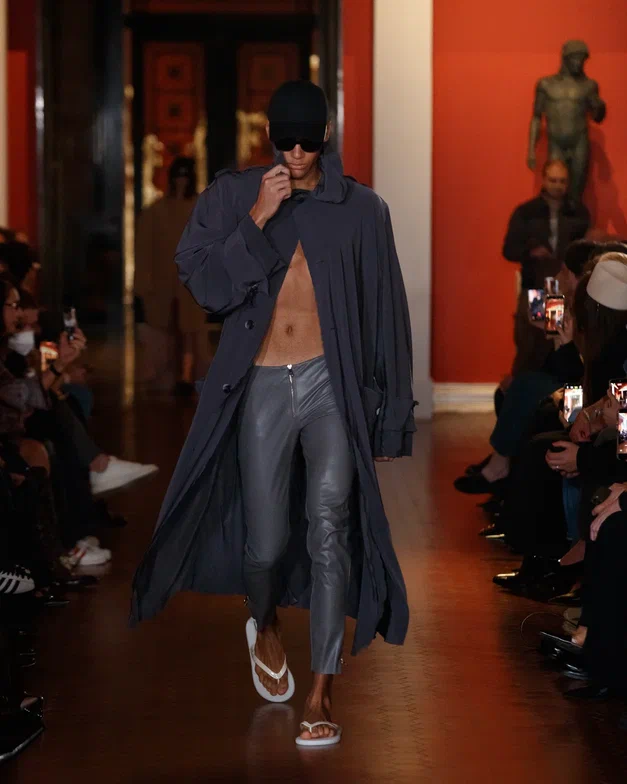
Another show took place at the Pushkin State Museum of Fine Arts, where Viva Vox (Moscow) presented its collection. The red walls, sculptures, and the museum’s architecture itself became part of the show, making the clothing look completely different from how it would on a conventional runway. Black, long one of Viva Vox’s signature colors, once again came to the forefront: elongated silhouettes, leather, bodysuits, loose coats, trench coats with stand collars, and dark sunglasses. Sandy brown and beige tones provided a softer counterpoint. The designer combined eveningwear with street-style details, and this contrast worked particularly well in the museum setting.
The fourth day opened with a show by the Institute of Business and Design B&D (Moscow). First-, second- and third-year students and graduates of the Costume Design and Art Fashion programs offered their own interpretation of Russian identity. The runway featured asymmetrical corsets, regal hemlines with geometric peplums, blouses with statement sleeves, jellyfish dresses and deconstructed shapes. Color combinations played a particularly important role: apricot with pomegranate, tangerine with royal blue, wine with fuchsia, and aubergine with coral and moss green. One graduate, taking part in the show for the third time, commented: “This event gives you confidence, and the whole atmosphere is incredibly inspiring. You understand why you make these clothes, because clothes are meant for people.”
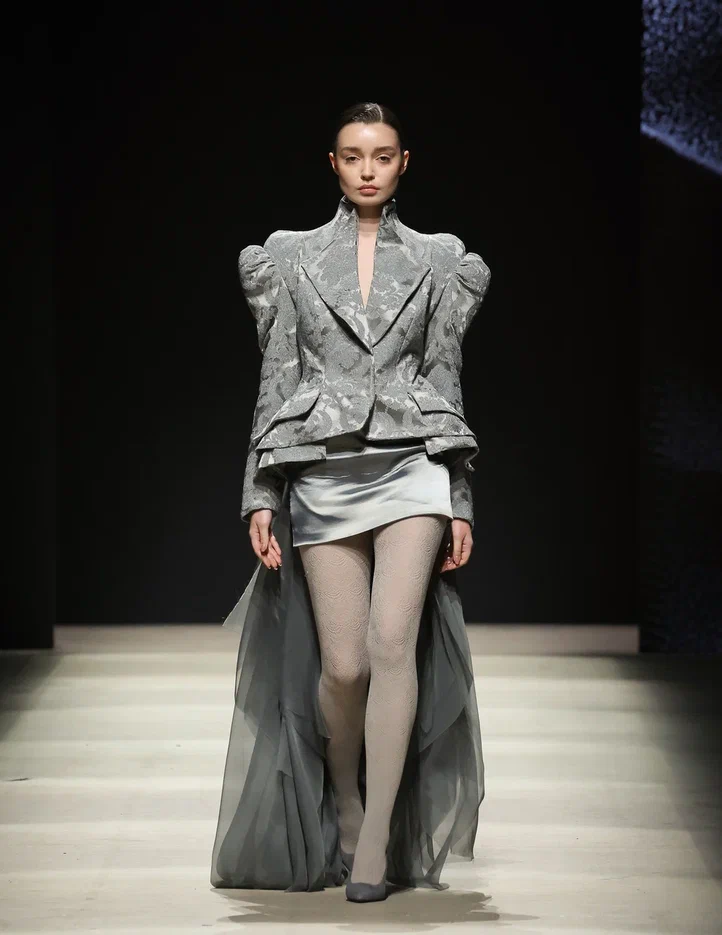
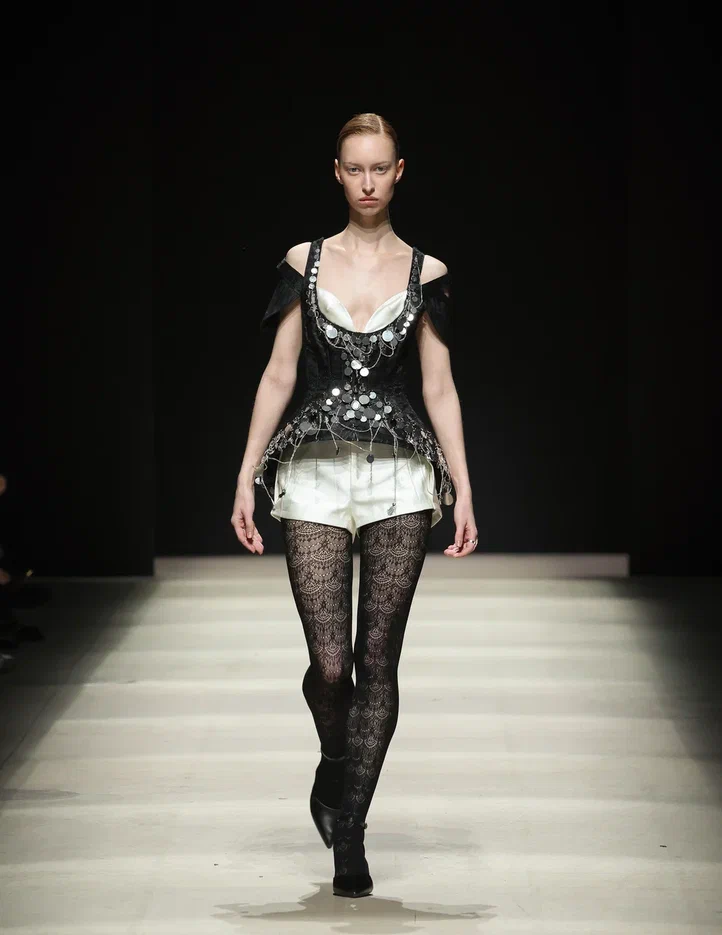
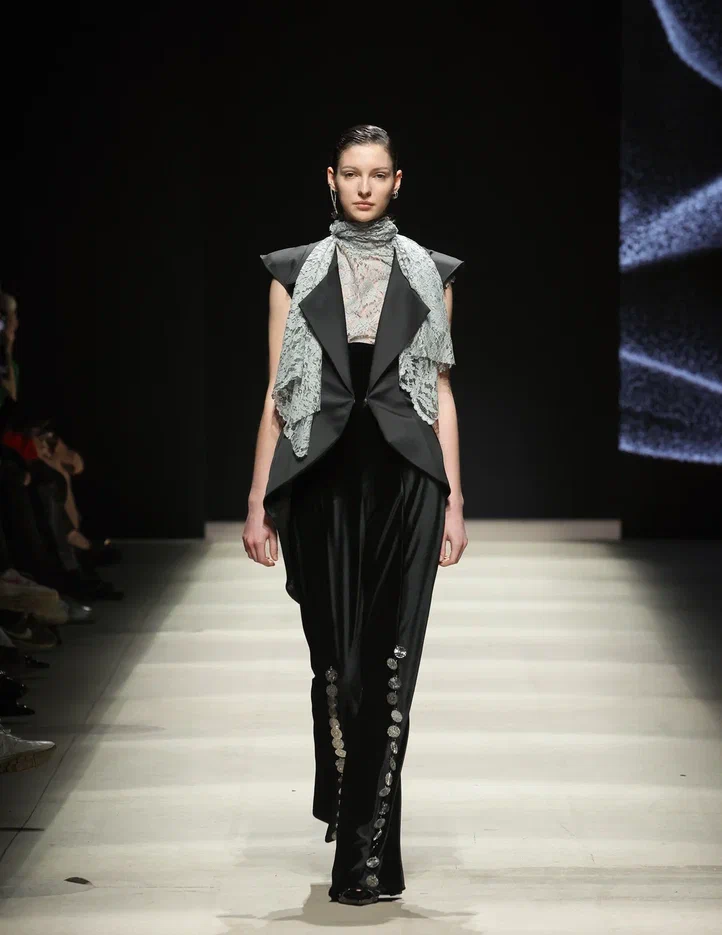
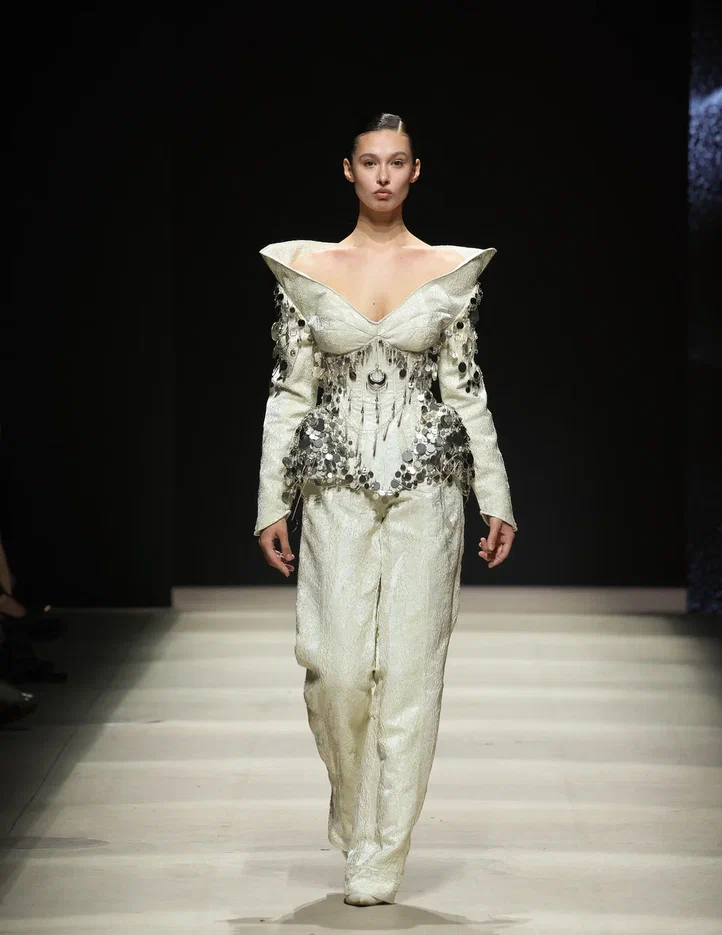
Next, Ónoma (Moscow) presented Incognito, a collection about a heroine trying to escape reality and find herself amid the noise of the digital age. Sandra Gutsati plays with shapes and materials: bombers and trench coats move beyond their conventional functions, while layering and transparency play leading roles. The collection includes layered column dresses, “naked” tops, sheer hemlines, bloomers and almost invisible capri pants, with some looks complemented by mesh masks. Materials range from silk and synthetic organza to suiting wool, cotton and mesh. The looks also features a signature shadow-weaving technique, using satin silk, chiffon, and other fabrics to create textured patterns that resemble embroidery. “This is our first time taking part in the show program. [We have participated in the Pop-up Shop before], but I already feel that we have created a much more ambitious collection for the runway, with many new pieces we have dreamed of making for a long time. It is a step forward and an incentive to expand,” the designer says. Gutsati also highlights the impact of the Pop-Up Shop: “We had very good sales at Moscow Fashion Week Pop-Up Shop. The energy and the budget it generated were enough to make this collection.”
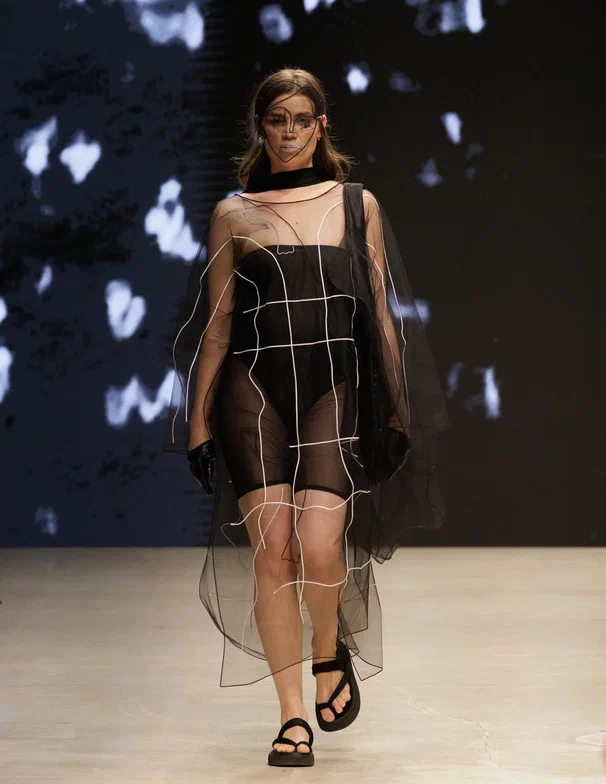
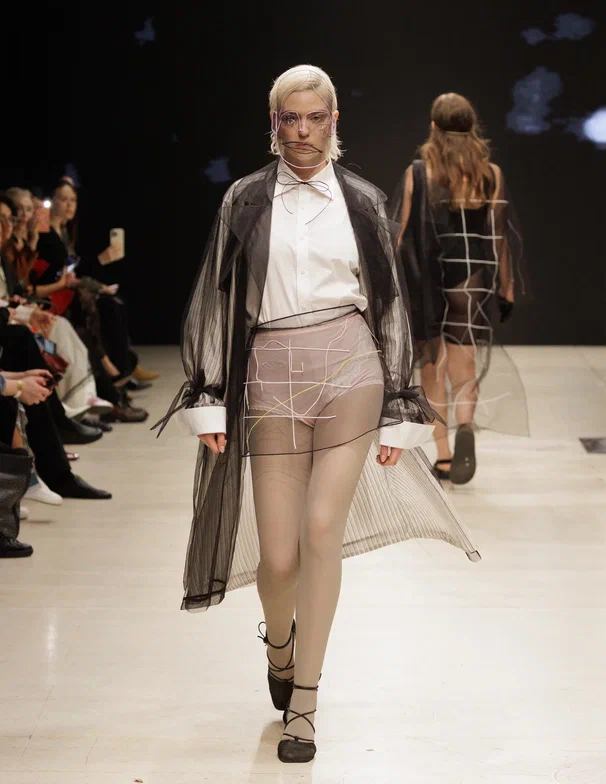
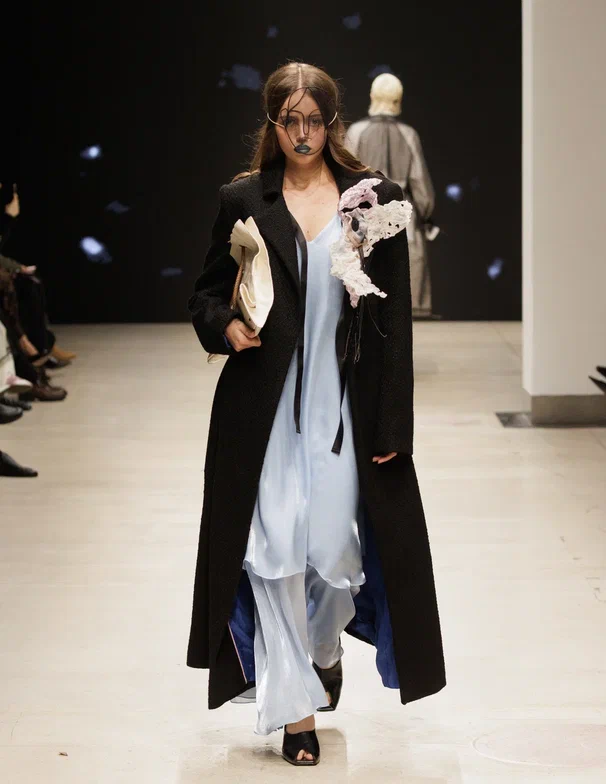
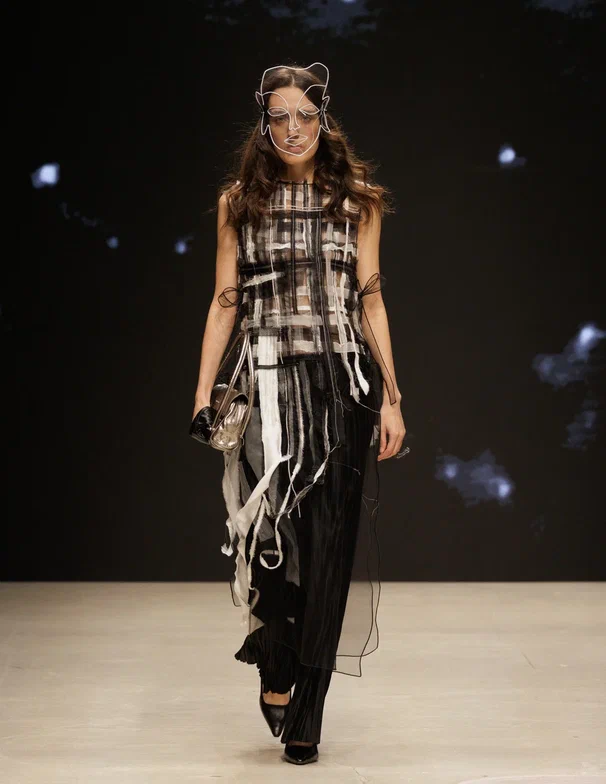
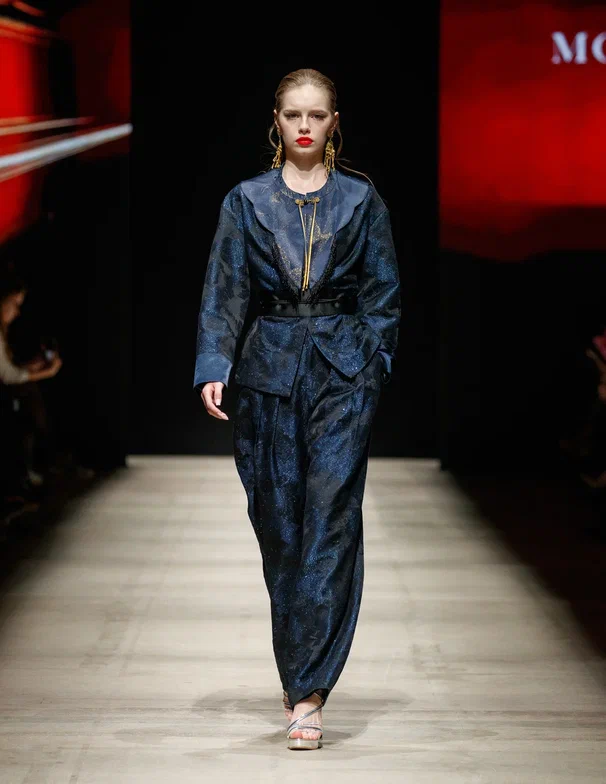
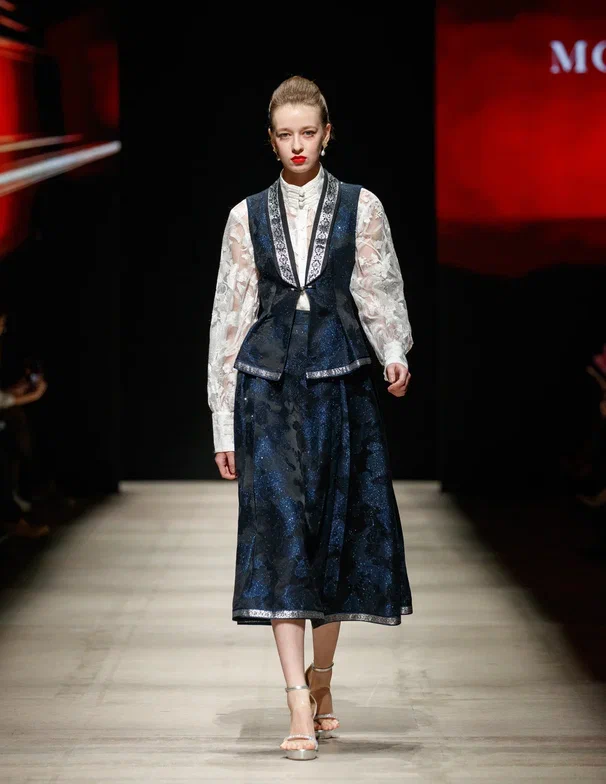
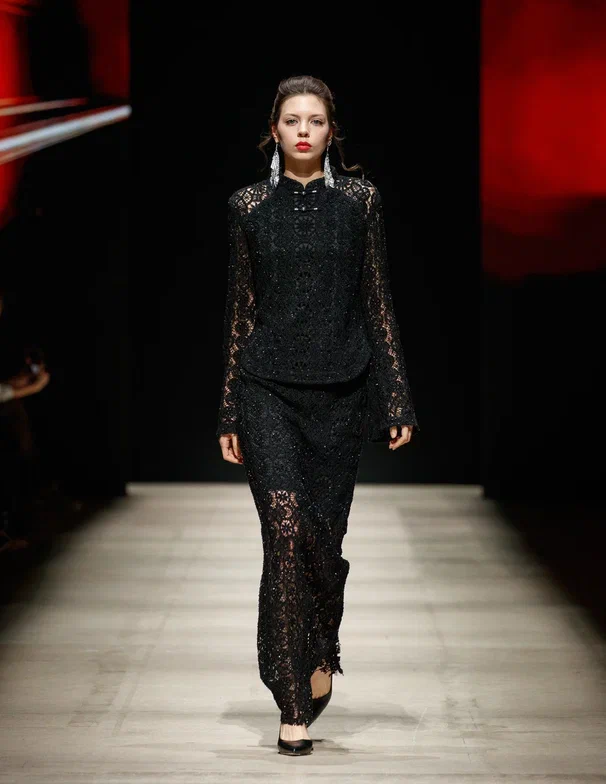
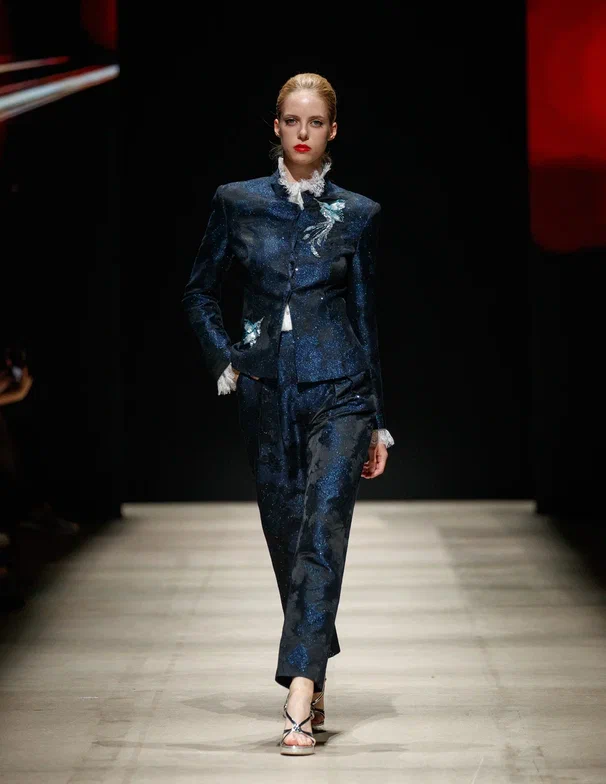
Chinese brand Momiwei presented its Light Sequence collection. Classic Eastern aesthetics merged with the image of the modern woman, while ancient motifs were given a fresh interpretation. Light served as the collection’s central symbol – a metaphor for awakening, courage and inner awareness. Qipao dresses, vests and blouses echoing the silhouette of hanfu, relaxed trousers and changpao dresses were made from velvet, xiangyunsha silk and acetate. “This is our first show at Moscow Fashion Week. For our brand, this is our very first international cross-border show. So this time we will carry out a major media promotion, reporting on everything here in Moscow, the welcoming people, and the beautiful environment,” designer Wei Shan says.
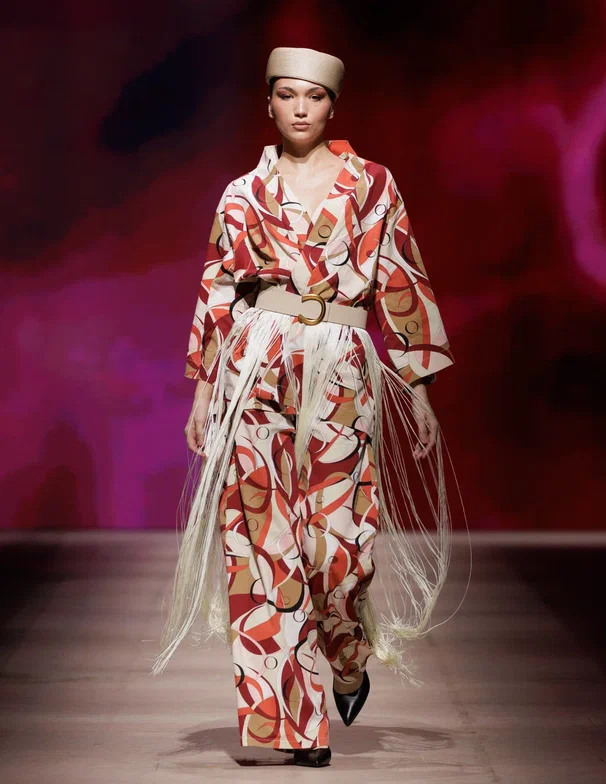
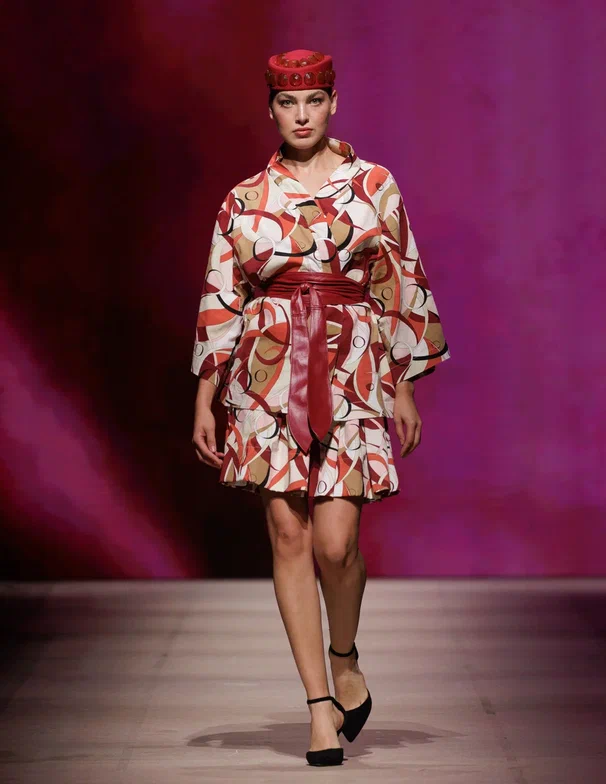
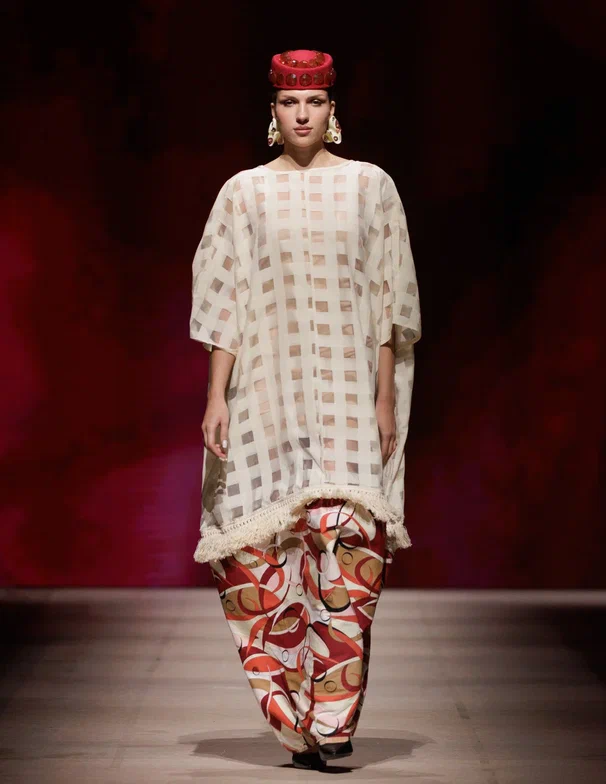
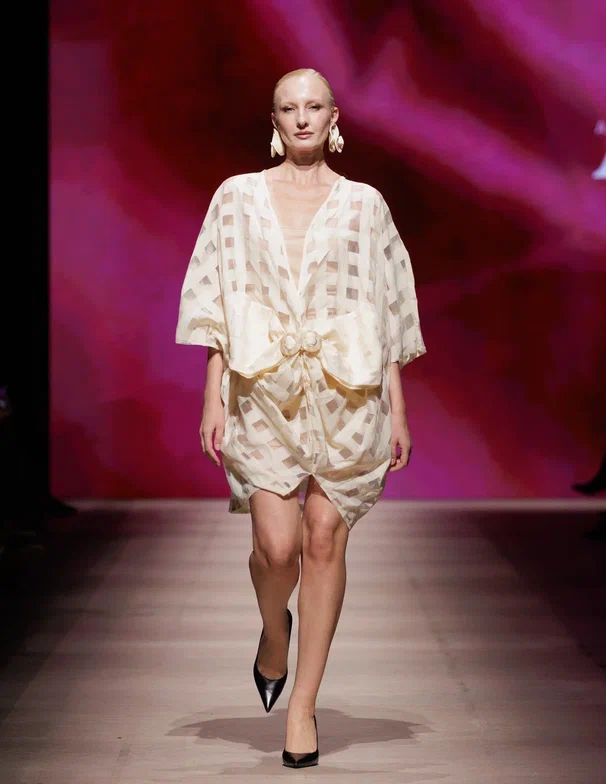
US brand Amirah Creations presented a collection centred on individuality, cultural influences and contemporary femininity. Flowing kimonos and kaftans appeared alongside figure-hugging dresses, suits and statement outerwear. Floral motifs, bold prints, denim, leather, burgundy and soft pink set the mood, while wide-leg trousers and layering added movement. Pillbox hats, bold jewellery and hand-painted earrings completed the looks.
One of the day’s most unusual events was the show by Motorica (Moscow), a company specialising in assistive technology and medical cybernetics. The collection blurs the line between everyday and adaptive clothing, bringing together three lines – Move, Feel and Live. Thoughtful cuts, solutions for wheelchair users and features that make dressing easier for people with prostheses are integrated into the designs so seamlessly that the garments look like a contemporary everyday wardrobe. The runway featured puffer bombers, capes, relaxed co-ords, business suits, floor-length dresses, romantic blouses and loose-fitting shirts. “As a designer, I wanted to make this clothing line beautiful and fashionable, so that the people who wear it feel confident in their everyday lives,” explains designer Nadezhda Kupreeva. In developing the collection, she interviewed prosthesis users and studied the difficulties they face when getting dressed.
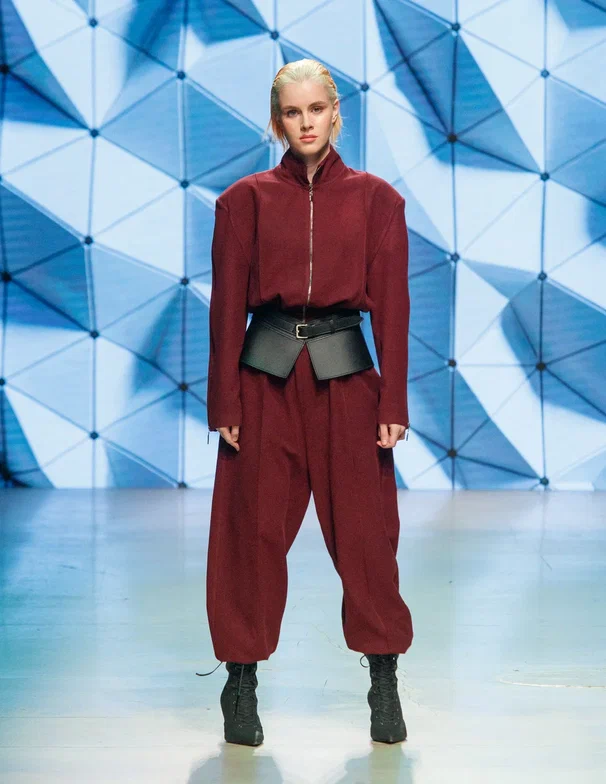
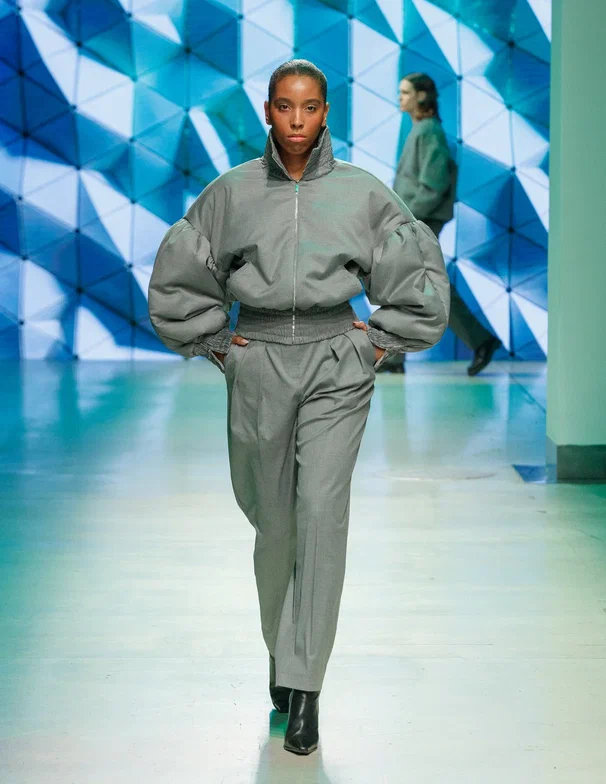
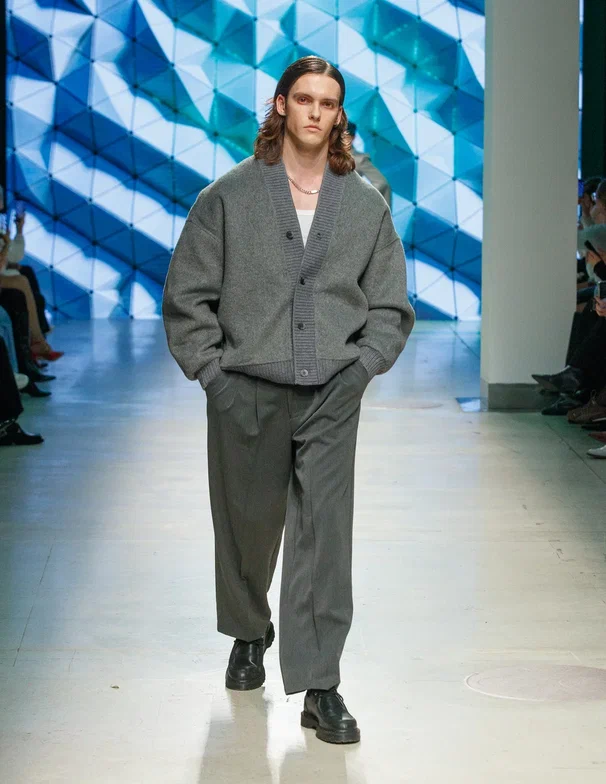
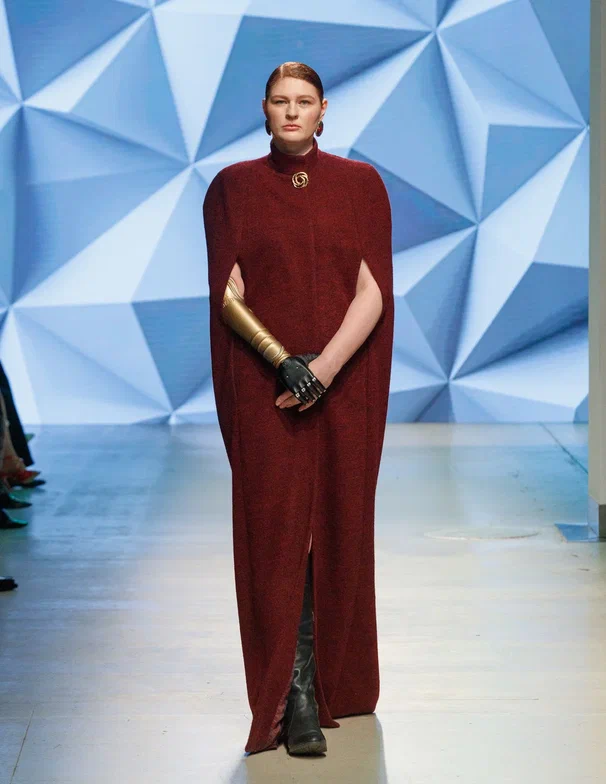
Spanish designer Miguel Llopis presented Valentia, a collection in which historical heritage meets contemporary fashion. The inspiration came from Mediterranean aesthetics, classical architecture and traditional dress, with corset silhouettes referencing Valencian tradition serving as the main focal point. Structured shapes were paired with fluid lines and expressive prints, while most pieces are made to order or produced in small runs. “There is very high media visibility here. Having foreign press from abroad also makes a difference because we become better known all around the world,” says Miguel Llopis. According to the designer, participating in the event is already bringing tangible results: interest in his dresses is growing, and opportunities to present his collections in different countries are emerging.
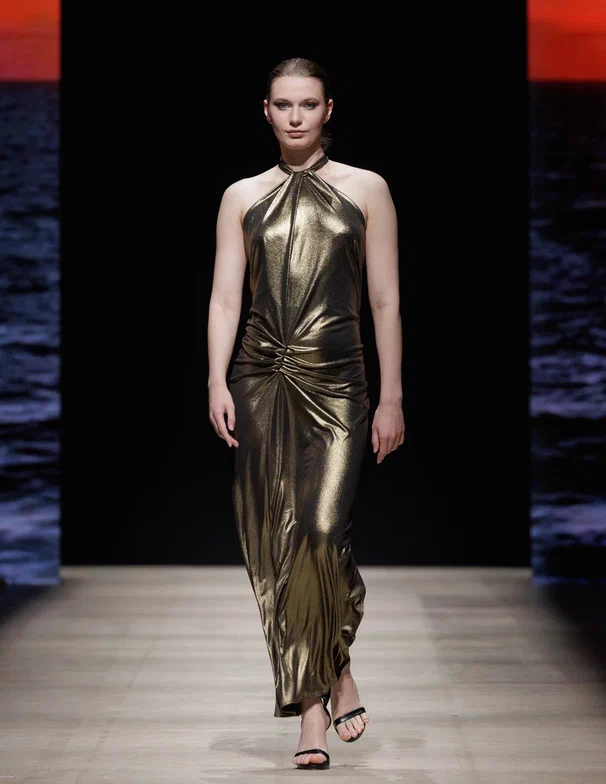
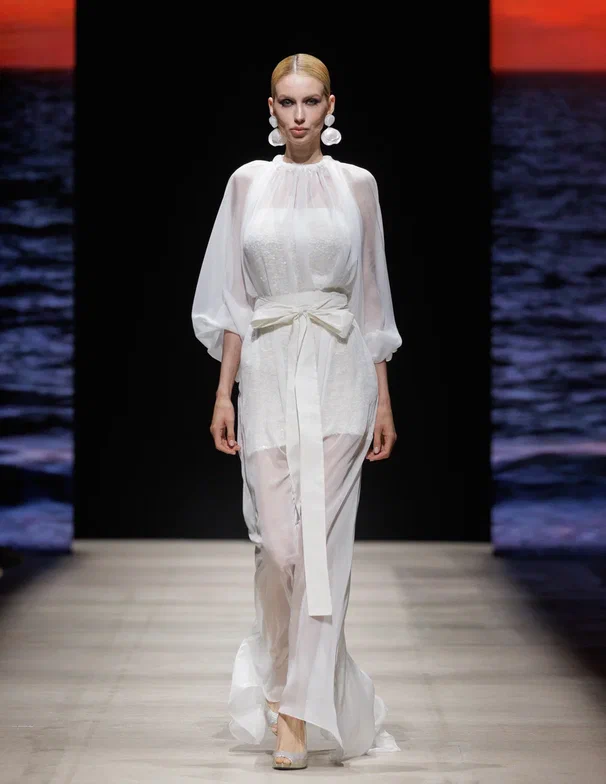
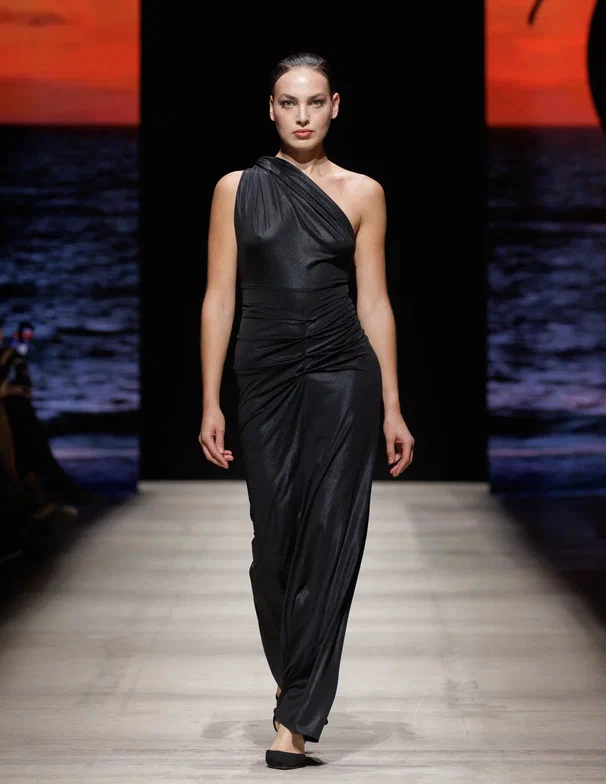
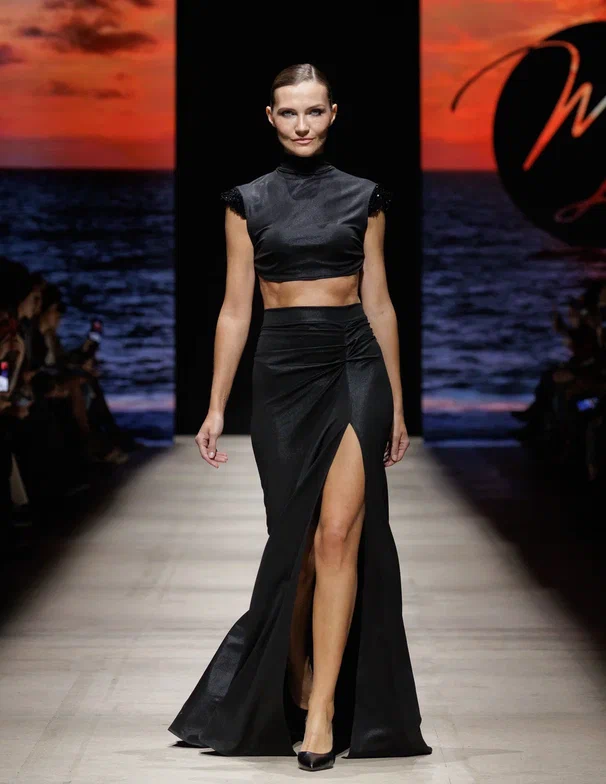
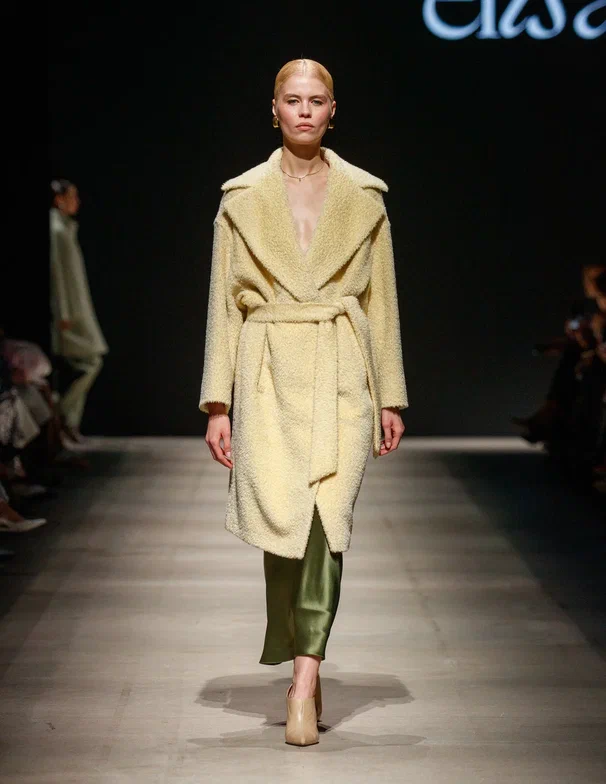
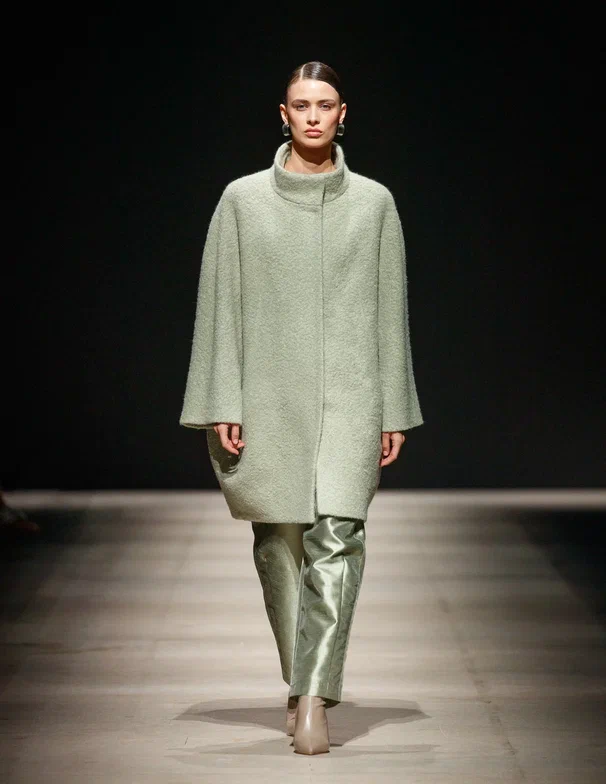
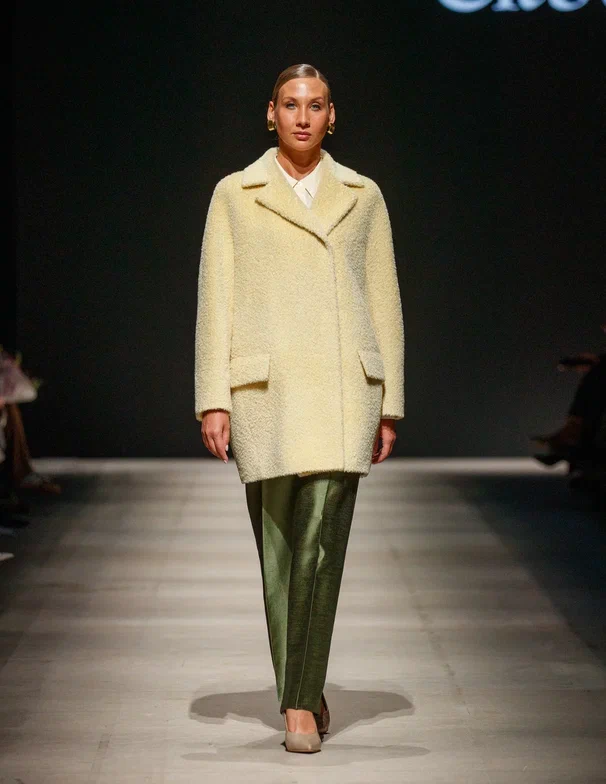
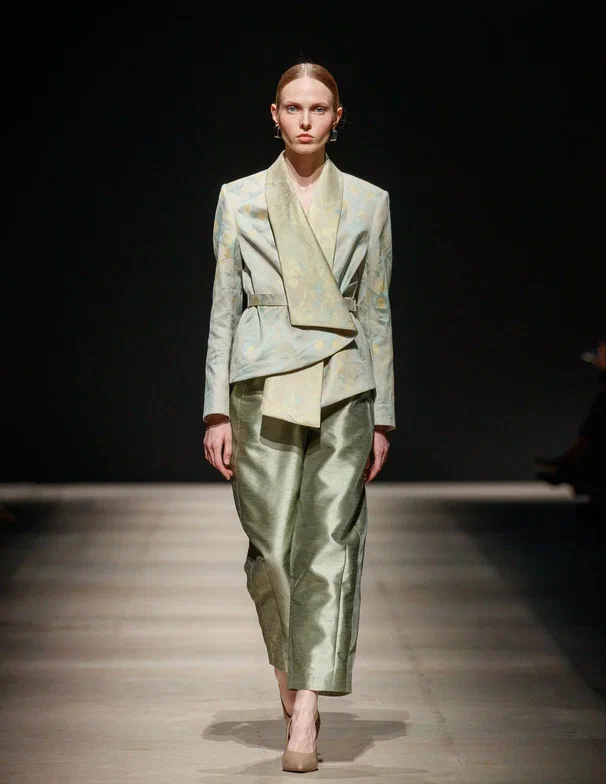
St. Petersburg-based brand Elisabetta presented its ‘Wind of Change’ collection as an ode to the paintings of Claude Monet. The palette references his iconic ‘Water Lilies’ series, with pink, deep jade, and green set against rich blue, white, and gray. 1960s-inspired silhouettes received a contemporary interpretation, while plush outerwear and feather coats added an airy quality to the collection. Brand founder and designer Alena Chuprina admits that taking part in Fashion Week has raised the bar for her as well: “I can’t stop now. And the collection is gaining more and more couture pieces.” Among the tangible results, she cites increased brand recognition, a growing number of retail customers in Moscow, and the emergence of international partnerships.
Next, Les Noms, Katami, and Lesia Lisun took to the runway together. Les Noms (Krasnodar) drew on the material culture of 19th-century Kuban, combining the practicality of Cossack costume with vintage fabrics, embroidery, and voluminous silhouettes. Moscow-based Katami presented its ‘Imprint’ collection – a story of the transformation of a blank sheet into a finished work, told through loose Asian-inspired cuts, architectural forms, and a palette ranging from white to the final red. Lesia Lisun’s ‘Severina’ collection (Moscow) continued her exploration of hand weaving and avant-garde cuts, drawing inspiration from northern wooden architecture. “We’ve just come off the runway. We stood there praying that everything would go perfectly. But I really hope this will lead to some great communications and useful connections,” the designer said after the show.
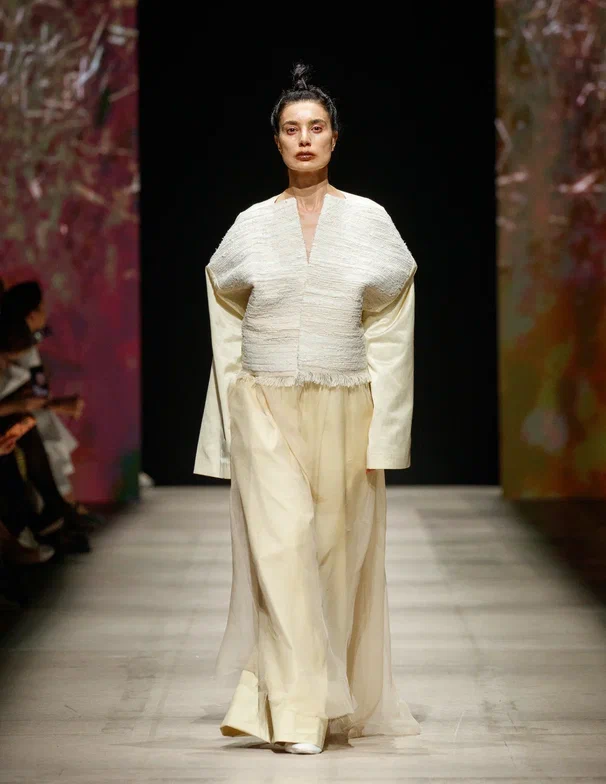
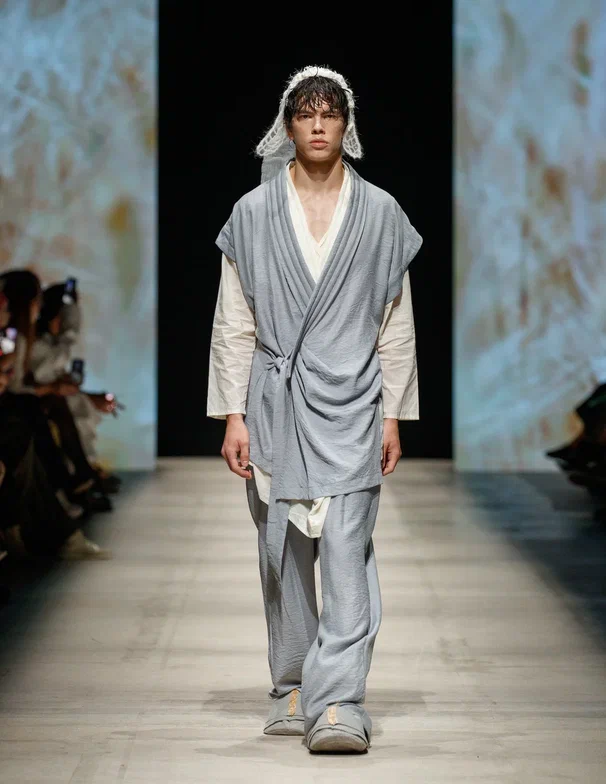
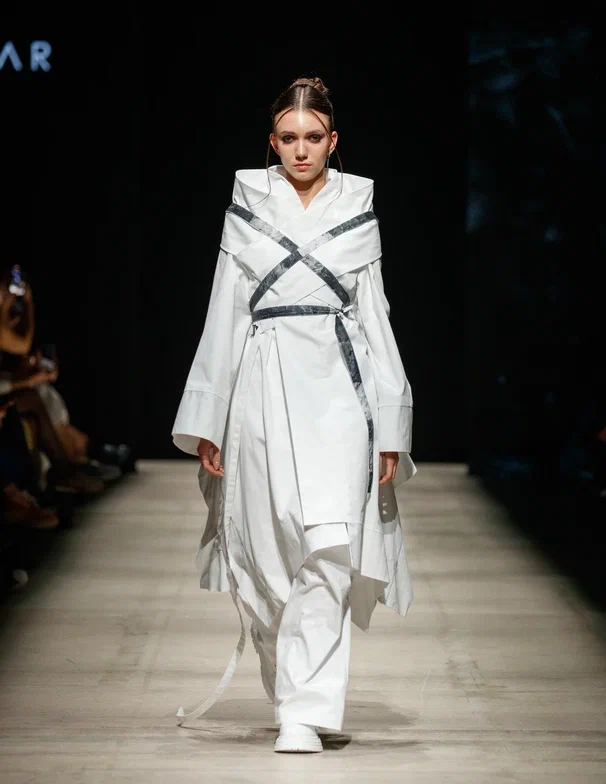
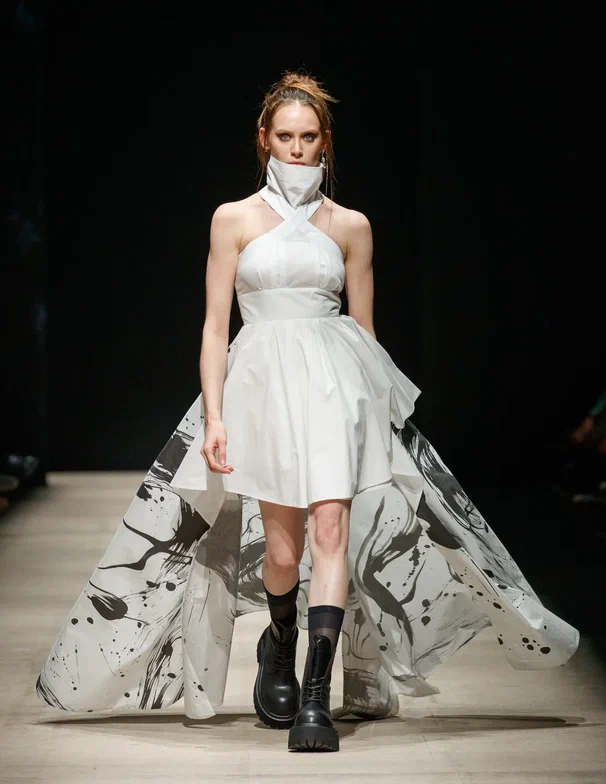
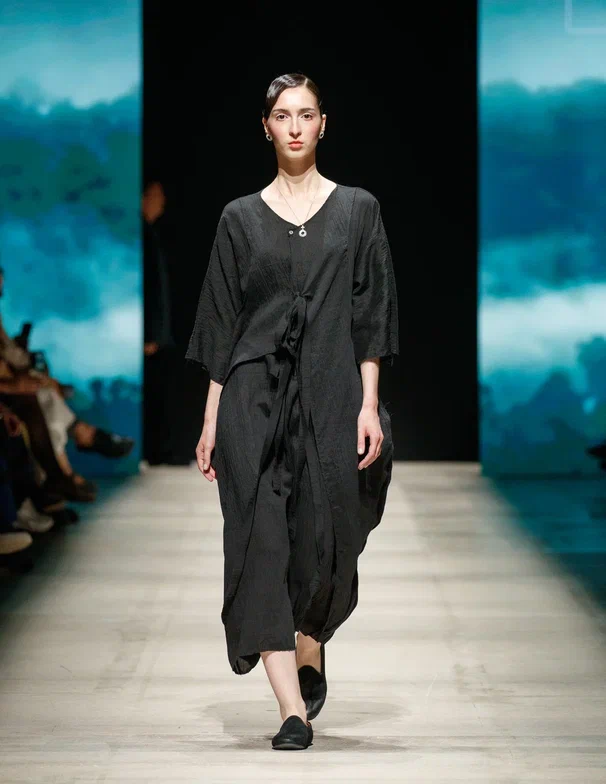
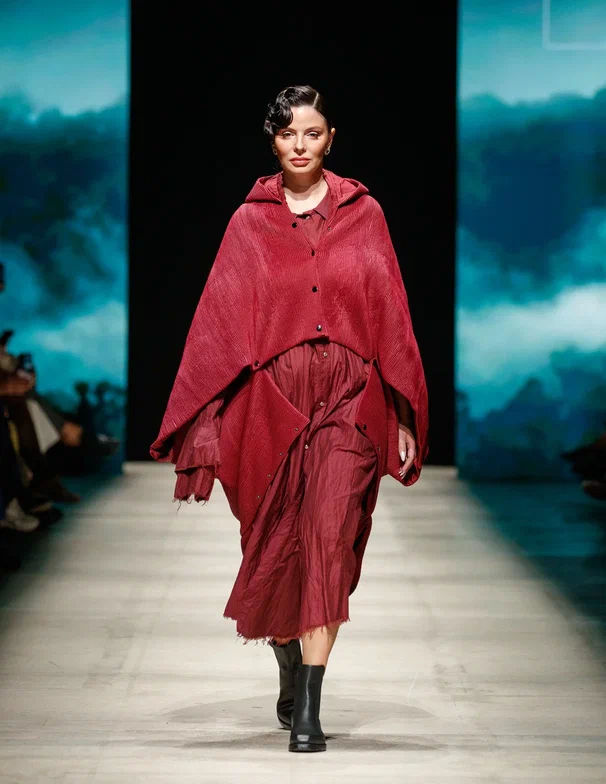
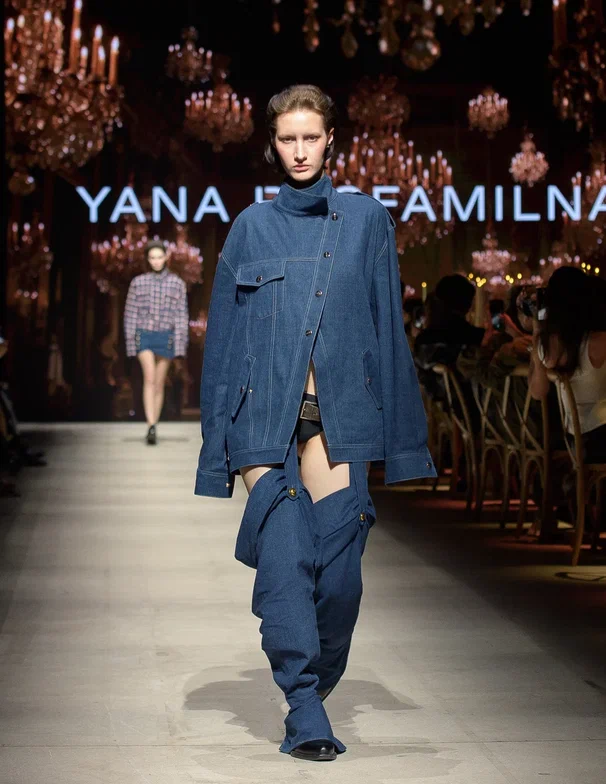
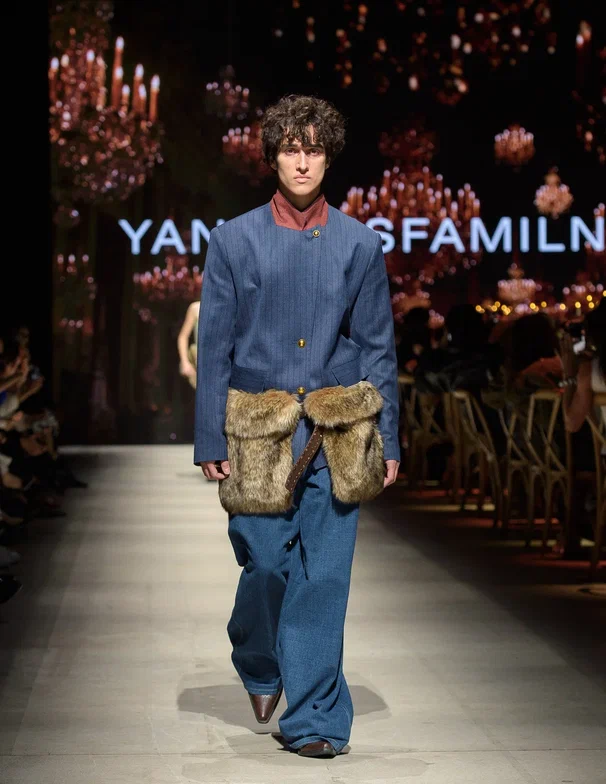
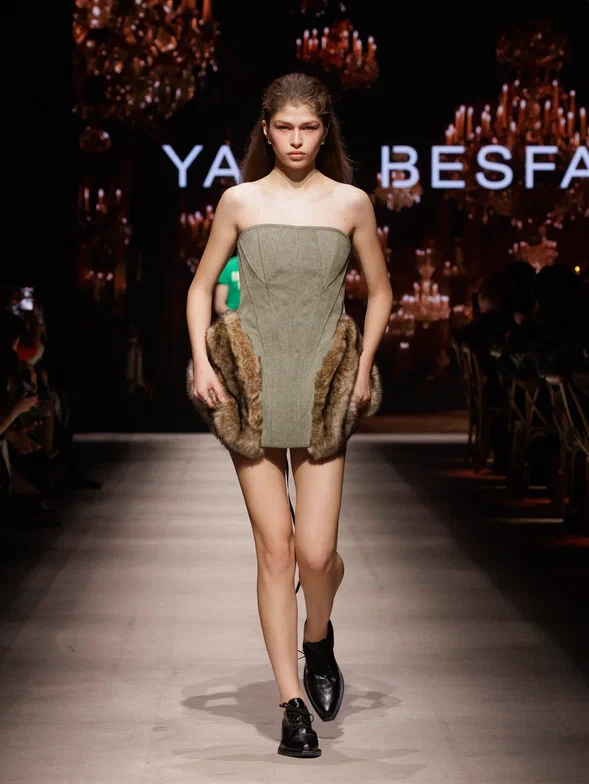
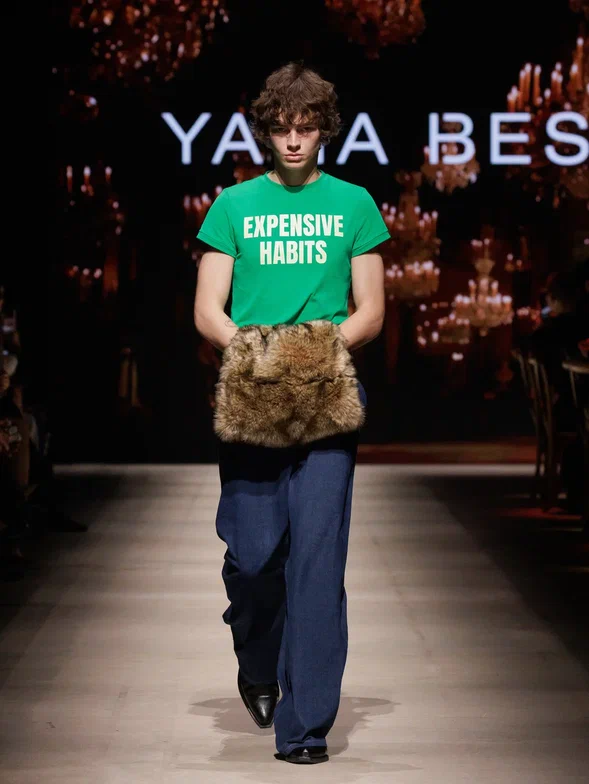
Yana Besfamilnaya (Moscow) brought Rock’n’Royal to the runway – a story of a meeting between the romantic 18th century and rock ’n’ roll. Military uniforms and ball gowns were paired with fitted trousers, T-shirts with bold prints, distressed plaid fabric, rocker pins, rugged belts, and cowboy chaps. Yana Besfamilnaya calls taking part in Moscow Fashion Week “a huge boost”: “This is probably the best thing we’ve done in terms of marketing. In terms of value for money. Really, it’s perfect.” According to her, the effect is also evident in the numbers: brand recognition has grown, while regional partners are reporting increased sales.
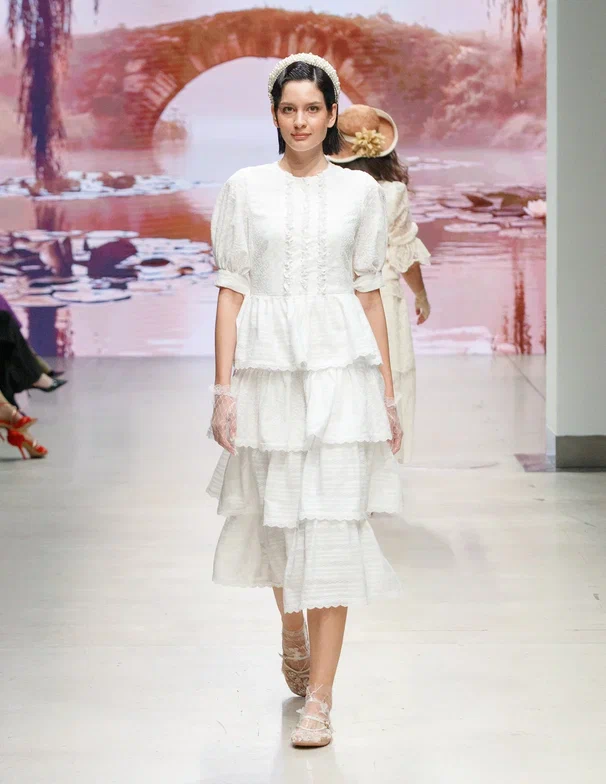
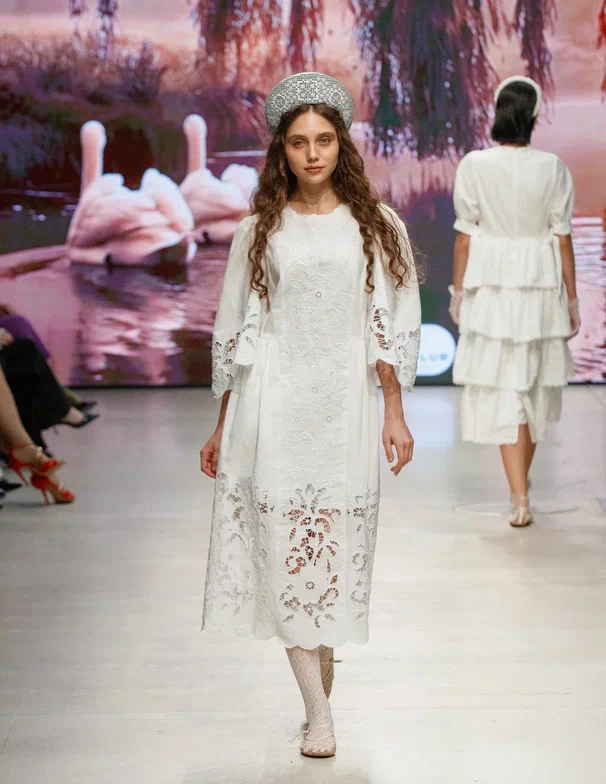
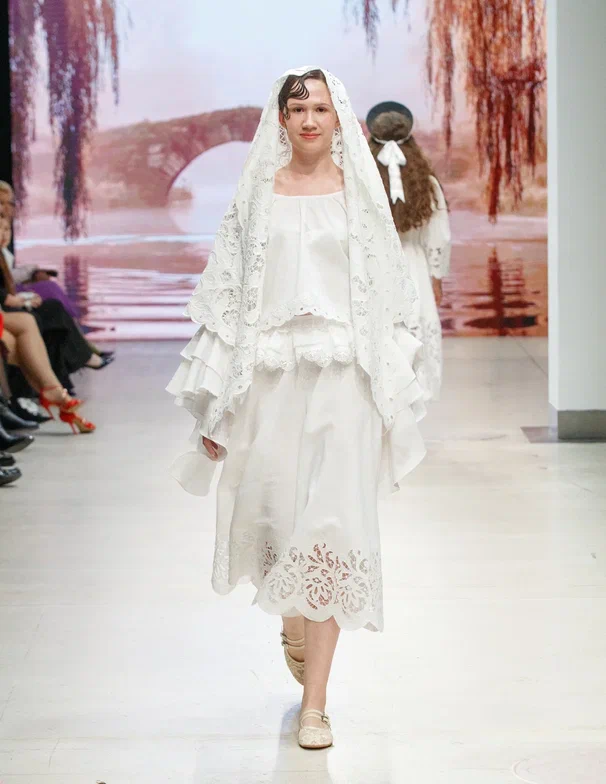
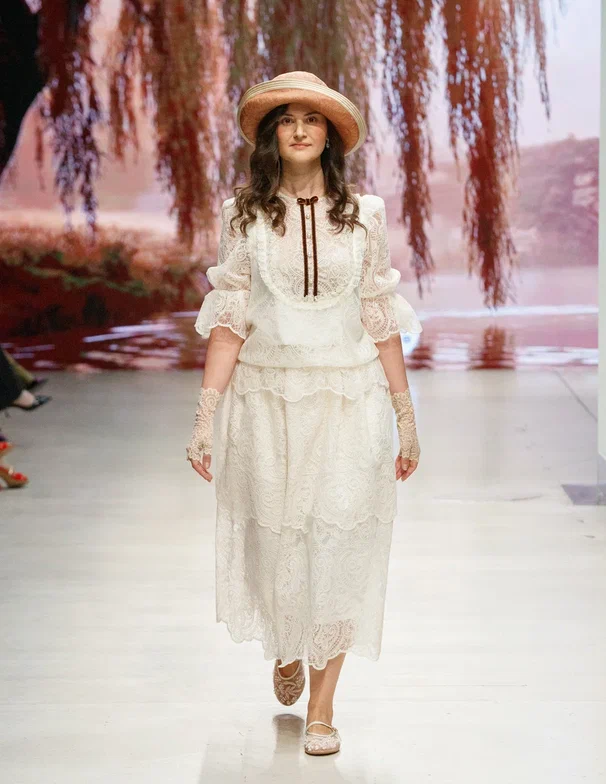
Kholuyskaya strochka (Kholuy), in collaboration with the Kosygin State University of Russia, presented a collection that gave Russian wedding traditions a contemporary interpretation. The entire line was rendered in white, from maxi dresses to lightweight midi styles featuring Kholuyskaya strochka. Veils, jeweled kokoshniks, headbands and boater hats, puff sleeves, tiered skirts, capes, and openwork textures appeared on the runway. For the project, this was its runway debut. “It is a tremendous responsibility and an honor for us to be appearing at such a great venue,” says Ilya Semenov, the project’s CEO and designer. Among the first results, he notes a noticeable increase in followers and growing sales.
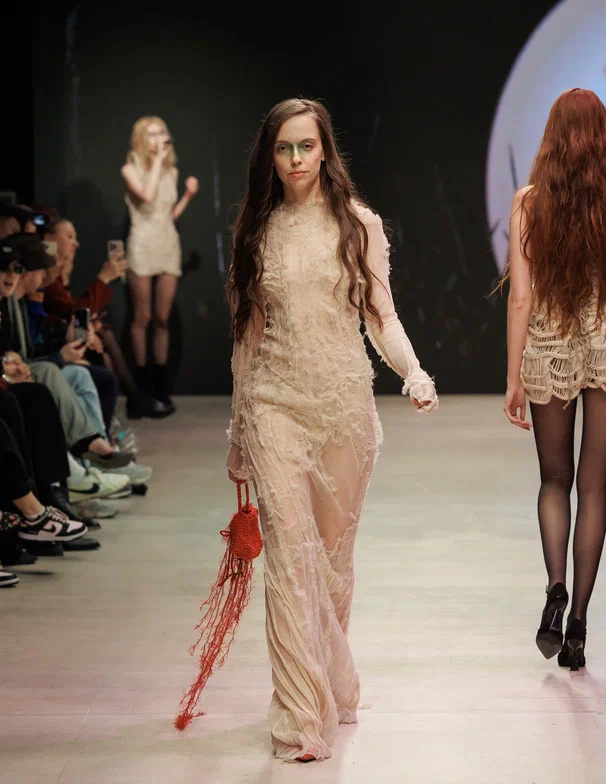
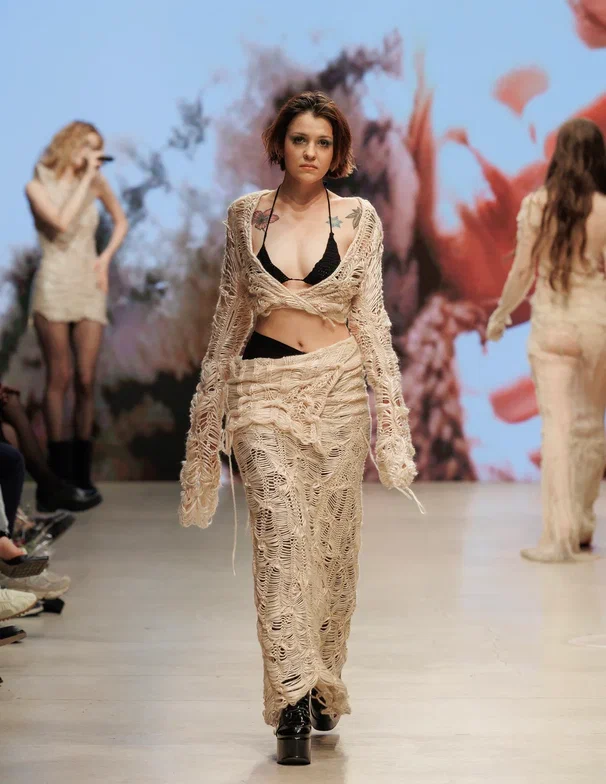
Two designers, Darya Lozis and Alexandra Dolgopolova, worked on the new collection by Das (Moscow). At the heart of the project is a conscious approach to clothing: all the pieces are made from recycled materials. A green scarf reminiscent of moss, a spiderweb-inspired dress, deconstructed shirts, skirts, sweaters, and corsets were brought back to life using old upholstery, denim, and mass-market garments. “It’s always a really great PR experience. With every Fashion Week, we try to do something bigger, better, and better,” say the brand’s founders.
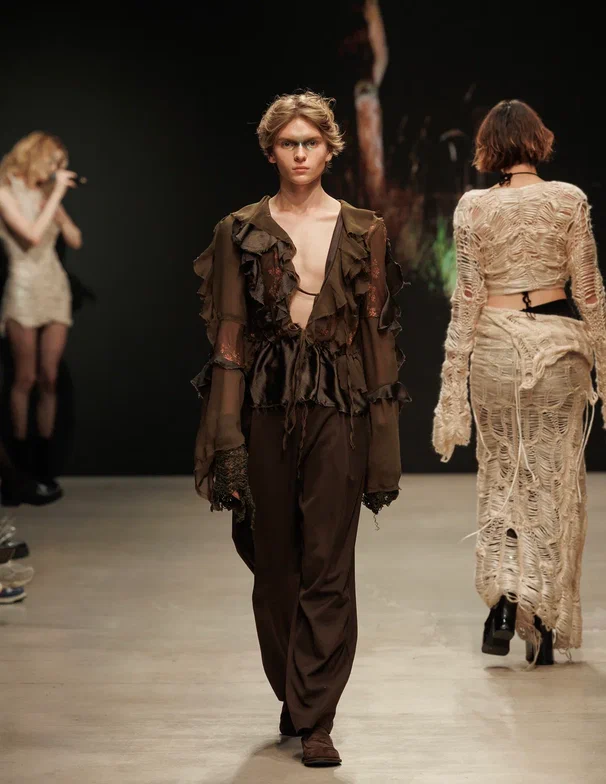
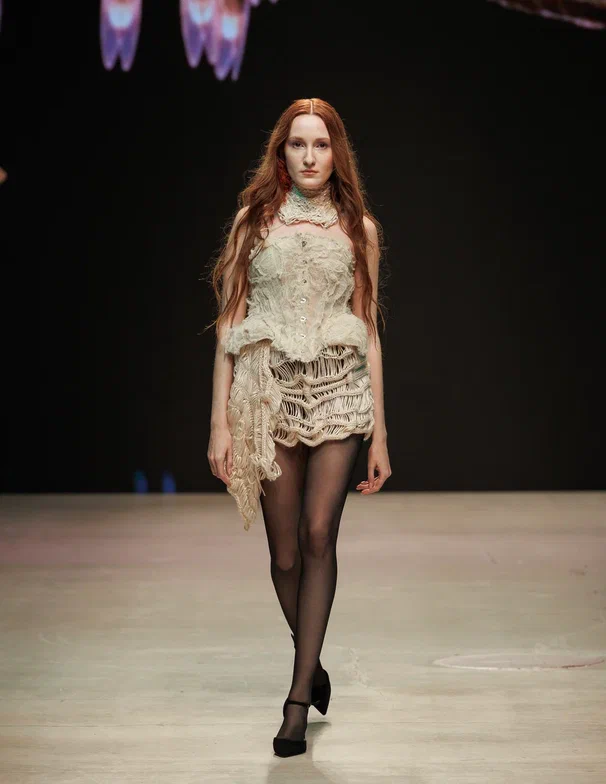
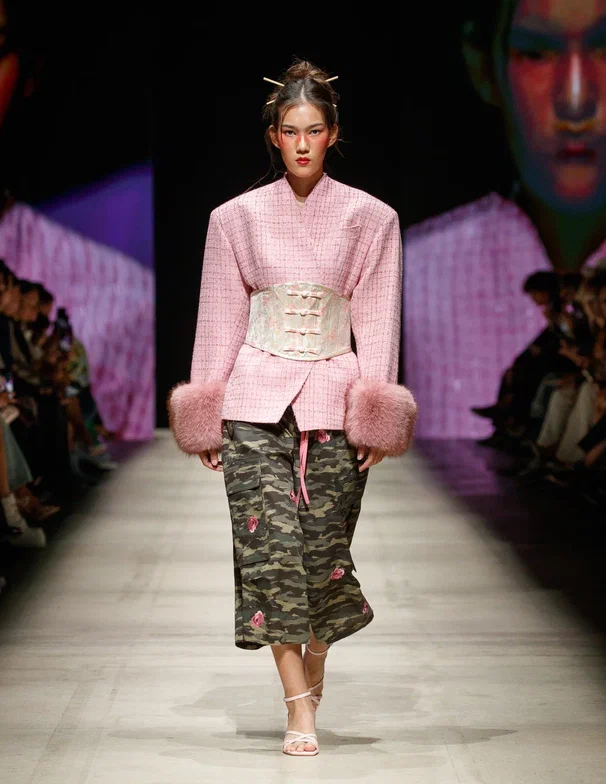
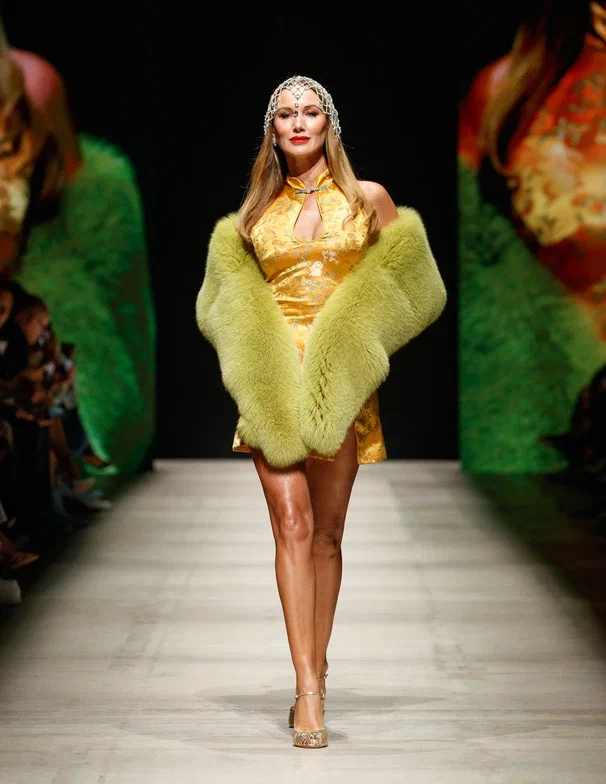
Masterpeace (Moscow) closed out the fourth day with its ‘Silk of Time’ collection. Evgenia Linovich drew on the aesthetic of Wong Kar-wai’s ‘In the Mood for Love’ – a film in which clothing becomes a full-fledged part of the narrative. The strict geometry of the kimono met the fluidity of the sari, stand-up qipao collars, and obi belts. These elements appeared in mini skirts and corsets, as well as cargo pants with Chinese-style hand embroidery and business suits. Heavy, hand-embroidered silk was paired with jacquard and brocade, fur, and feathers. “I felt like a producer and director to some extent, because fashion shows were unfamiliar territory for me before, and now Fashion Week has given me this opportunity,” says the brand’s owner and creative director. She sums up the main result in the most concrete terms: “We are growing: our turnover is growing, our team is growing, our sales are growing. It seems to me that this is the only measure by which a commercial brand can really be measured.”
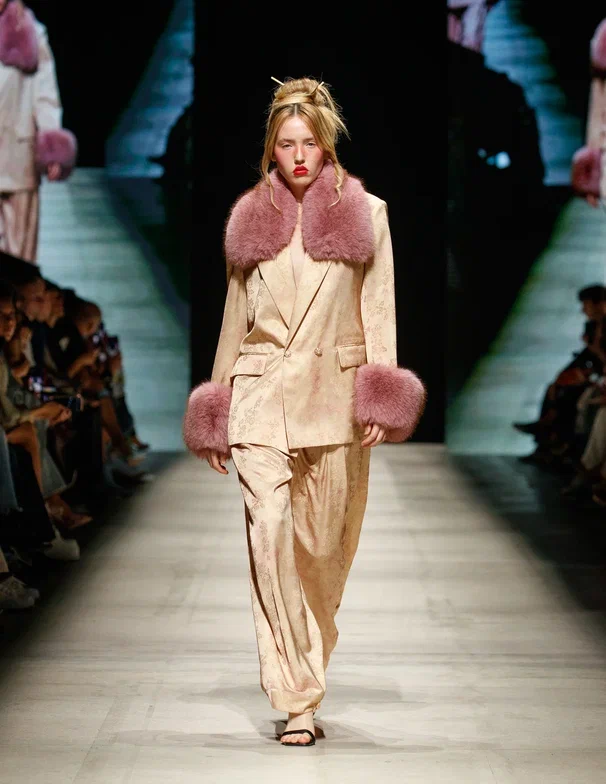
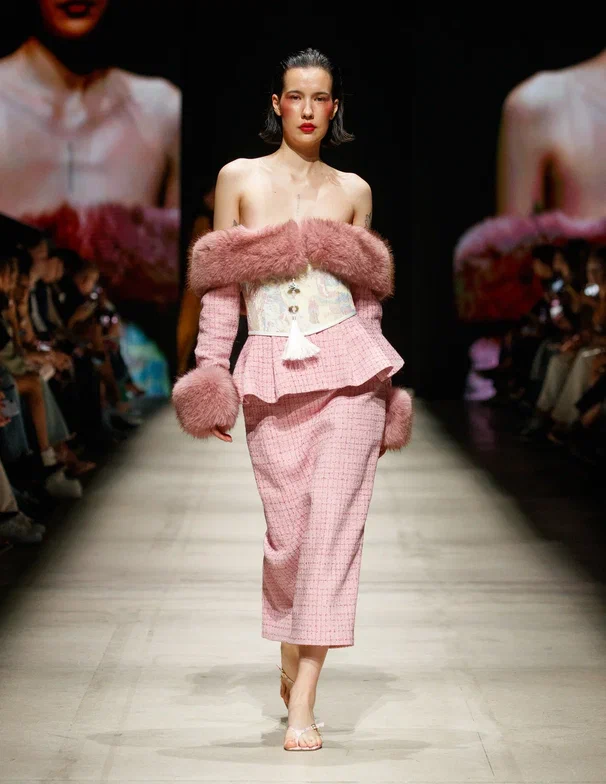
Tver-based Unke presented its ‘Remembrance’ collection. The theme of memory was explored through sheer fabrics, layering, checks, stripes, and washed and waxed corduroy. These were complemented by technical materials, puffer jackets, leather bomber jackets, and relaxed suits. According to founder Yulia Privalova, the shows noticeably boost interest in the brand, with demand growing both for new pieces and for items from its regular collections: “Everyone writes to us, congratulates us, reposts, and tags us. […] It is definitely a huge surge. This is very important to us, and we are grateful for the opportunity. We receive requests for pieces after the show, while people also look through items from our regular collections.”
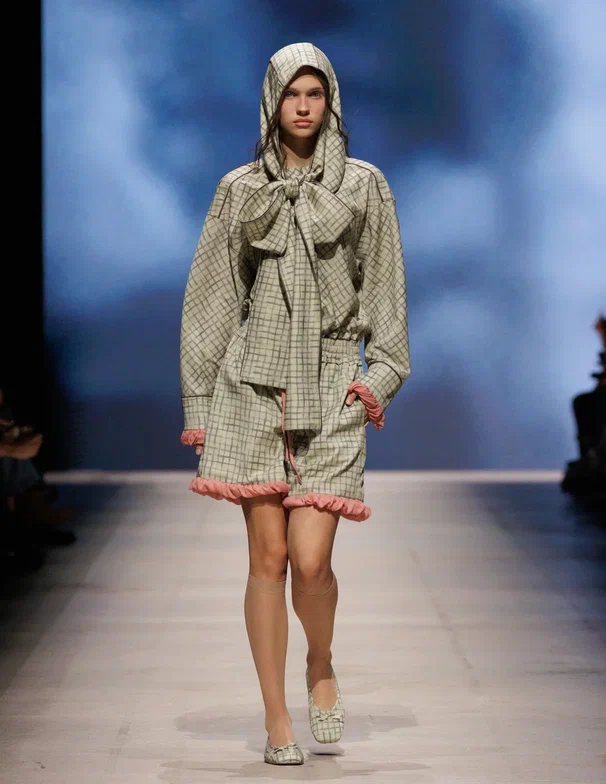
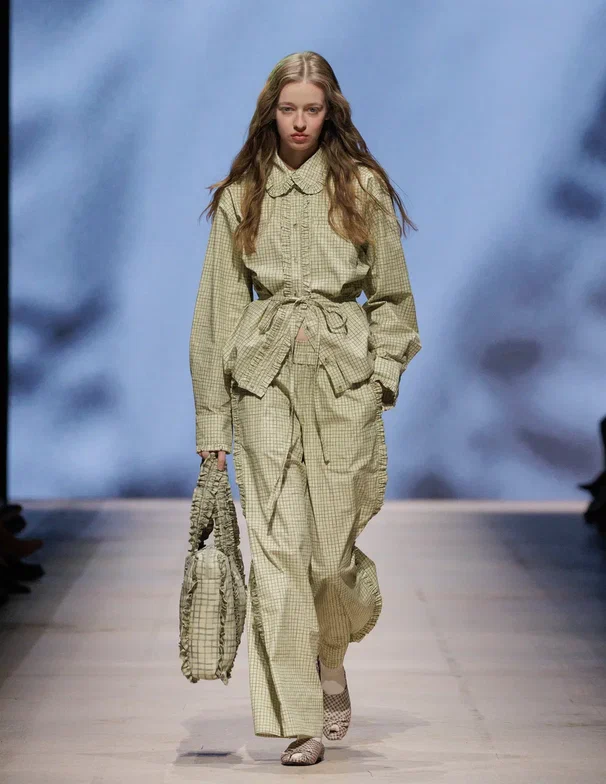
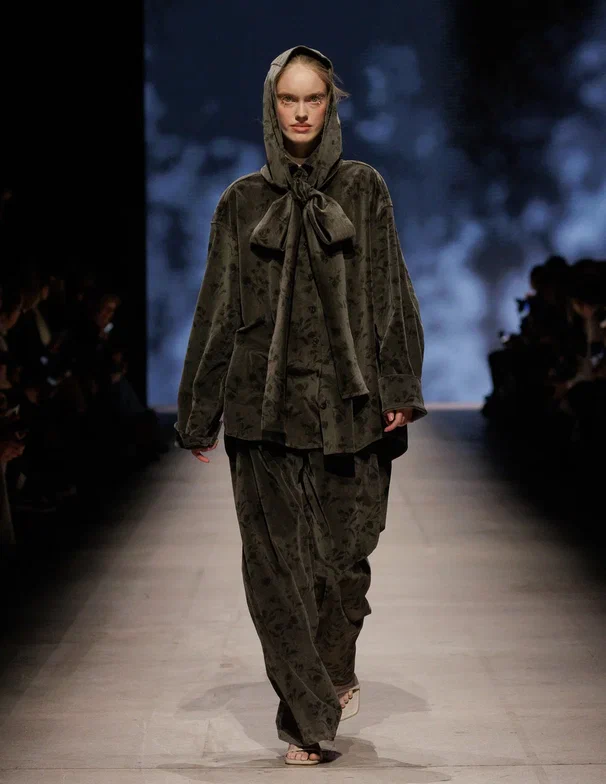
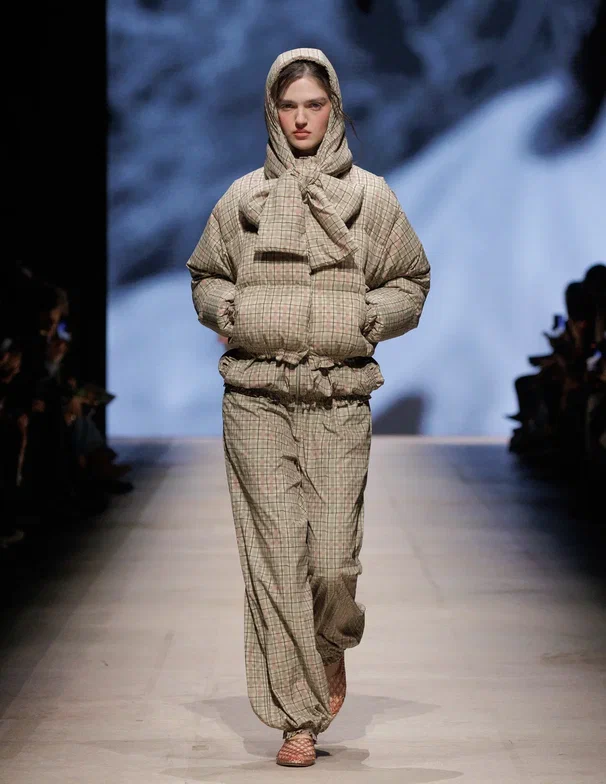
On September 30, Ruban presented its Spring/Summer 2027 collection at the Trekhgornaya Manufactory as part of Moscow Fashion Week.
The collection and show were based on hypnagogia – the transitional state between wakefulness and sleep, when the usual perception of reality changes and thoughts and images become freer. Ruban translated this idea into different elements of the show, from the silhouettes and decorative details of the collection to the music, visuals, and styling of the models.
“Between sleep and reality, everything external fades away, and a person remains their true self. It is precisely then that you can feel yourself becoming someone else, someone different. We tried to convey this opportunity to step beyond the familiar through clothing, music, visuals, and the overall mood of the show,” said Alisa Ruban, co-founder and designer of Ruban.
Flowers become one of the key motifs of Ruban’s Spring/Summer 2027 collection. They appear in small-scale prints on silk, silk organza, and batiste, as well as in stitching on the fabric and three-dimensional appliqués. In this way, the floral motif runs through different materials and techniques, tying individual pieces of the collection together.
The floral theme is particularly expressive in pieces where flowers become part of the construction itself. Multicolored leather appliqués adorn individual pieces, while black silk flowers form a dress-vest with a voluminous detail resembling a large pocket. Another option is a small peplum that can be paired with different wardrobe pieces. This approach to the floral motif is connected to the broader idea of the collection – the opportunity not to conform to conventional ideas of how clothing should look and what an overall look should be. The pieces allow different moods, volumes, and decorative elements to be combined, leaving room for individual interpretation.
This idea is also reflected in the choice of materials and colors. Ruban uses natural fabrics and a natural palette ranging from rich chocolate brown to sky blue. Blue becomes one of the key shades of the collection: the designers spent a long time looking for the exact color that could tie together different materials, prints, and details.
Shoes and accessories play an independent role in the collection, complementing the looks and reinforcing their color and decorative elements. Flat silk slippers and bags echo the colors and prints of the clothing. The bags take the form of small quilted silk pouches with a wide cuff worn around the wrist, continuing the collection’s floral motif.
References to the dress of past eras can also be seen in the construction of individual pieces. The leather jacket and cotton parka have several fastening options, one of which resembles a corset construction with hooks. Other pieces – skirts and coats – feature hip pads that create additional volume and evoke elements of dress from past eras.
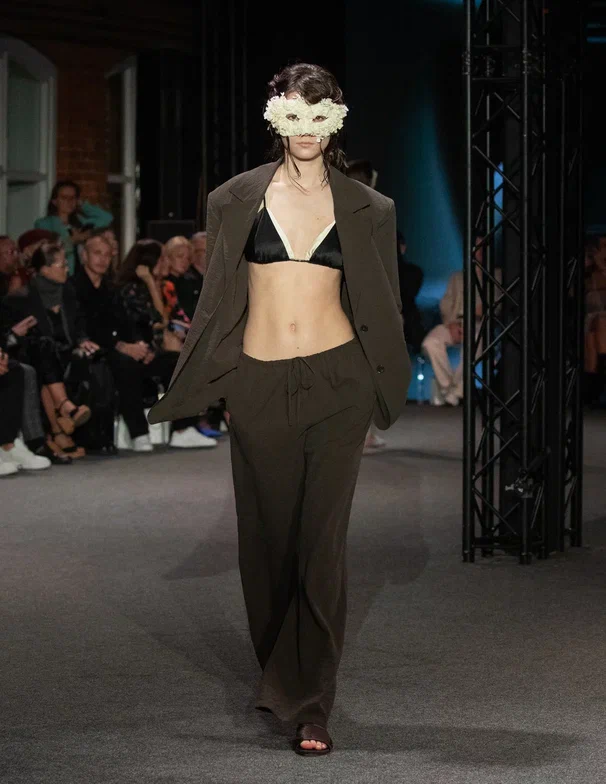
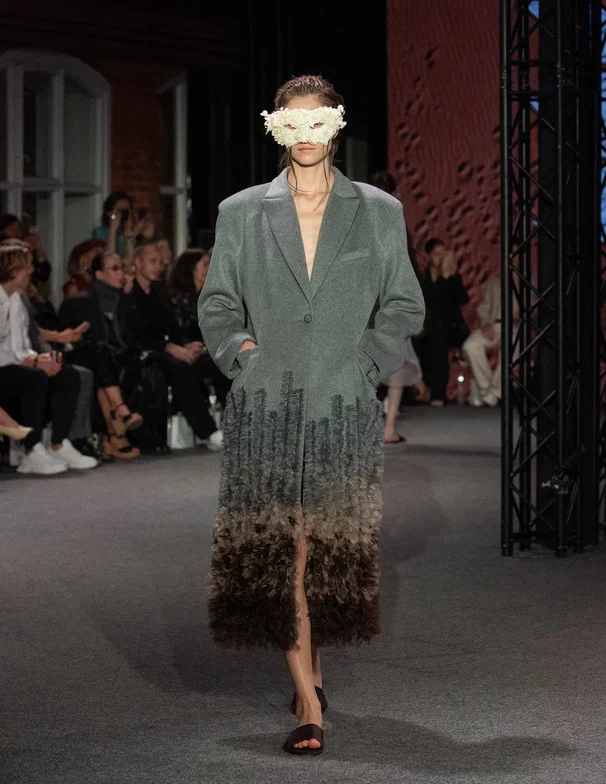
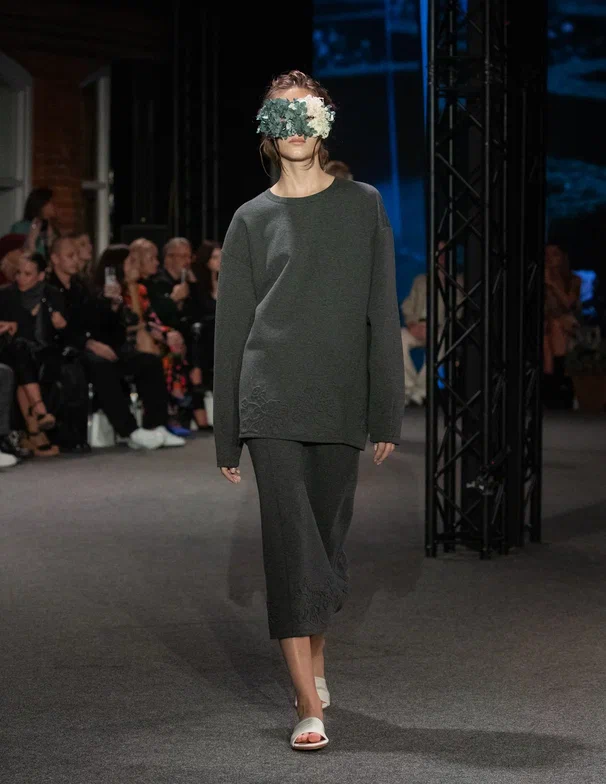
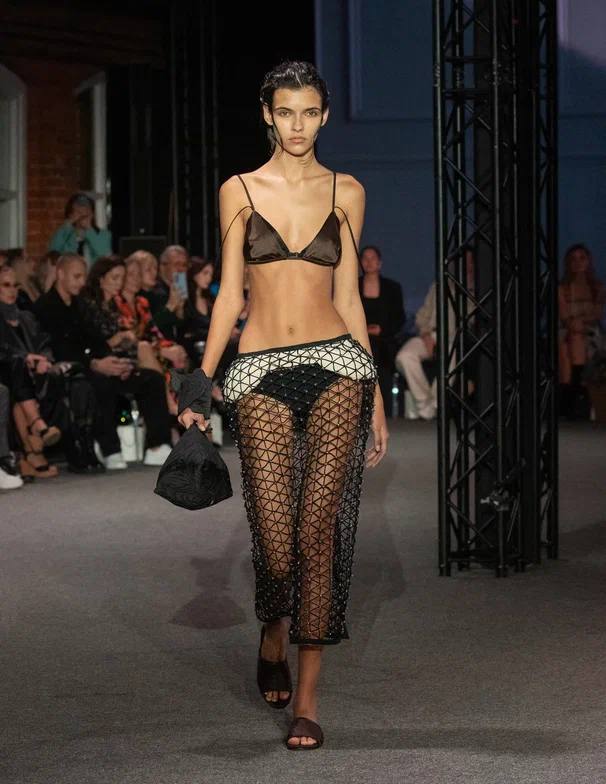
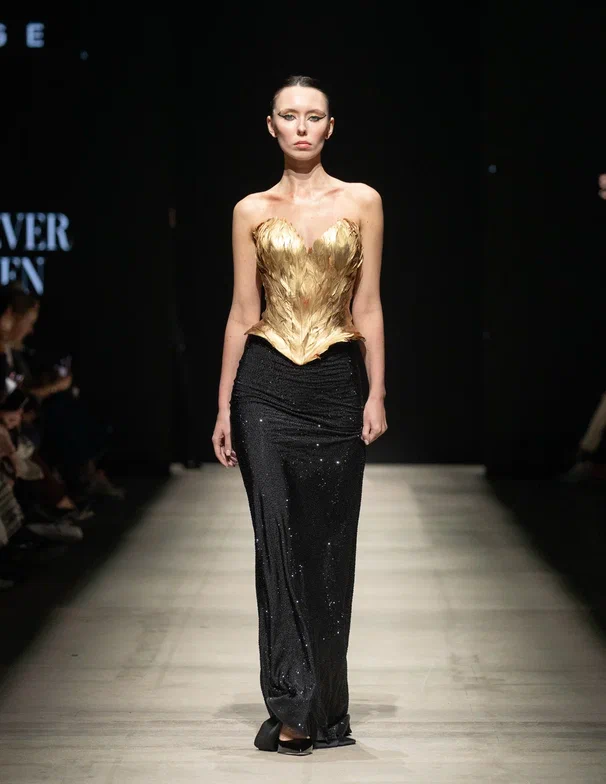
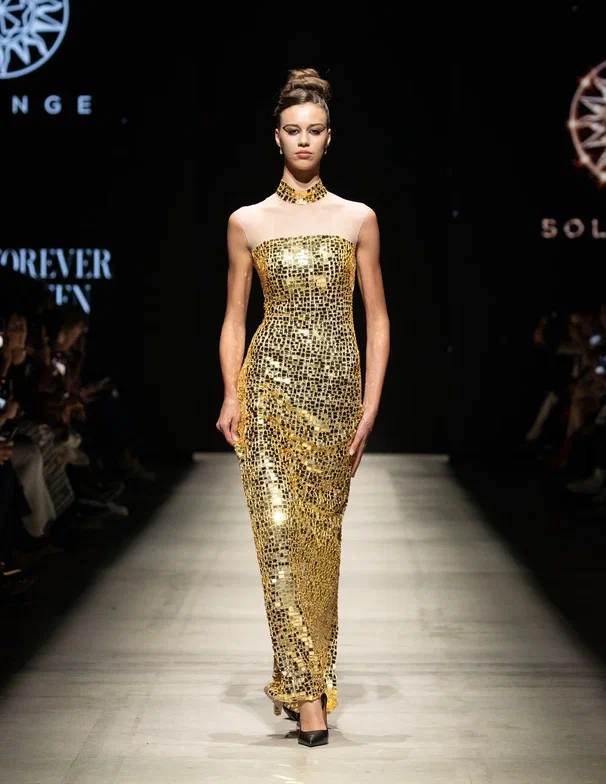
Moscow-based Solangel dedicated its collection to Russian ballet. Irena Soprano sent voluminous dresses, corset constructions, long gloves, pearls, and crystals down the runway. Real ballerinas in classic tutus also joined the models. Rather than reproducing stage costumes literally, the brand translated ballet-inspired elements into a contemporary women’s wardrobe. The same evening, Solangel presented clothing, footwear, and jewelry. Irena Soprano noted that participating in Moscow Fashion Week helps the brand connect with new international partners: “I’ve gained partners not only in Russia but also abroad, and that’s very important.”
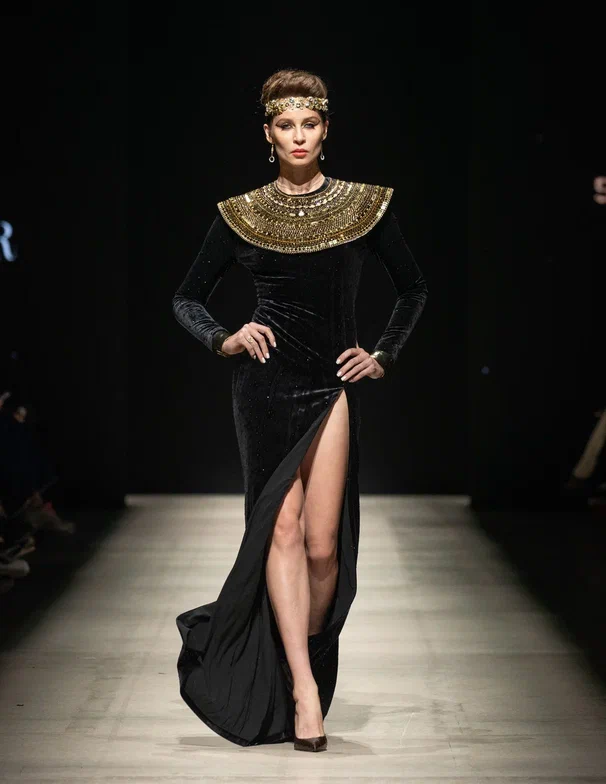
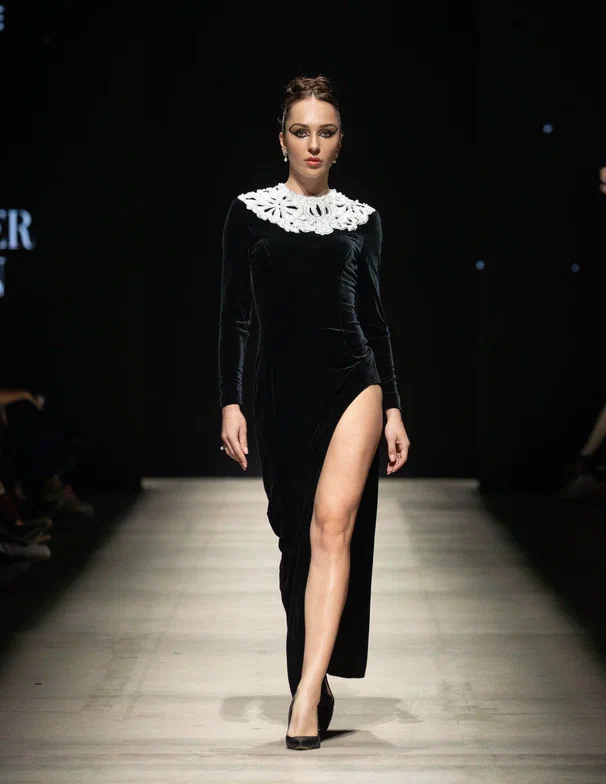
St. Petersburg-based Za_Za closed the day with its ‘Life Cycles’ collection. At its core was the spiral as a symbol of movement and repetition. This motif appeared in asymmetry, fluid lines, complex tailoring, and textured details. The palette gradually shifted from deep shades to lighter ones. Alexandra Koryakina sees a connection between generations and family experience in this idea. The designer describes Moscow Fashion Week as a stimulus that helps the brand move forward and reach a new audience: “Moscow Fashion Week is like a stimulus, like adrenaline that keeps us on our toes so that we don’t relax and continue to develop. And we are very grateful to the entire team and organizers for this opportunity.”
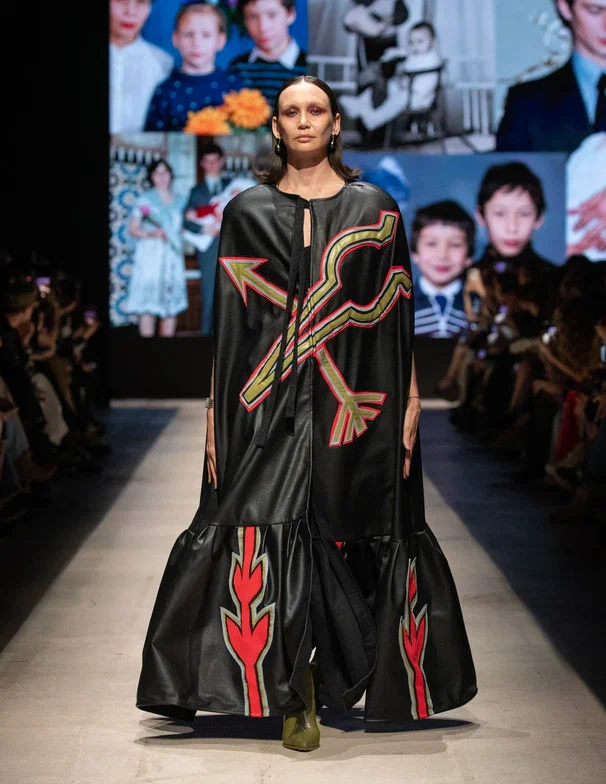
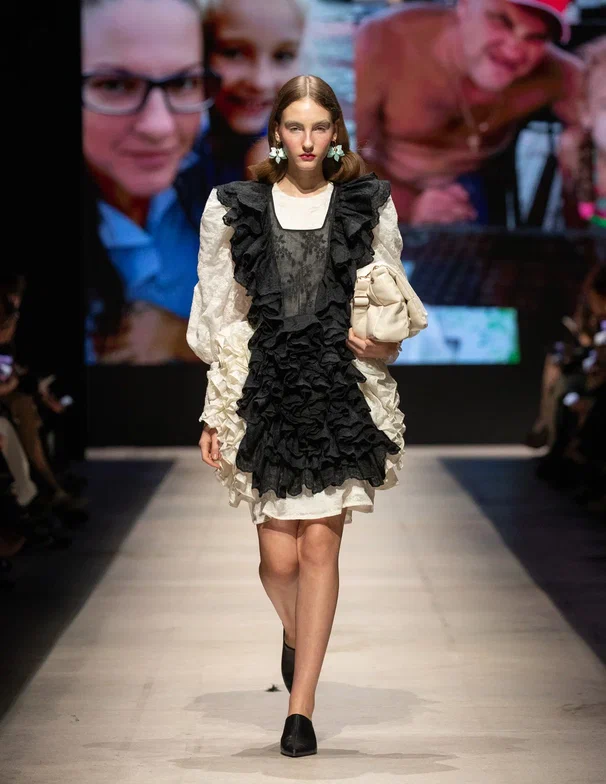
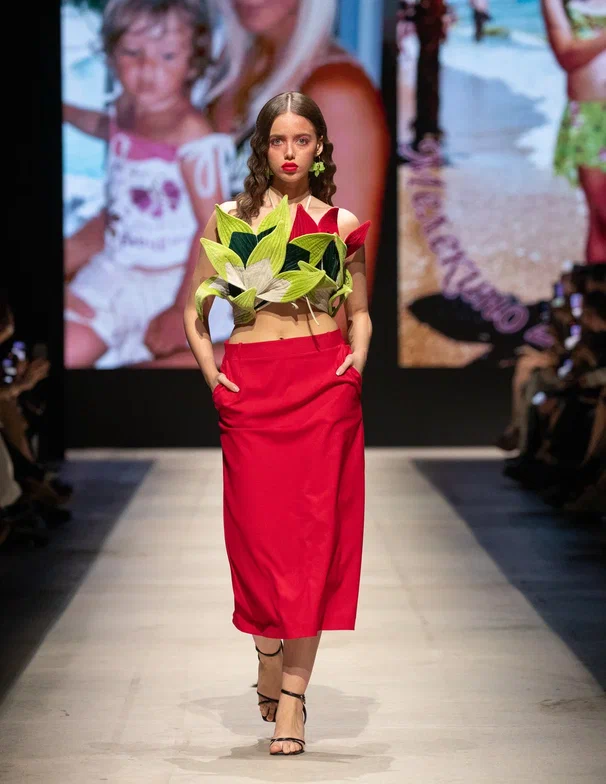
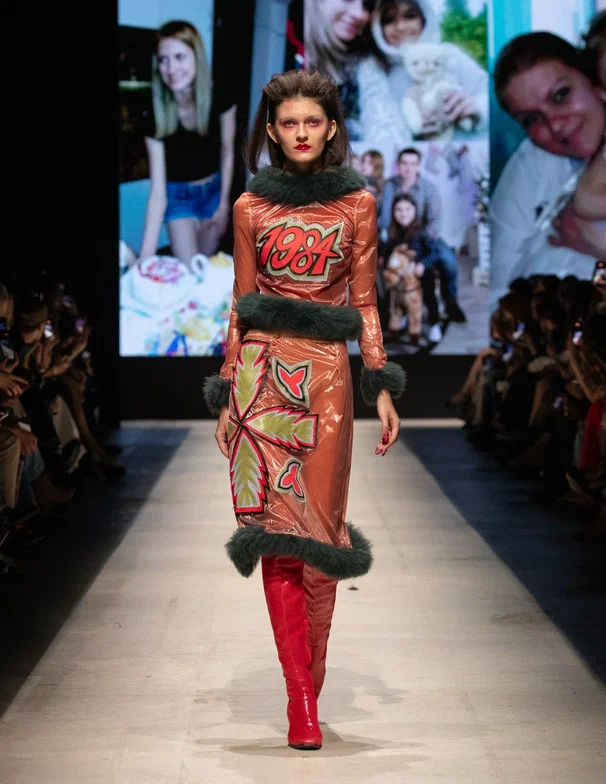
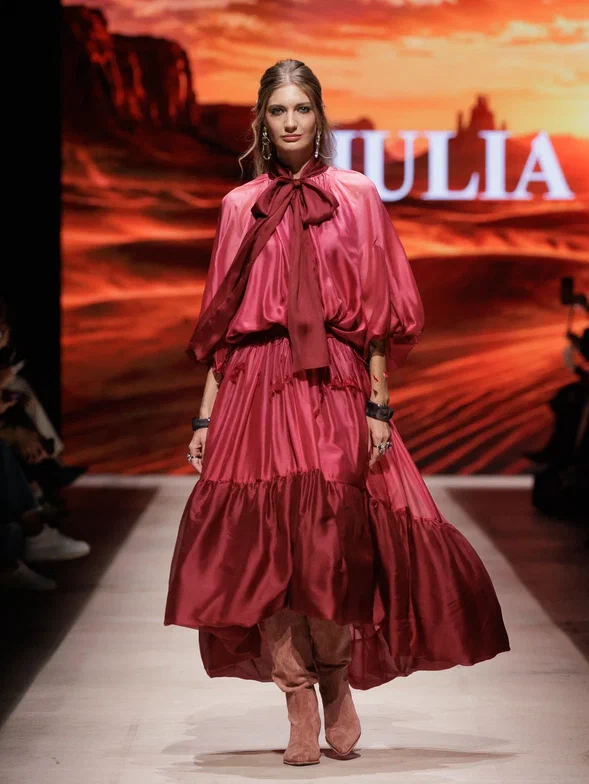
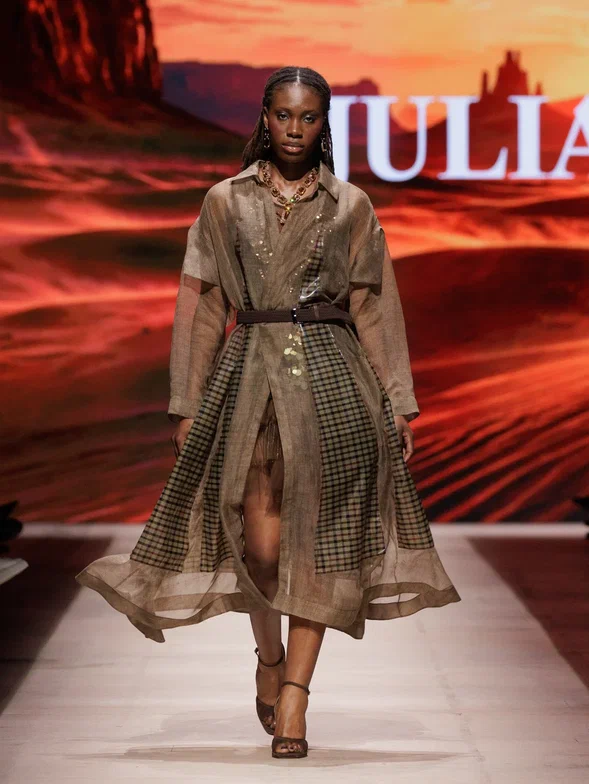
Moscow-based brand Julia Dalakian presented its ‘African Queen’ collection. Asymmetry and crisp geometry were paired with draping and soft lines, while the palette drew on shades of sand, greenery, sea, and sunlight. This time, the collection also featured a menswear line. Yulia Dalakian has also participated in Moscow Fashion Week since its inception and considers it important to support the professional community and remain part of it: “Participating in Moscow Fashion Week gives us the opportunity to stay connected, to be part of this community, because it is a community that needs to be supported.”
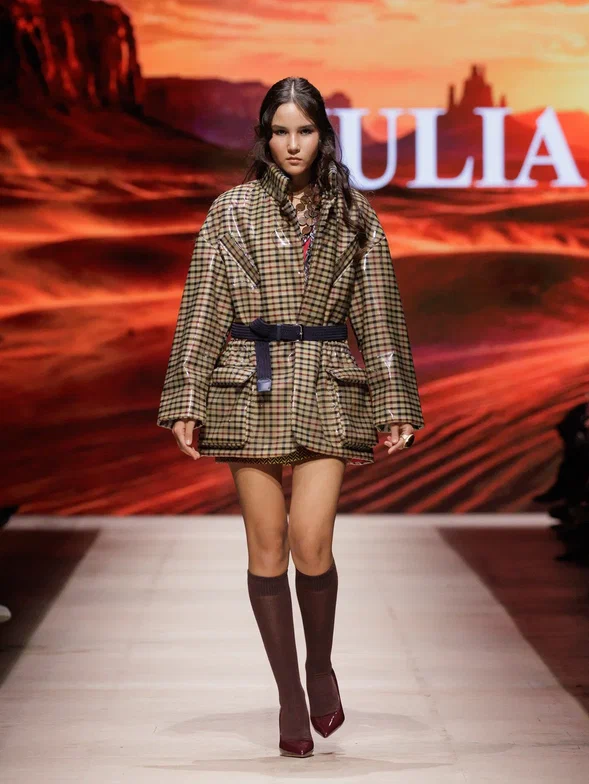
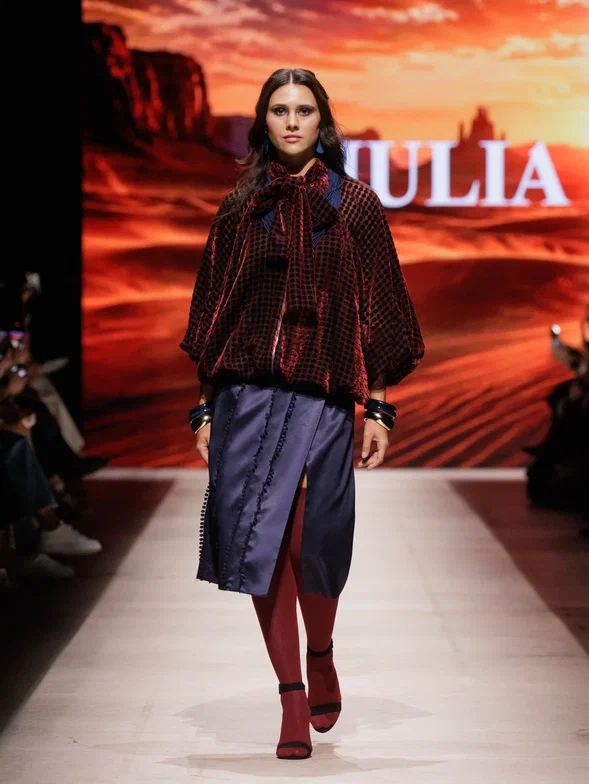
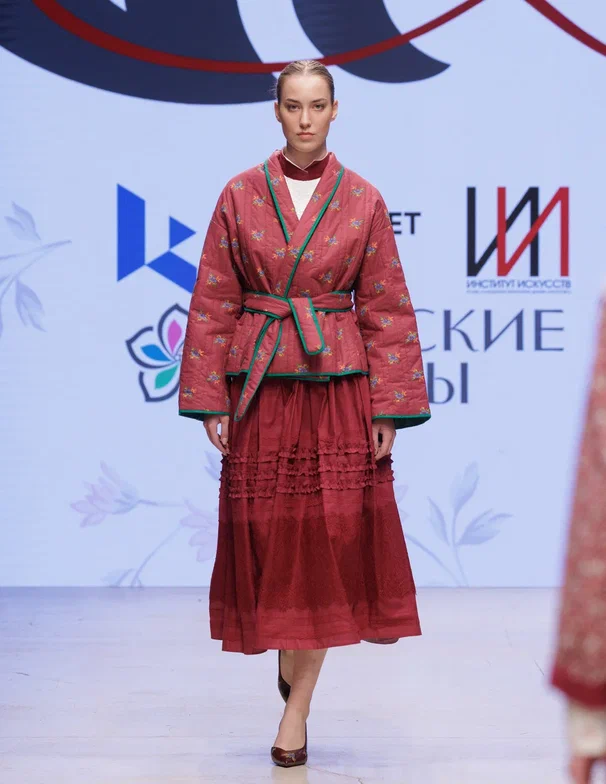
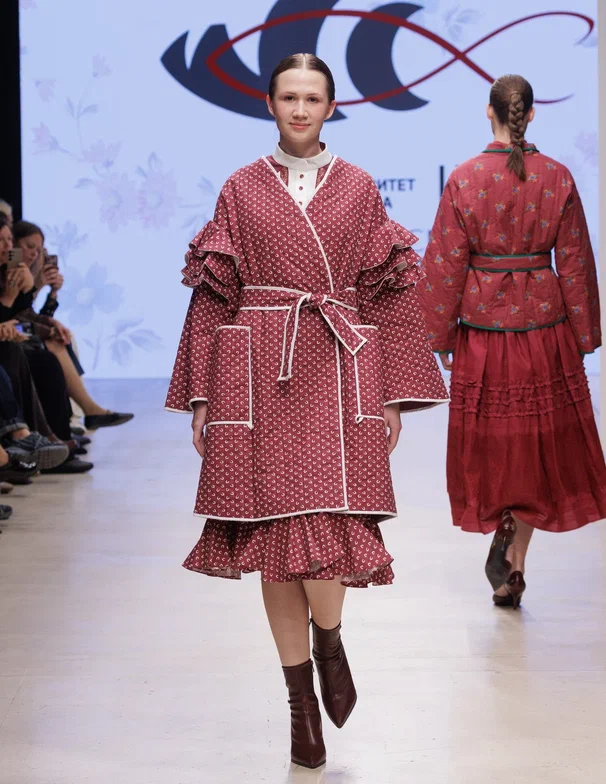
SHS from Shuya continued the exploration of Russian traditional dress, this time through the history of textiles. The brand was created by Shuyskiye Sitsy, a textile manufacturer with a history spanning more than 200 years. Its “Second Impression” collection featured relaxed dresses and sundresses, jackets, shirts, and skirts. Folklore was woven into the details: layering, headscarves, aprons, gathers, quilting, and fabric prints. Dresses were paired with aprons, jackets evoked traditional garments known as dushegreikas, and headscarves became part of the garment construction. According to designer Ekaterina Matrosova, taking part in Moscow Fashion Week helped the emerging brand first reach a nationwide audience and then expand internationally: “After our first collection show at VDNH, Moscow Fashion Week helped our emerging brand reach not only a nationwide audience but also the global market. International guests saw our new collection in person. […] And speaking of this year’s milestones, the company we work for has welcomed new young employees. People are an invaluable resource at any time, despite the rapid development of artificial intelligence. This has allowed us to expand our team, both in production and management.”
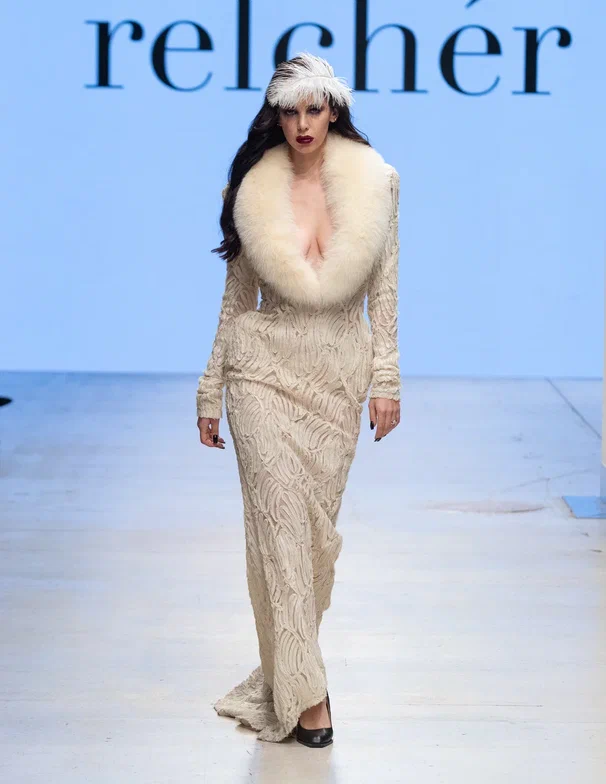
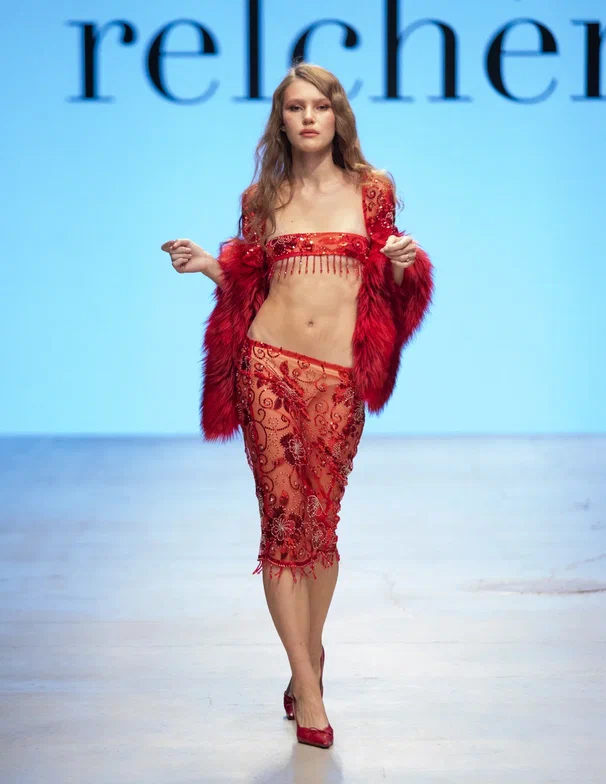
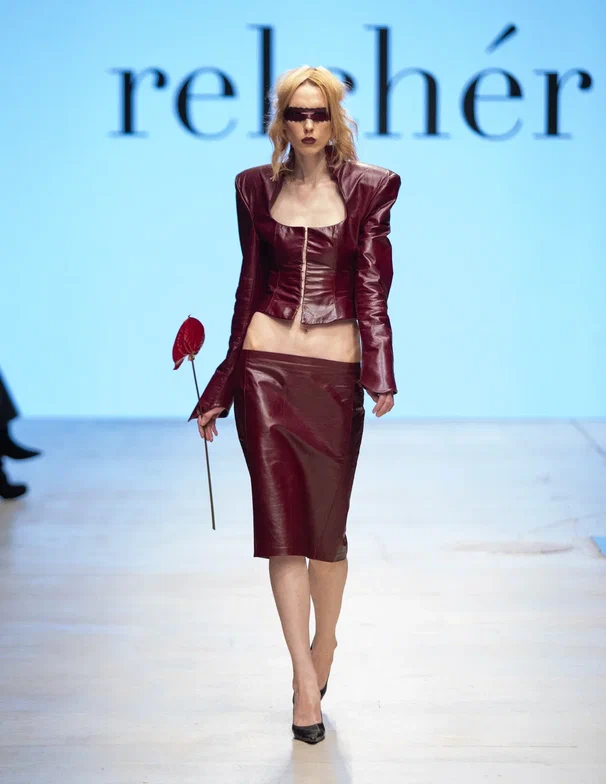
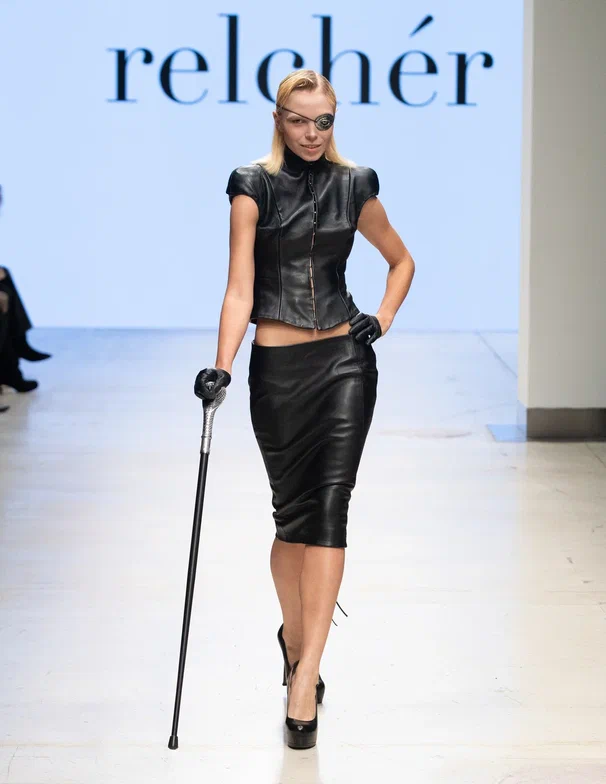
St. Petersburg-based Relchér made its Moscow Fashion Week debut with the “Secret Room” collection. Art Deco provided the starting point, with fur collars, low-rise silhouettes, rhinestones, plunging necklines, long dresses, and feathers. The mood shifted noticeably in the second half, taking on a more contemporary feel with jeans, vests, cardigans worn against bare skin, sparkling belts, and eyewear. The show closed with a maxi dress made entirely of feathers. Brand founder Renata Litvinovich says that for an emerging designer, taking part in Moscow Fashion Week is first and foremost an opportunity to gain exposure among the media, stylists, and new audiences: “My brand is just starting out – it’s a year old. It’s a great opportunity for emerging designers to show themselves, make their mark, and get noticed.”
Pirosmani (St. Petersburg) presented a different kind of show. Jenya Malygina named the collection ‘Paper Creature’, and paper indeed became one of its key materials. Individual pieces and art objects were made from it – light, fragile, and almost weightless. The distinctive shape of the footwear enhanced the feeling, as if the character could be carried away by the wind. For Jenya Malygina, Moscow Fashion Week is above all an opportunity to introduce the brand to a wider audience: “I like that there is a space where many people can come, take a look, and learn about the brand. Even those who don’t know the brand, because Moscow Fashion Week, of course, gives us broader reach.”
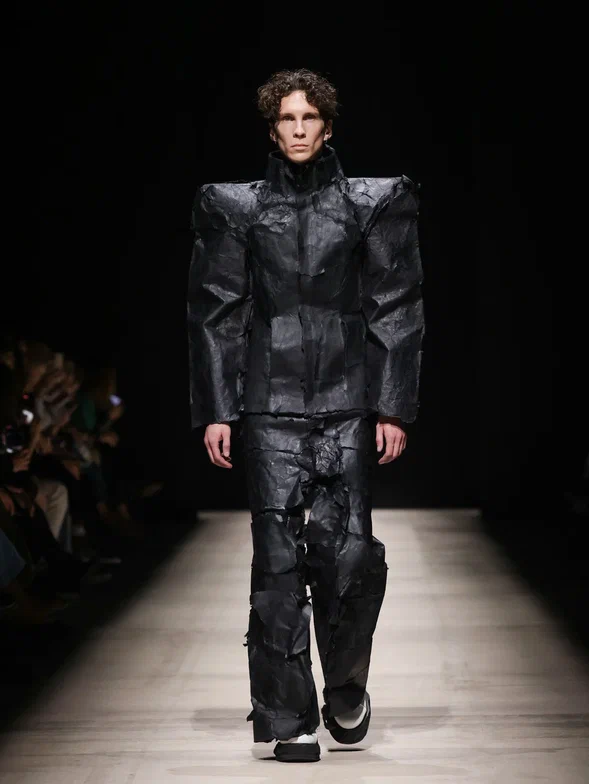
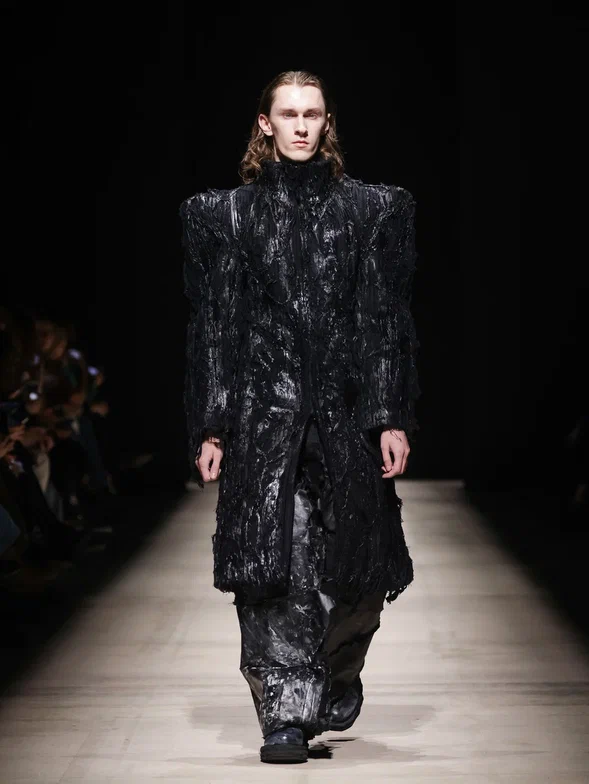
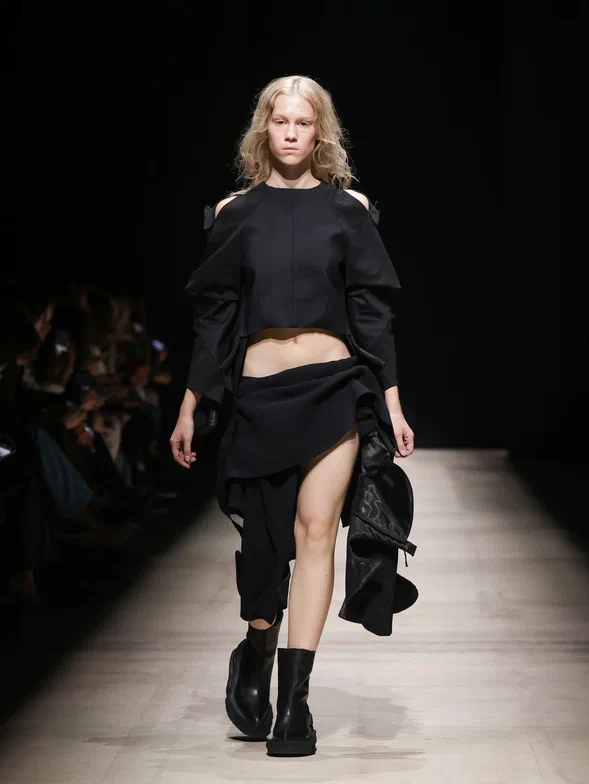
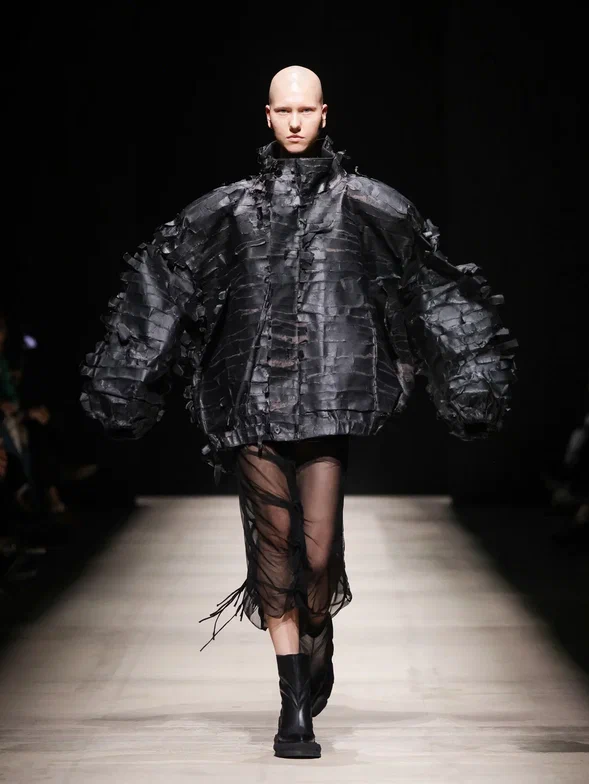
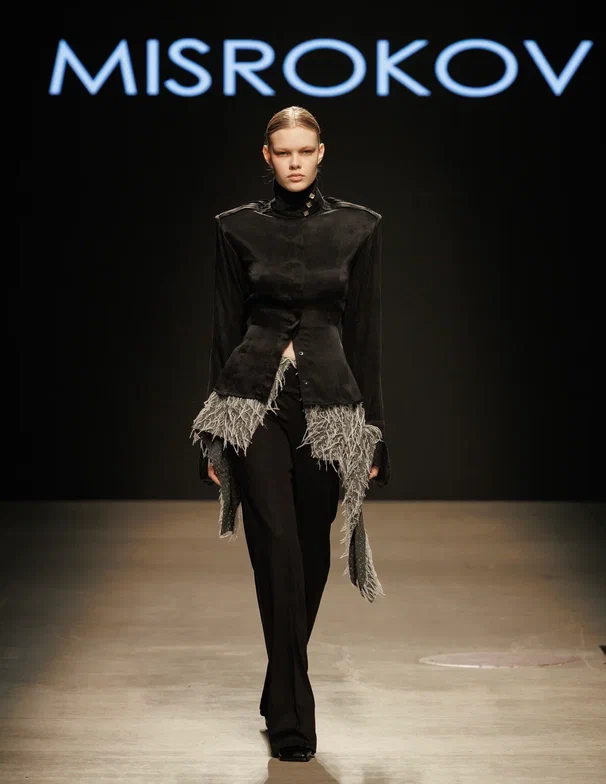
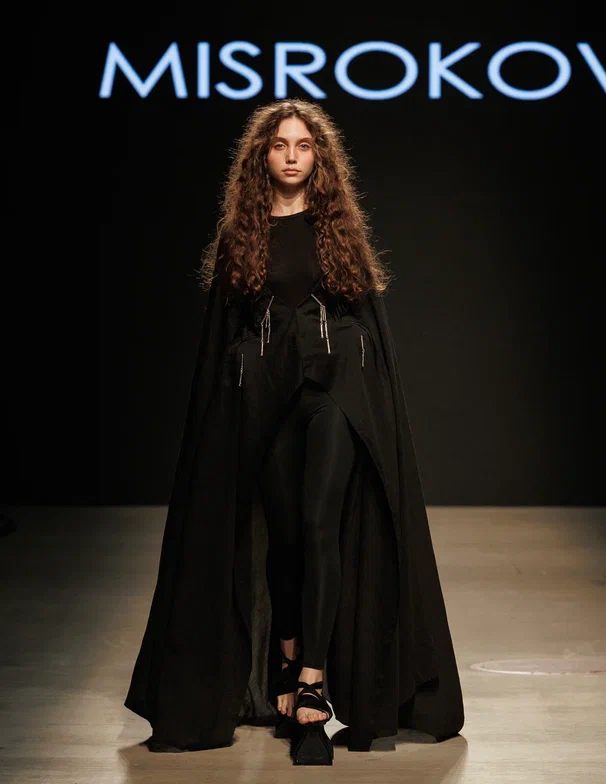
Nalchik-based Misrokov presented its ‘Fractura’ collection, in which Sultan Misrokov explored the theme of rupture – historical, social, and personal. Circassian motifs were combined with deconstruction, strict geometry with soft forms, and carefully considered volume with disrupted proportions. The designer cites the opportunity to receive professional feedback and compete for a grant for debut designers as one of the reasons for participating: “Moscow Fashion Week is the largest platform in the country where you can showcase yourself. And, to be honest, the grant for debut designers motivated me to participate this year. The experts announced for the event are the best experts in the country, so I need their assessment, whether good or bad, to understand which direction I am moving in and whether it is the right one, and, of course, I hope that the work will be highly rated.”
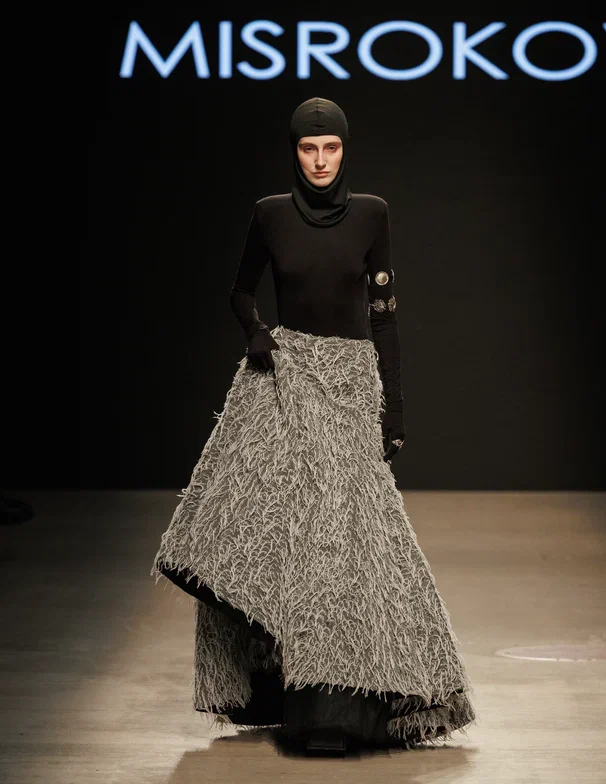
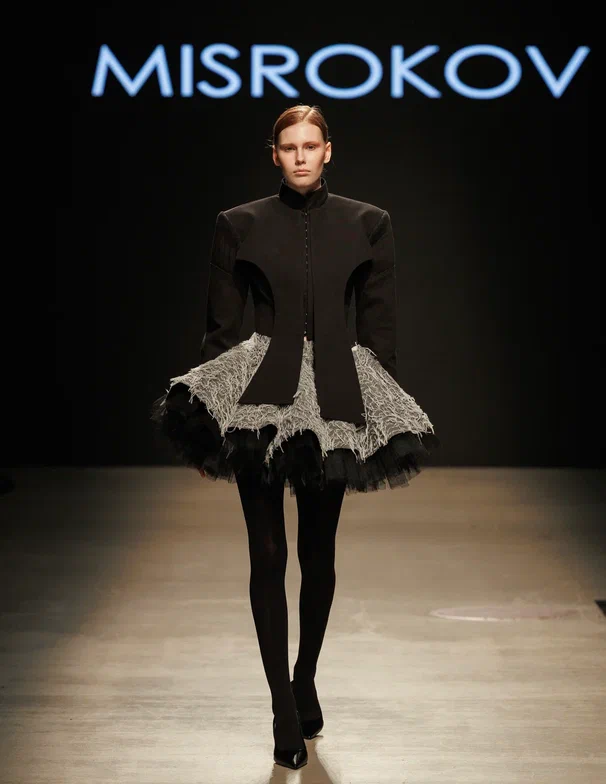
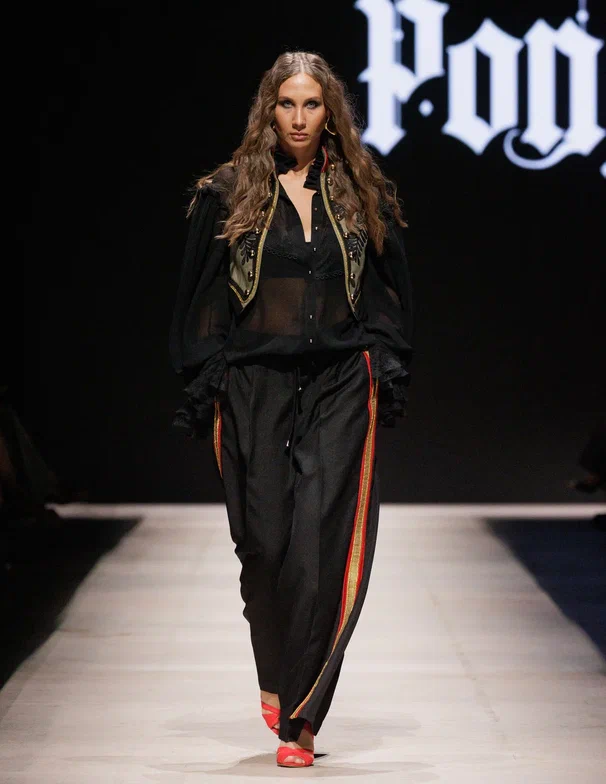
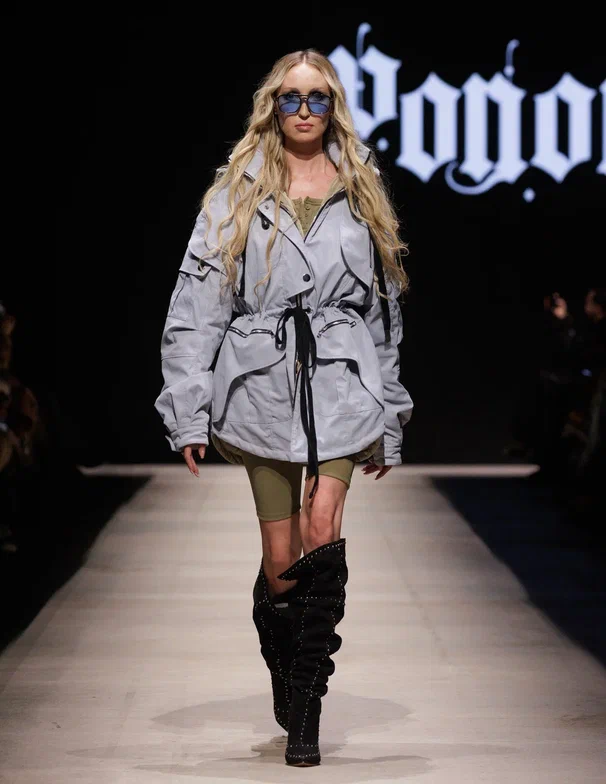
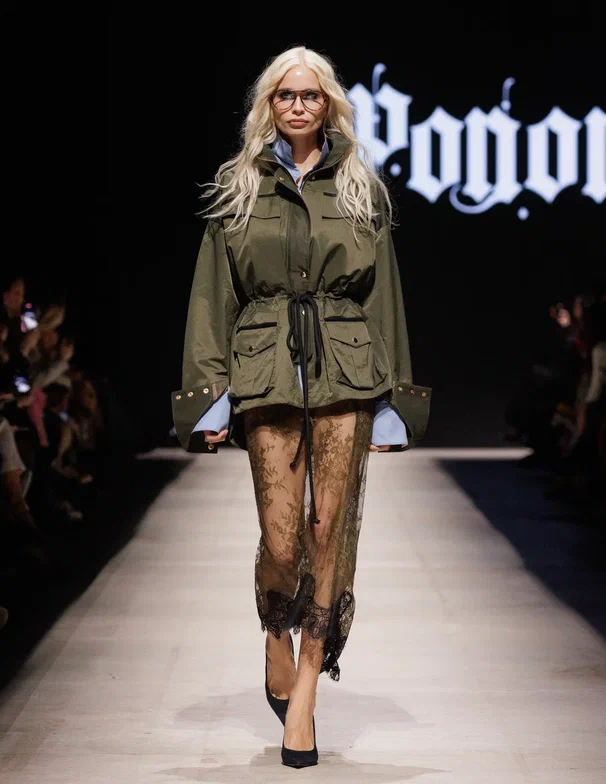
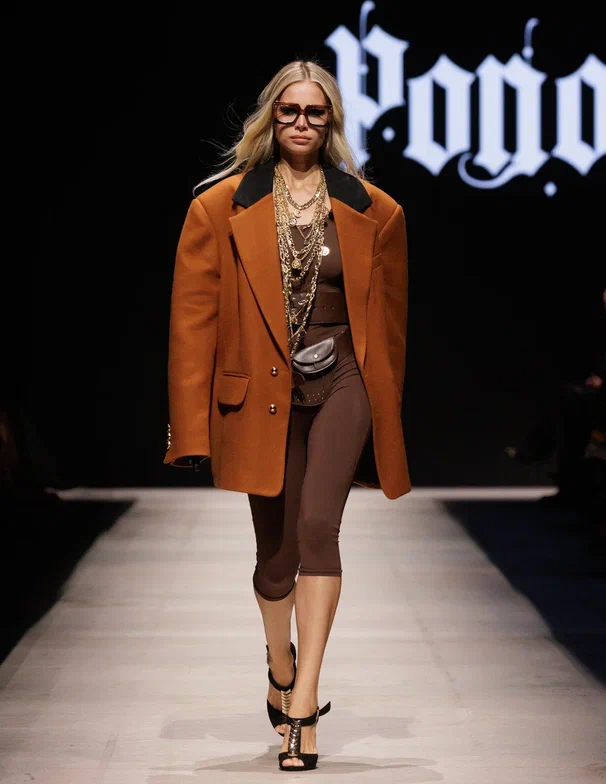
In Ponomarev’s (Moscow) collection lace met menswear tailoring and hussar-inspired silhouettes. Andrey Ponomarev paired openwork skirts and dresses with oversized jackets, fitted jumpsuits with voluminous coats, and cargo pieces with lace tops. The collection also featured trench coats, jackets, low-slung pants, corset dresses, and cropped jackets. Interest in the show began even before the models hit the runway: according to Andrey Ponomarev, he received around 4,000 requests for invitations after the brand’s participation was announced. “I hope there will be even more, more, more to come. And I hope there will be new offers, of course, and collaborations. That’s always exciting,” he added.
Moscow-based Skolka turned to Vologda lace. The collection was built around the contrast of black and white, which brought out the patterns and techniques of the lacework. The designs featured diamonds, circles, waves, birds, swans, the tree of life, and other ancient symbols. Rather than looking like a museum reference, lace was used in both elaborate evening looks and more wearable pieces. Designer Elena Baranova said the brand had received more than 1,000 applications from people hoping to attend the show. “I believe Moscow Fashion Week is one of the most important events in every designer’s creative career. Of course, it’s prestigious and a great honor for us to have been given the opportunity to participate this year,” she added.
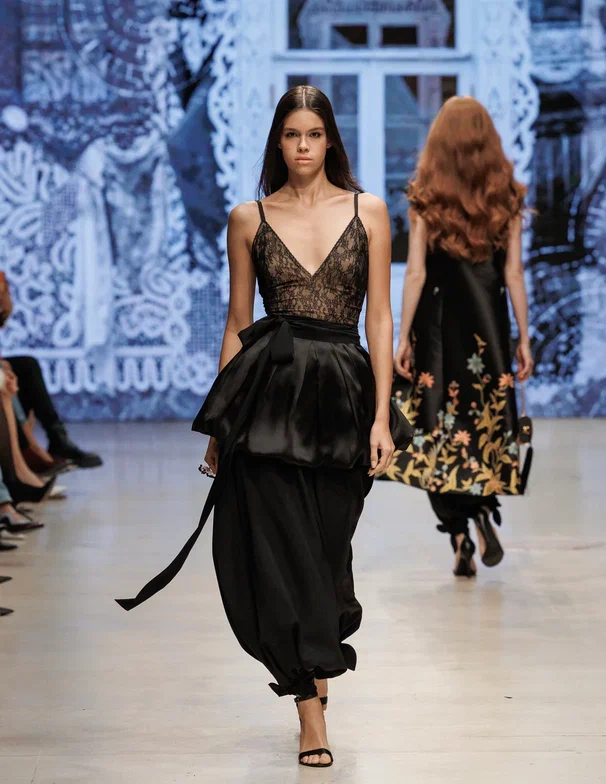
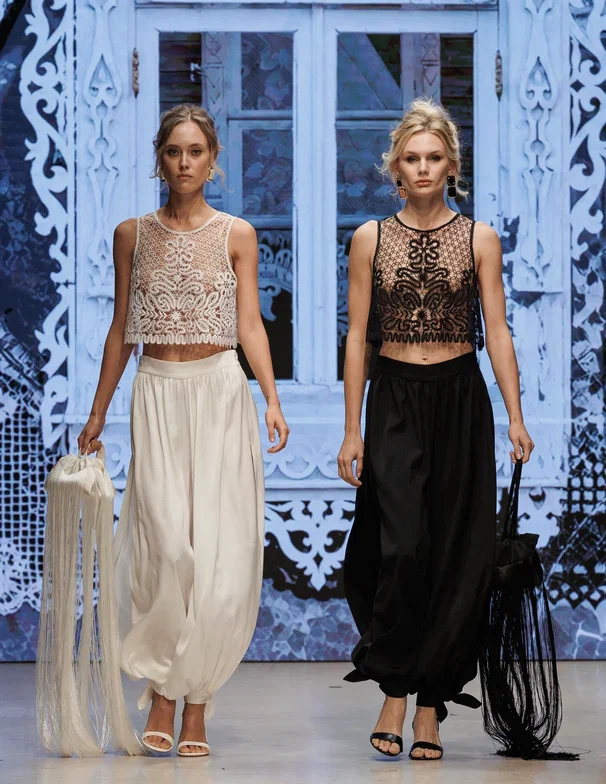
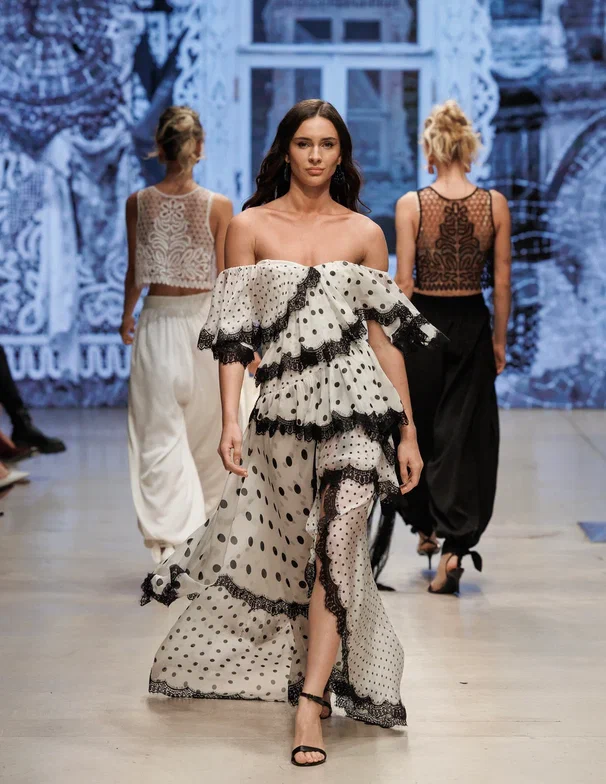
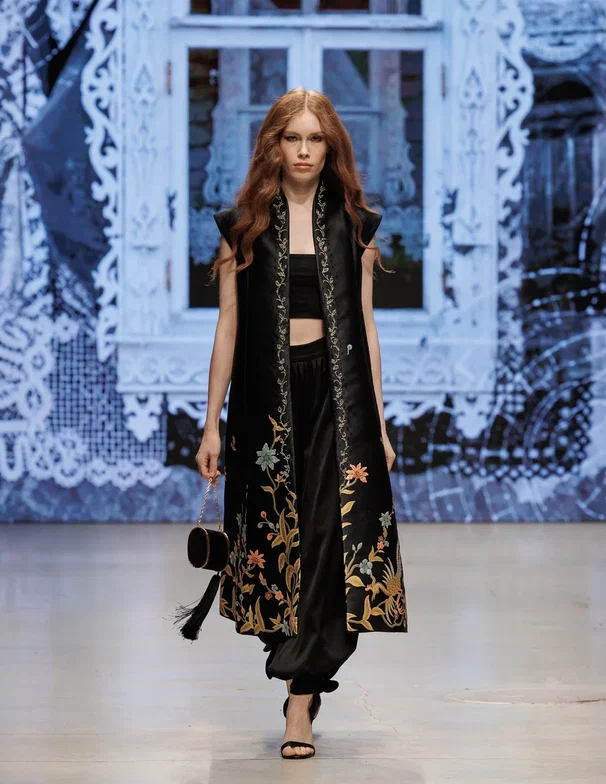
Belarusian brands Davidova and T. Efremova&Irra are three designers who represented Belarus Fashion Week on the runway. They showcased two joint collections dedicated to Marc Chagall. His works appeared on dresses, tops, jackets, and asymmetric blazers, while gold metal corsets featuring images of the artist’s paintings stood out as some of the most striking pieces.
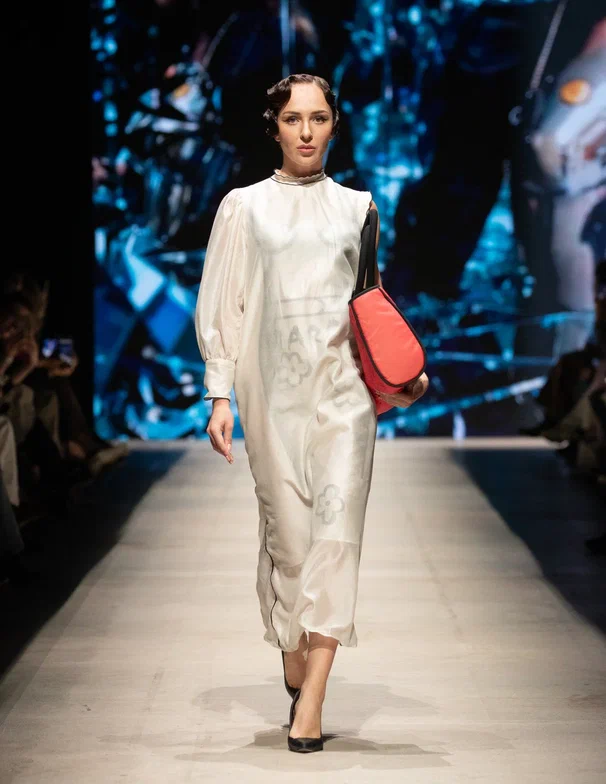
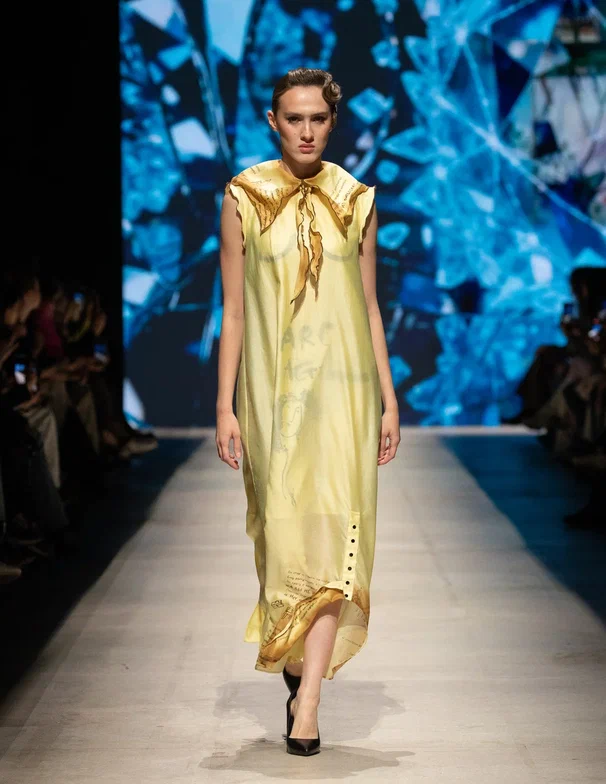
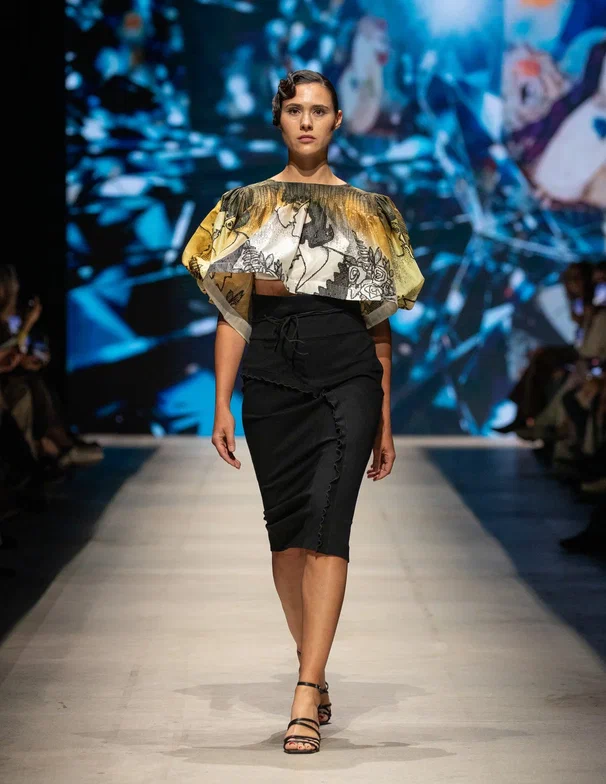
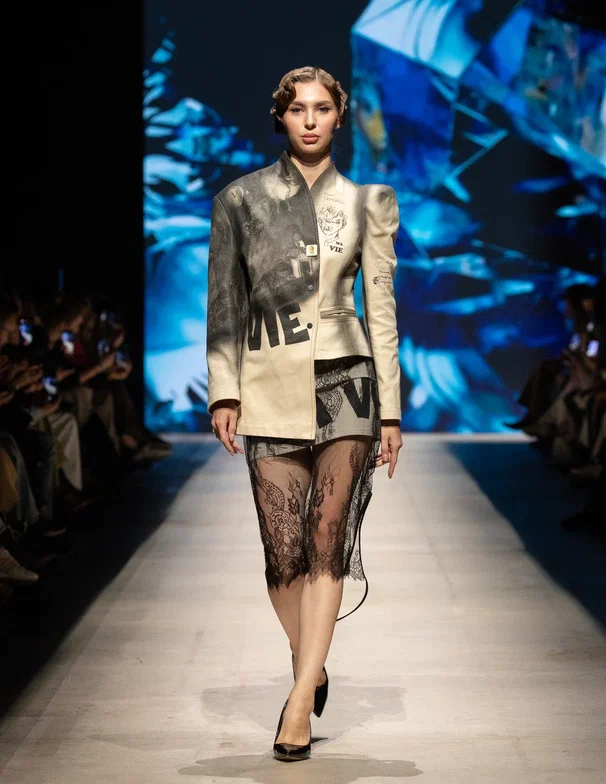
Limak by Kamil from Sri Lanka dedicated its collection to traditional batik. Kamil Hewavitharana chose a rich palette of pink, green, blue, yellow, and orange, combining national motifs with contemporary silhouettes. This was the designer’s first show in Moscow, following presentations in Rome, New York, London, and Dubai. Kamil says he paid close attention to how Moscow Fashion Week operates and learned a great deal from the experience.
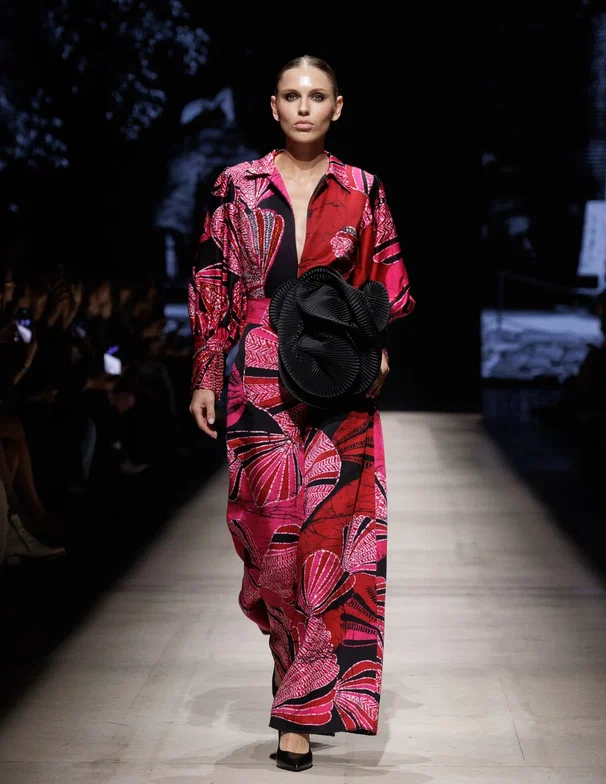
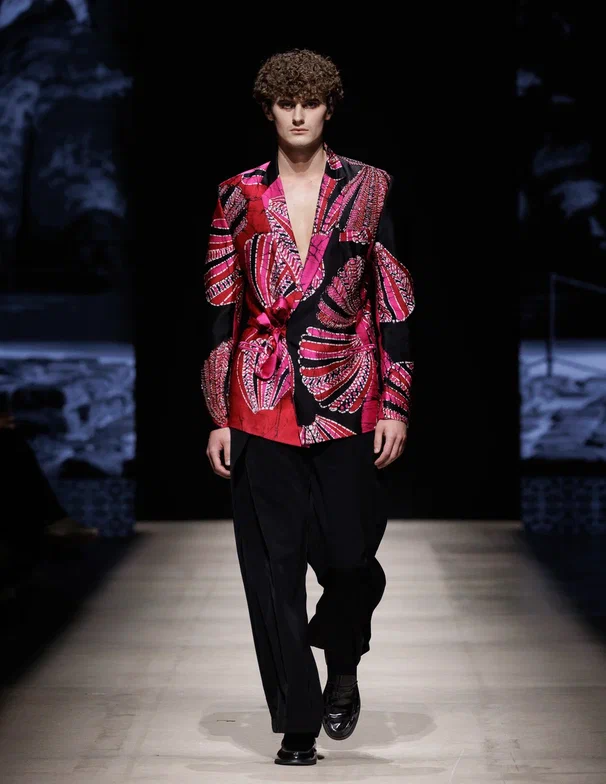
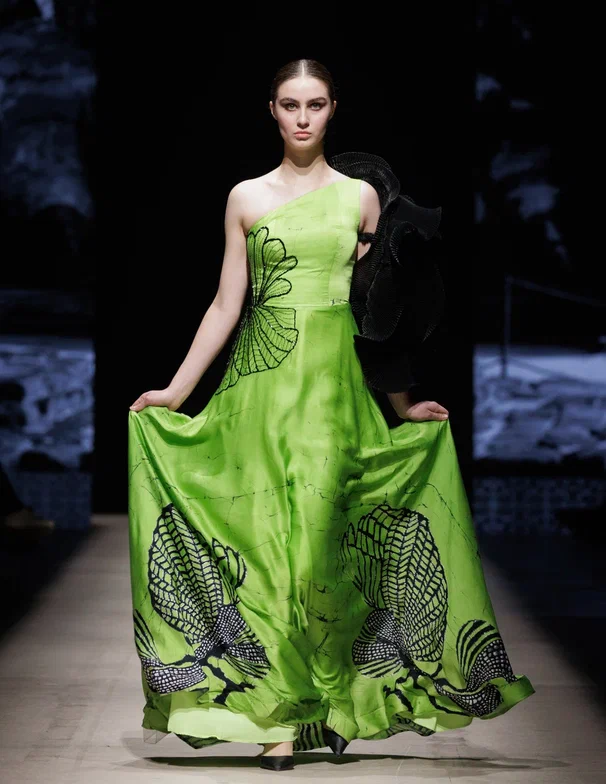
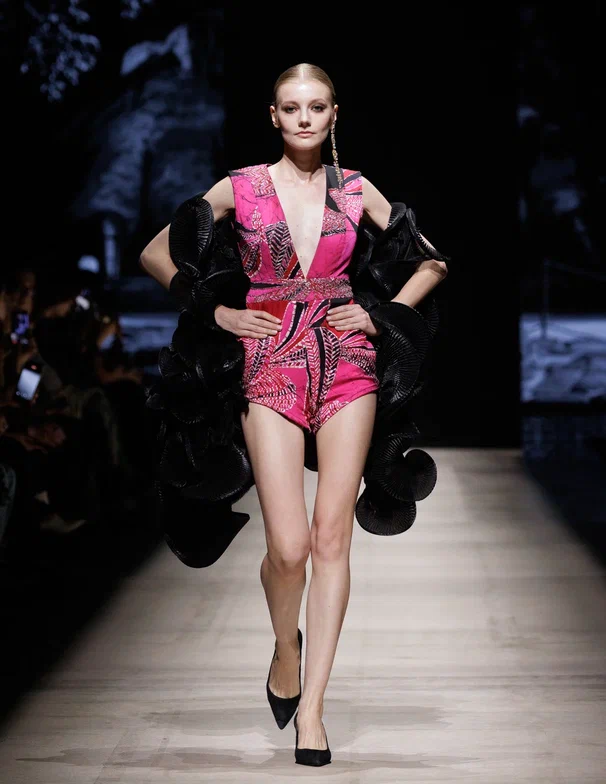
The day opened with a show by Kazan National Research Technological University and its Institute of Light Industry Technology, Fashion and Design. The collection “Ana Steppe,” created by faculty and students, celebrated the culture of the Volga region. Tatar, Mari, Mordvin, Chuvash, Bashkir, and Russian motifs were brought together around the image of Mother Earth. Kaftans, shushpan jackets, shamanic accessories, and other elements of traditional dress were reimagined for a contemporary audience. Rather than opting for the vivid colors one might expect, the designers chose a muted, natural palette. This was the university’s first show at Moscow Fashion Week. A university representative shared their impressions afterward: “This is our university’s first time participating in Moscow Fashion Week. Our institute is delighted to be part of one of the largest platforms in the fashion industry. […] This is undoubtedly a wonderful experience for us and for our students. And since this is our first time participating, we very much hope to draw attention to our wonderful university from the neighboring regions.”
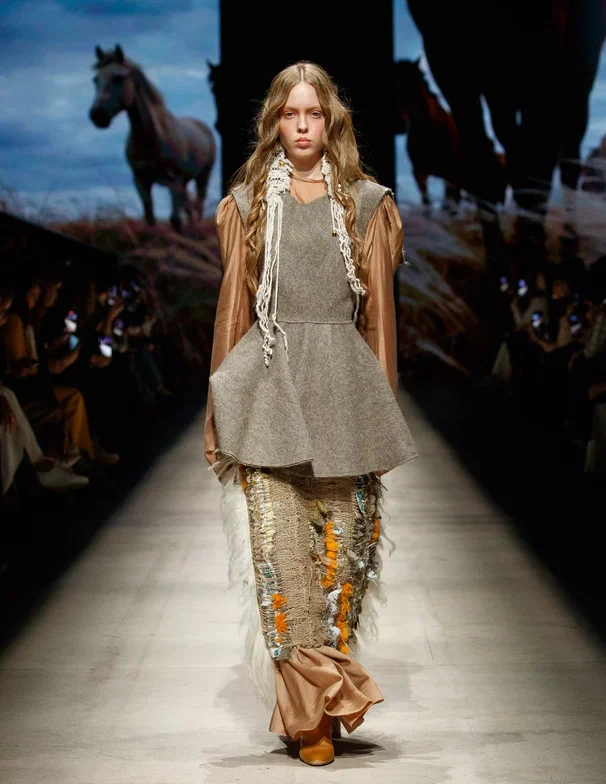
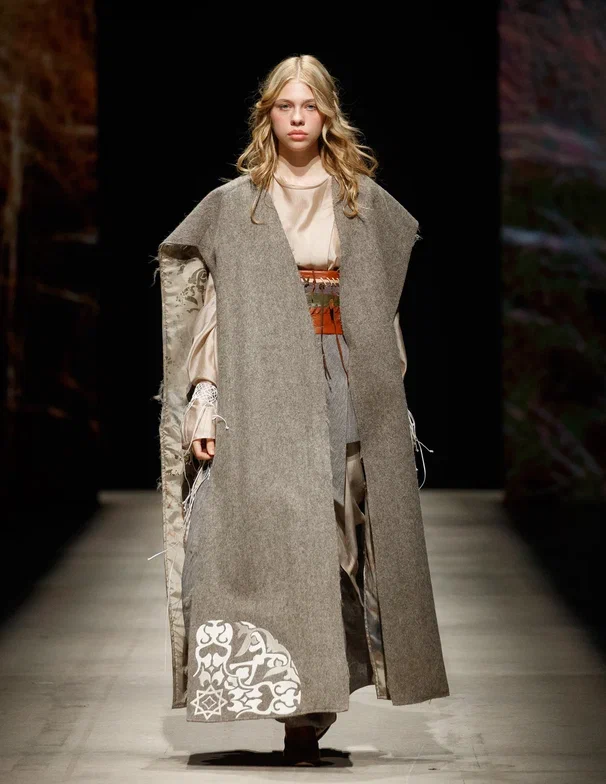
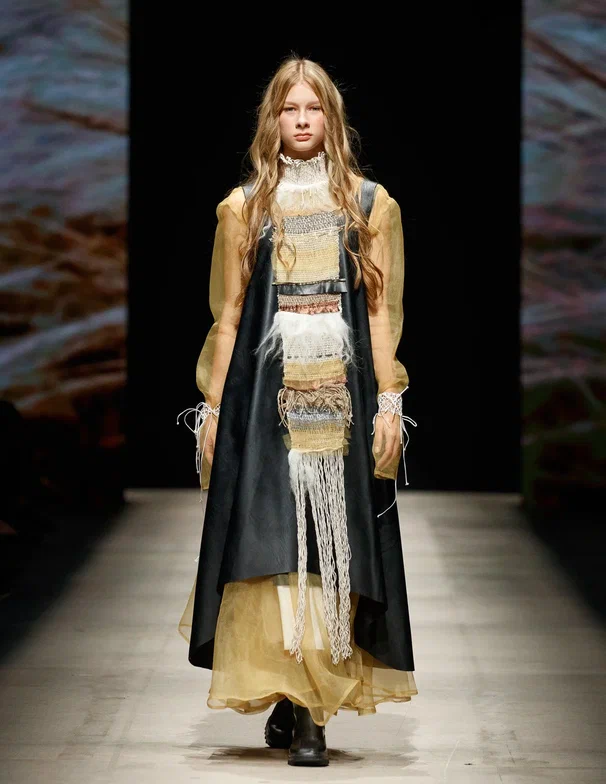
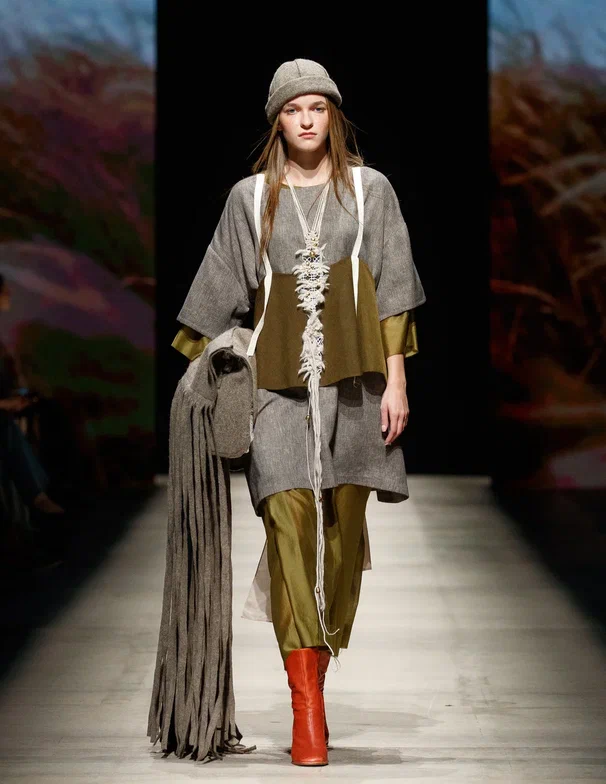
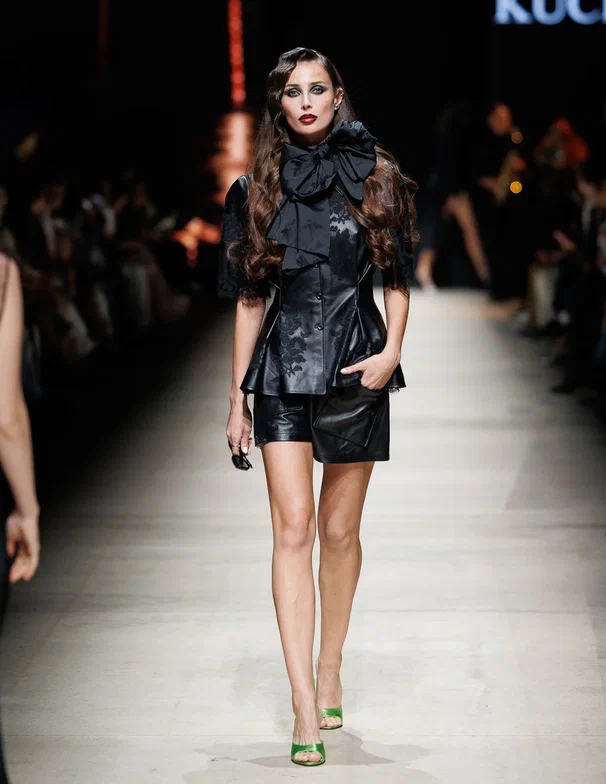
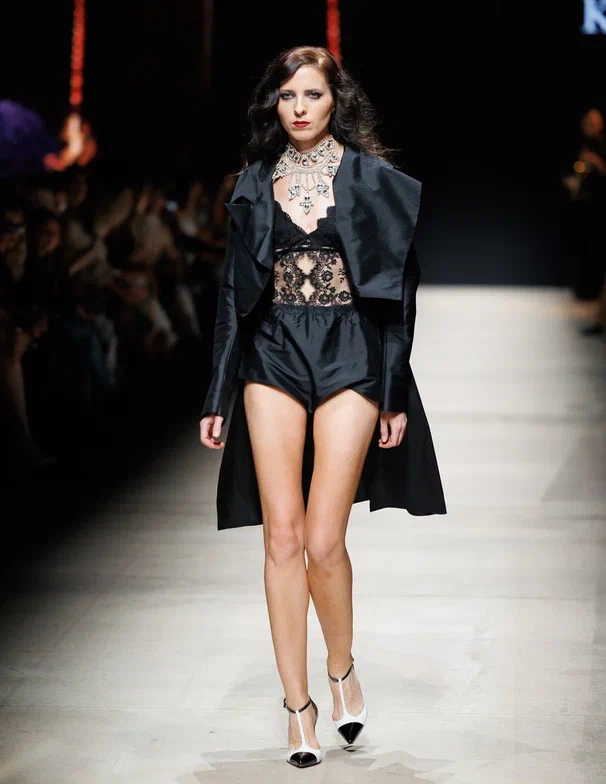
Moscow-based Kuchugova dedicated its collection to what happens to a cabaret performer after the show ends – when the stage is already behind her, but its mood still lingers. Hence the sheer tops, high-slit dresses, fringe-trimmed minis, evening gowns, and opera gloves. Cashmere, silk, organza, and lace were paired with rhinestones and shimmering threads, while the palette centered on burgundy, black, navy, and gold.
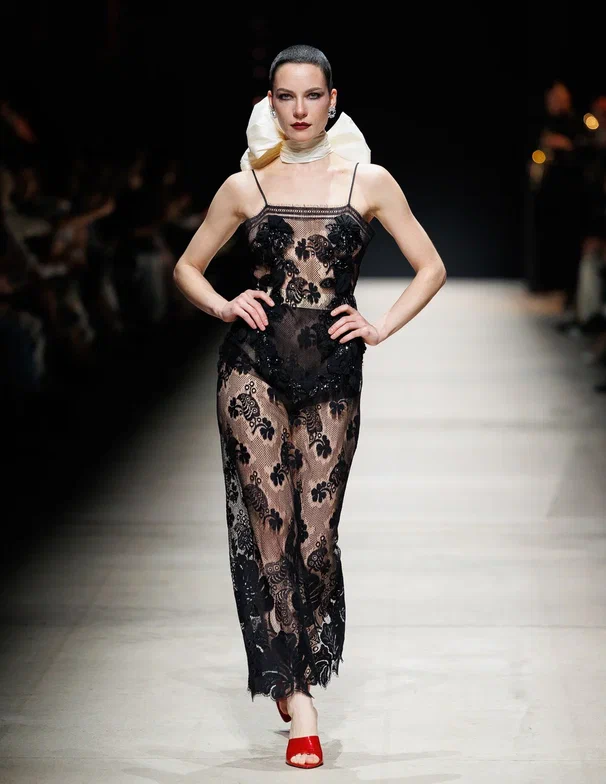
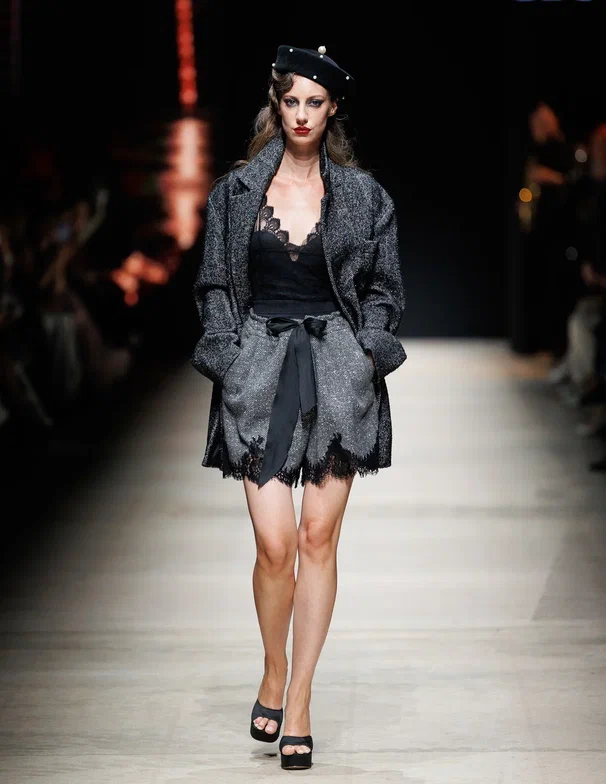
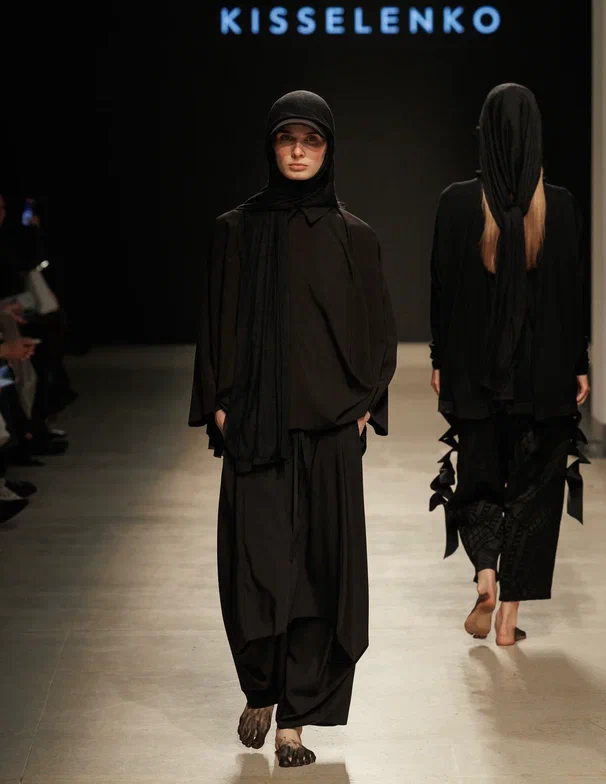
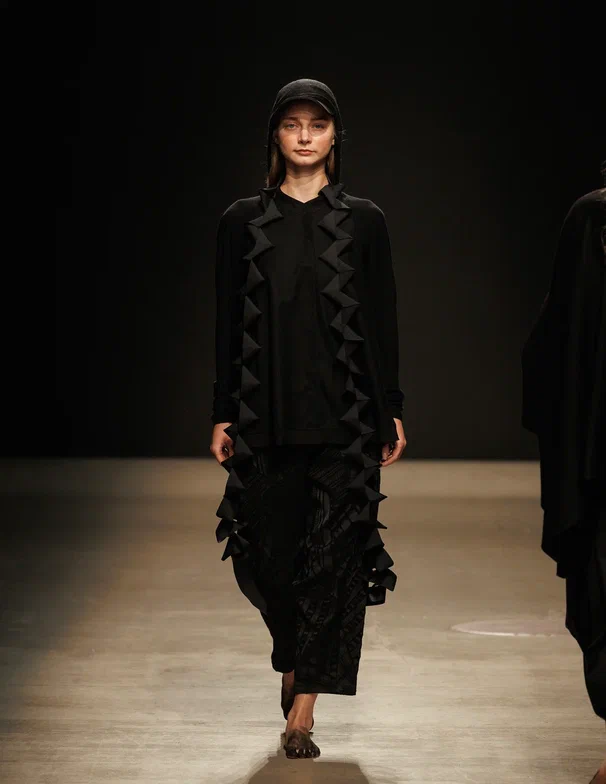
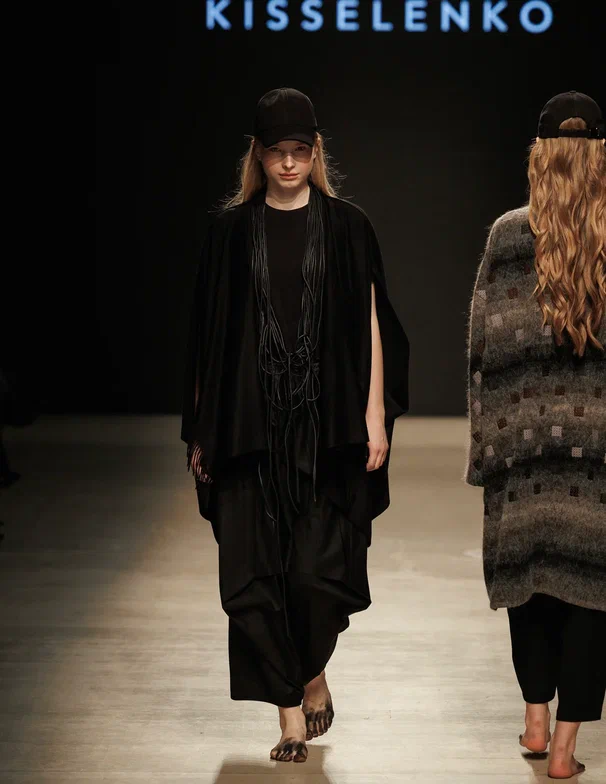
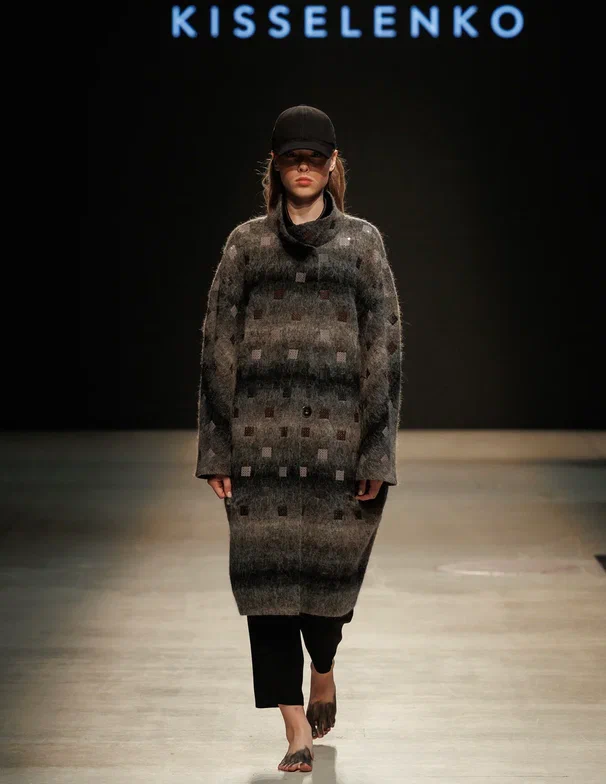
Moscow-based Kisselenko presented Collection No. 59 for Fall/Winter 2026/27. Once again, Lilia Kisselenko focused primarily on form and materials. Embossing, relief, and pleats added volume, while organza and chiffon brought lightness. Silk, fine wool, cotton, and linen were presented in a restrained monochromatic palette.
Alexander Smirnitskiy
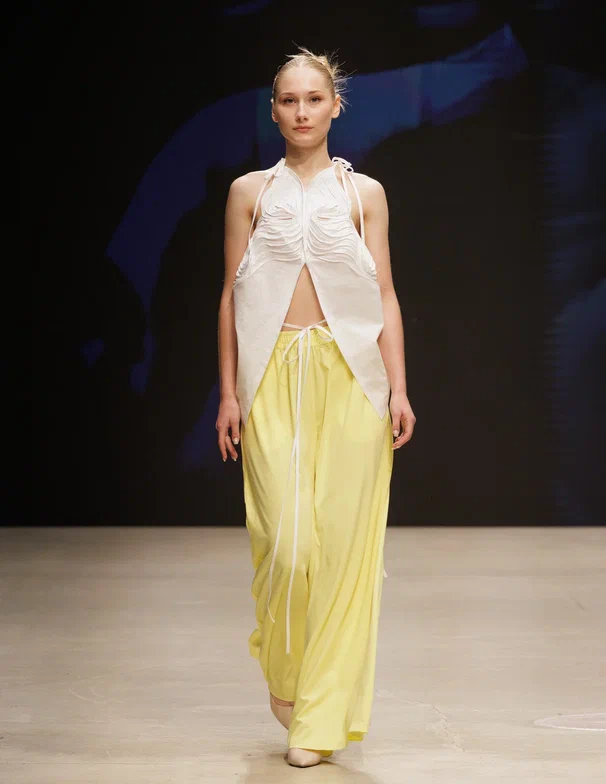
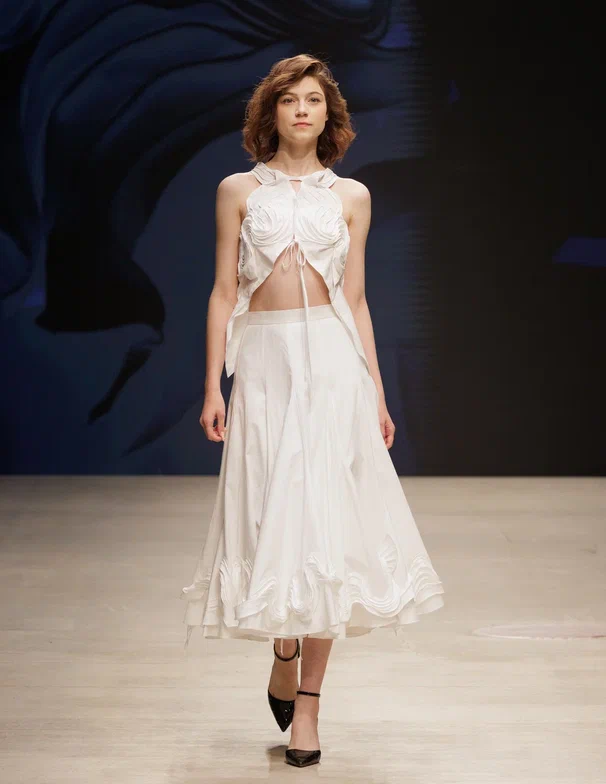
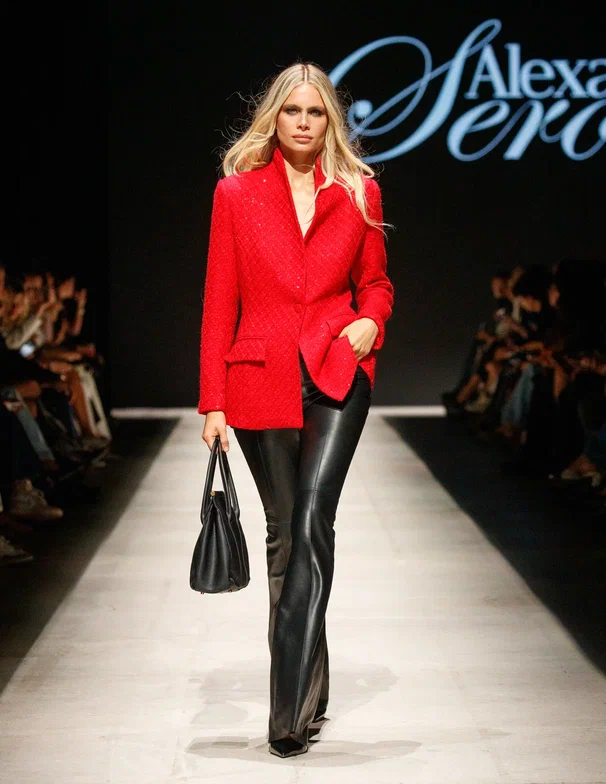
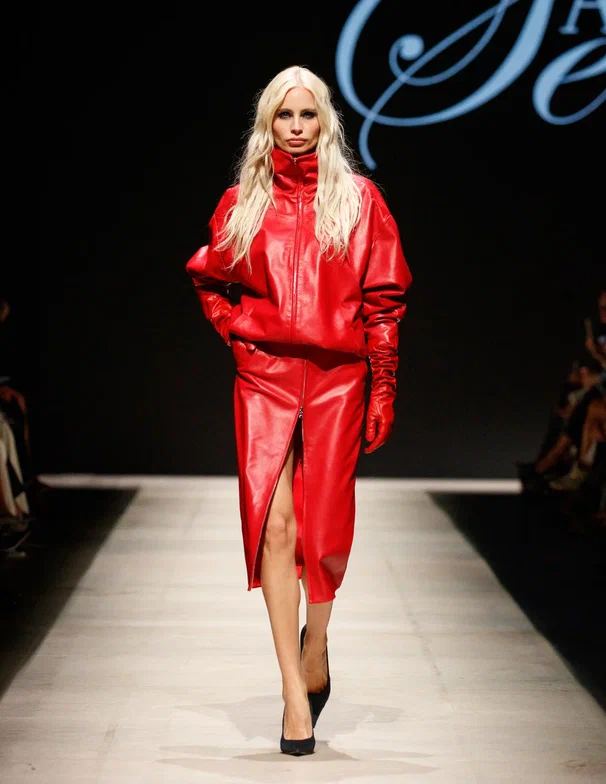
Alexandra Serova
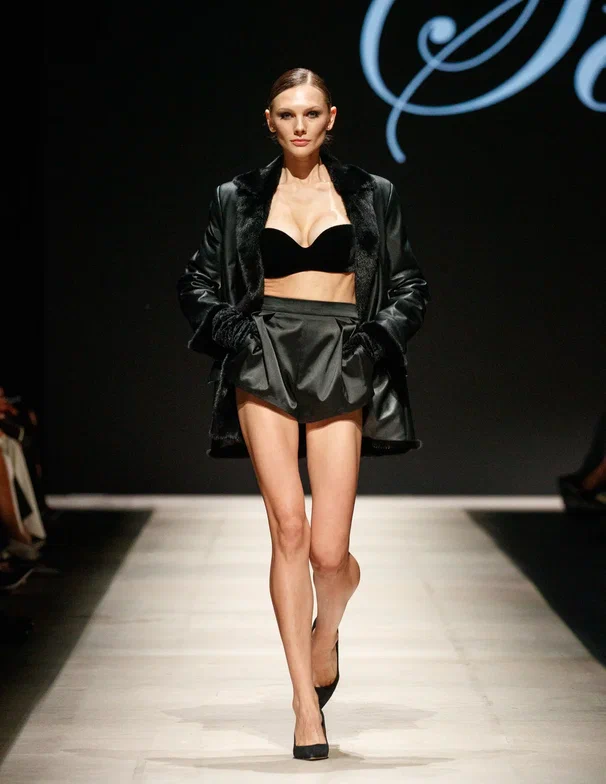
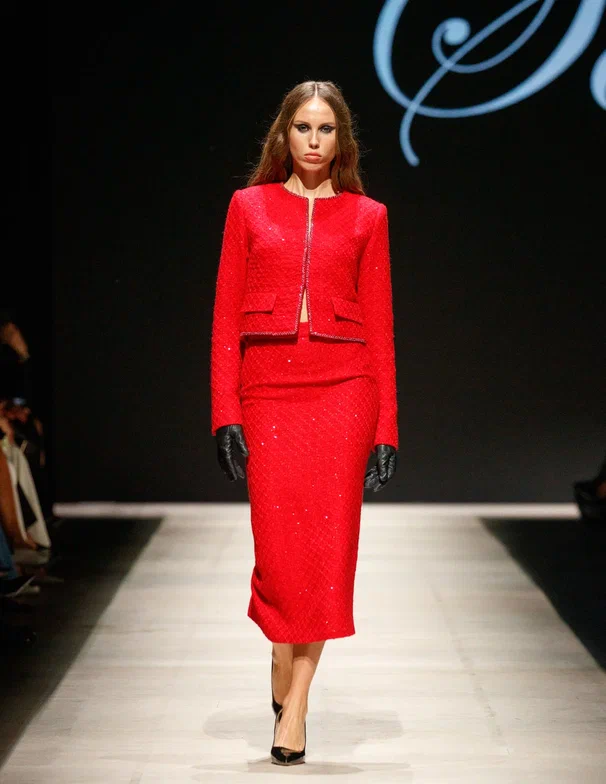
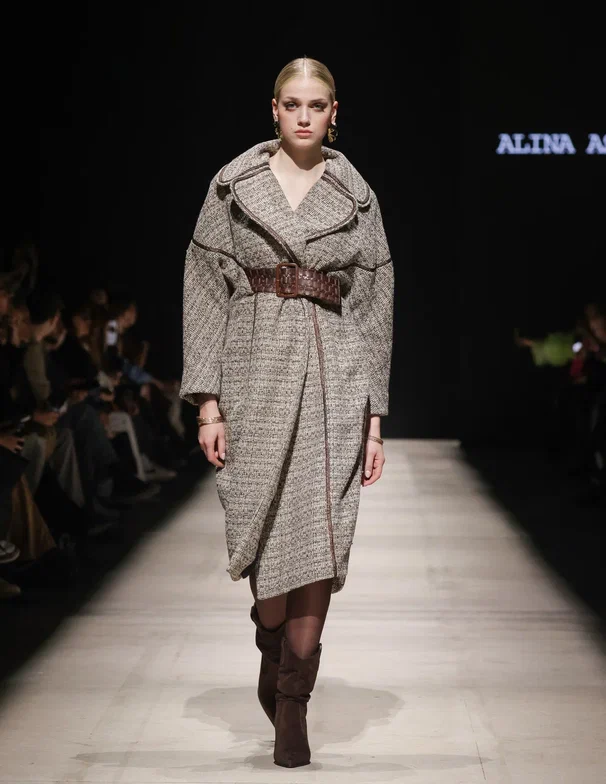
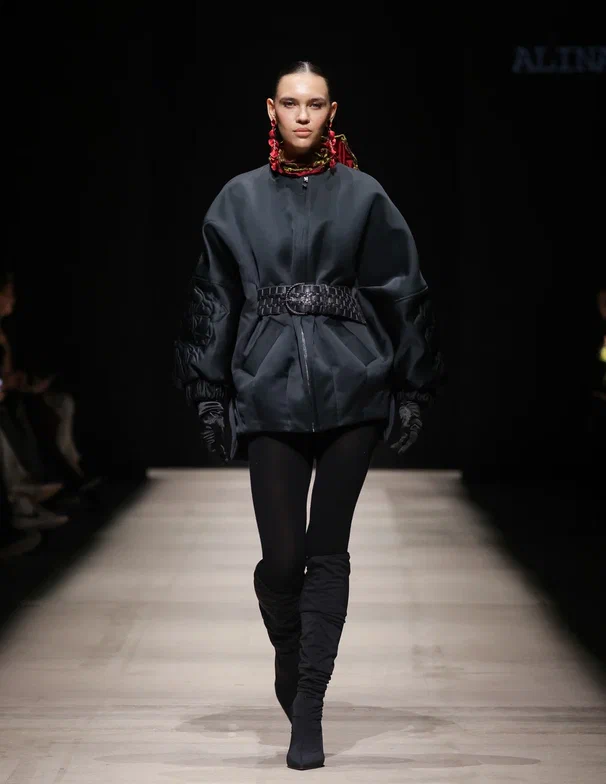
Alina Assi
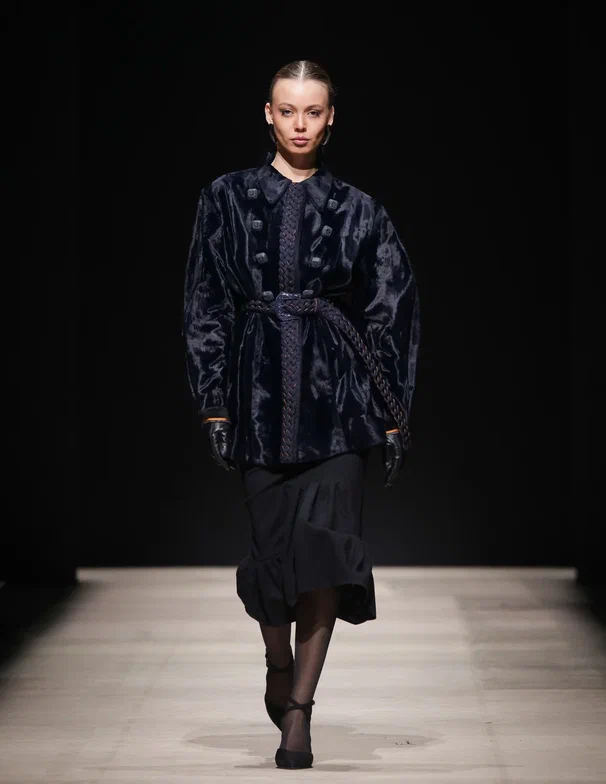
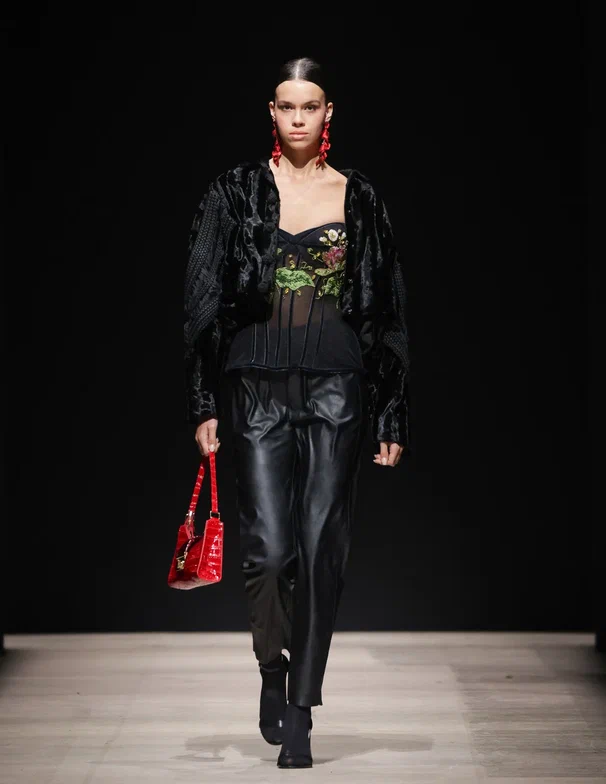
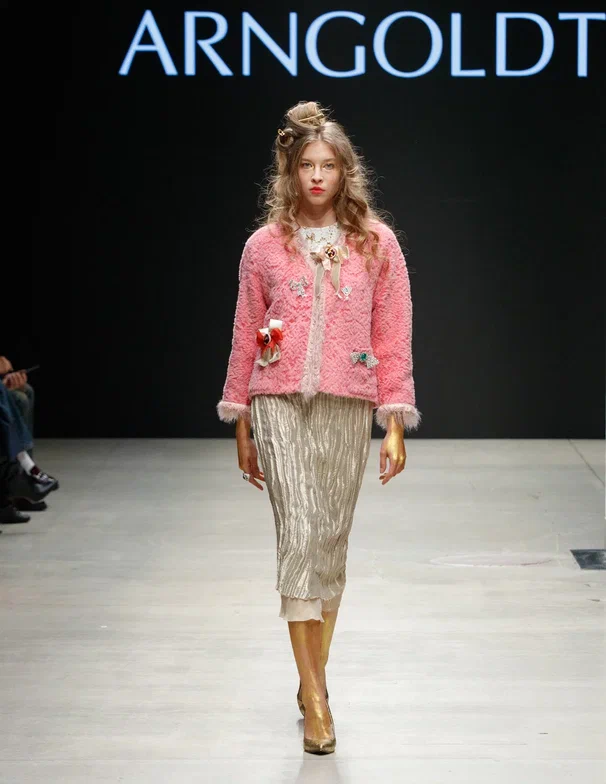
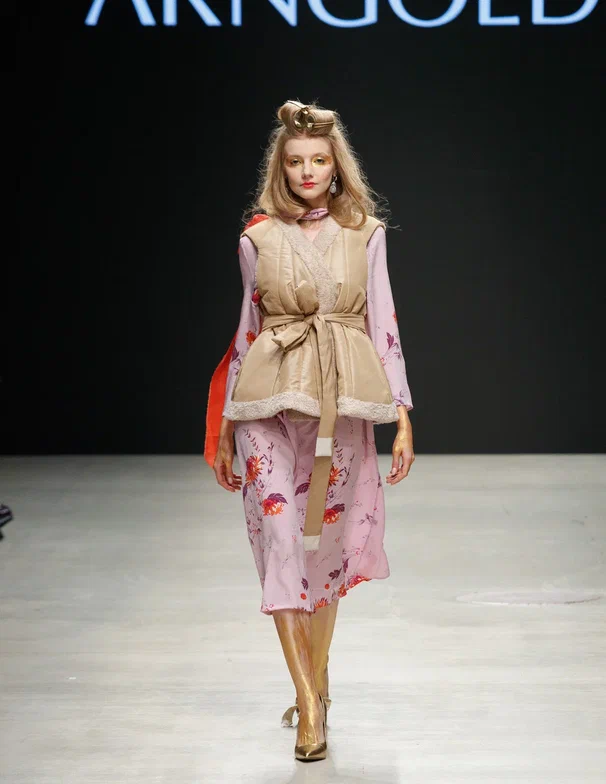
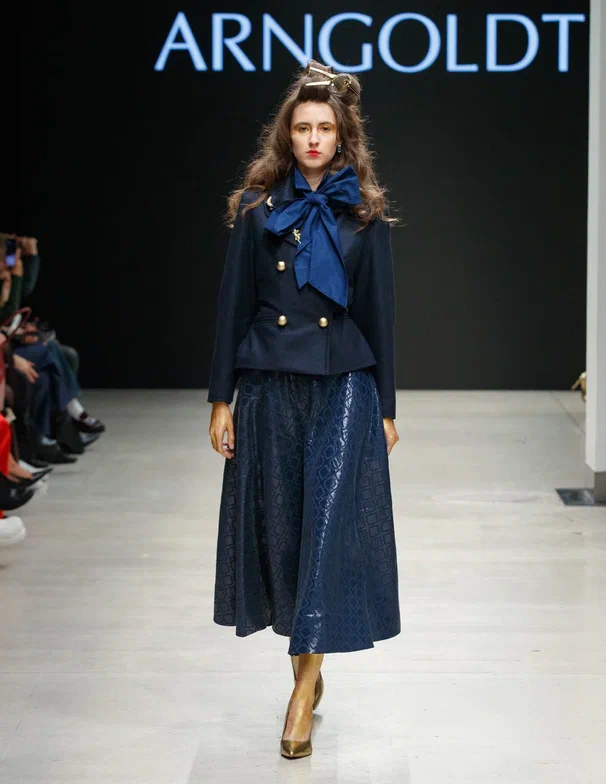
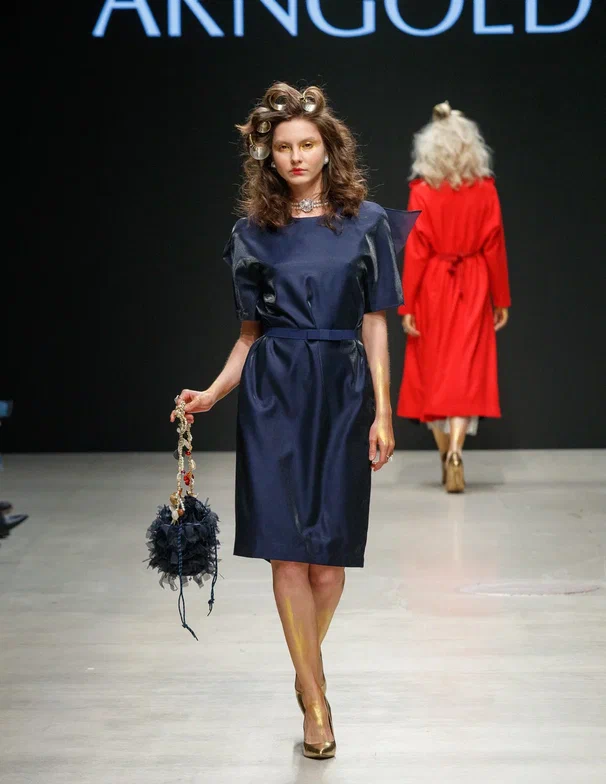
Arngoldt
IgorGulyaev
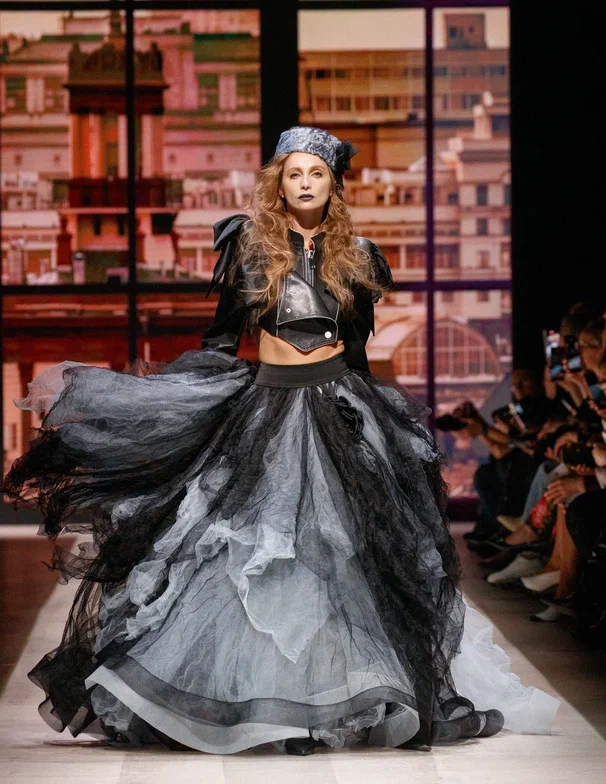
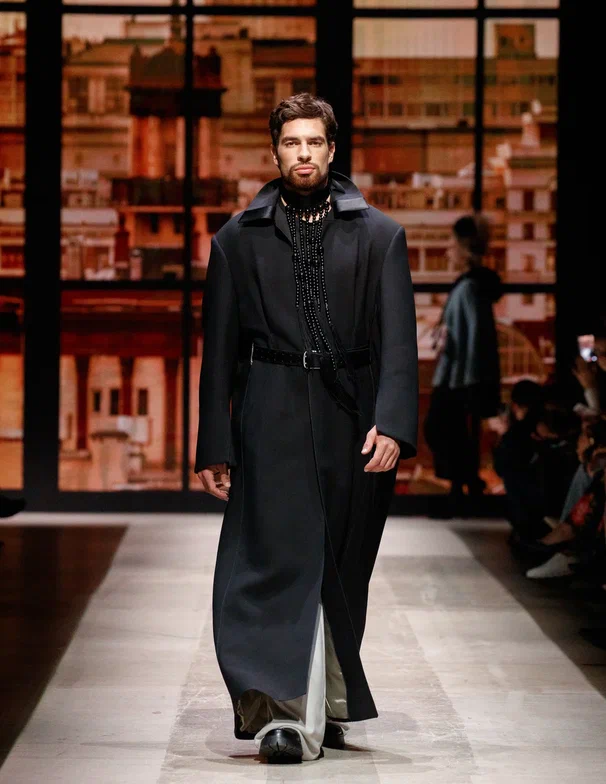
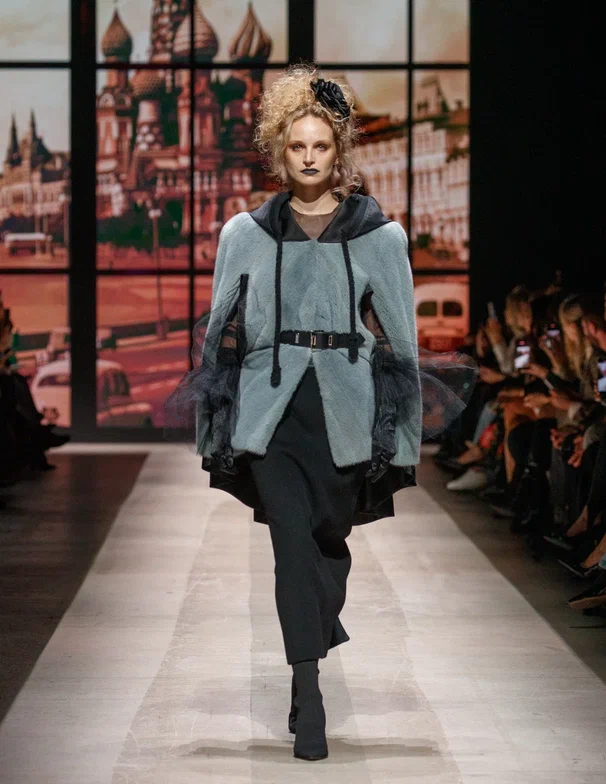
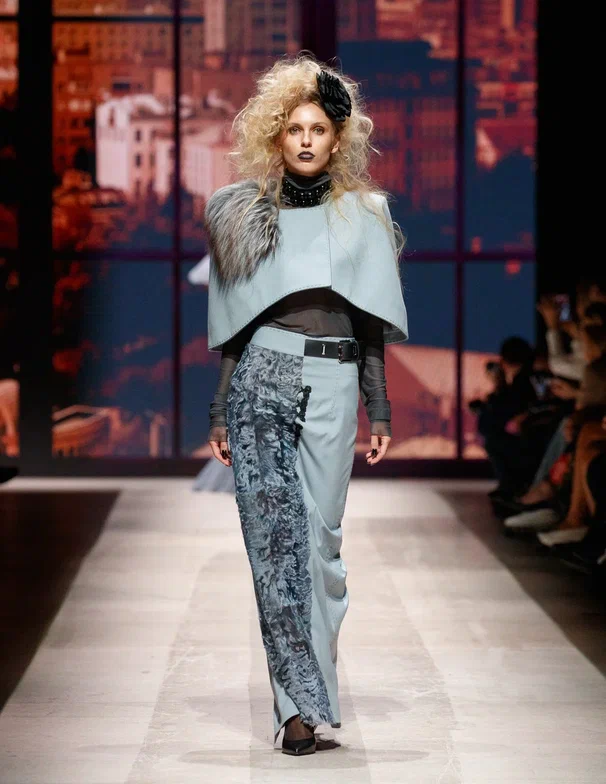
Kiri
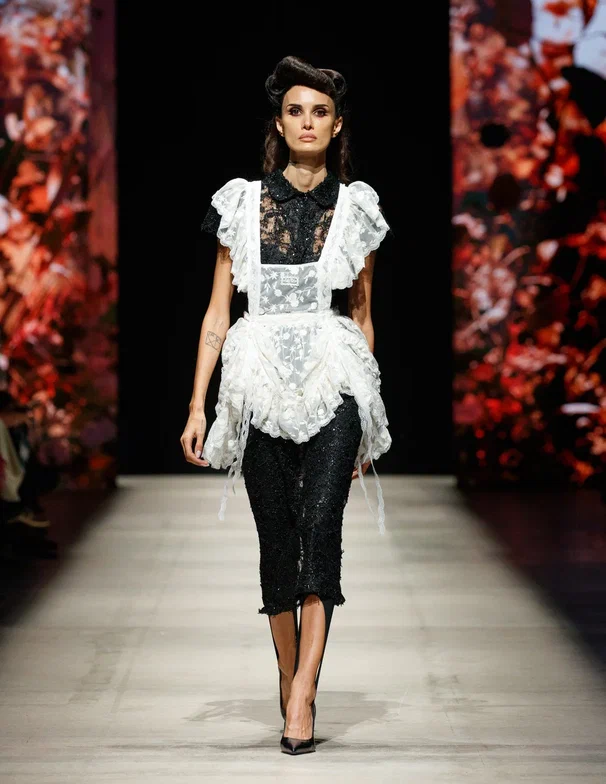
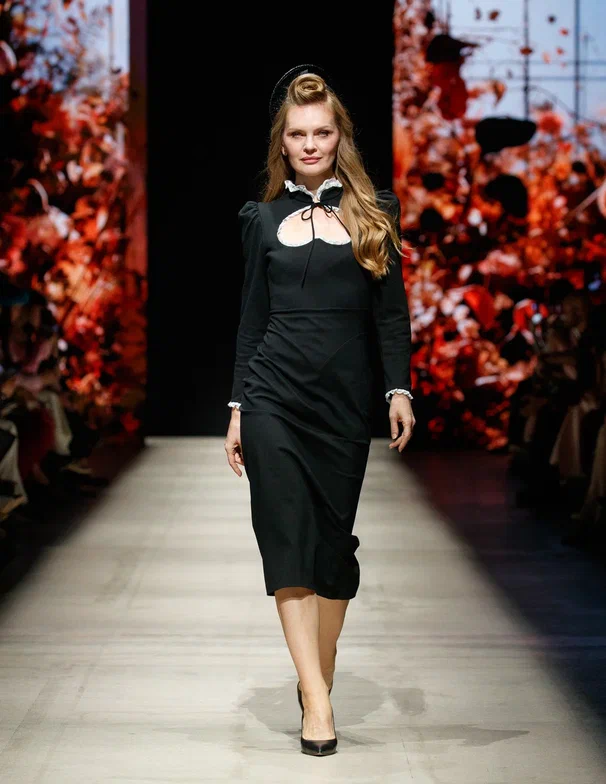
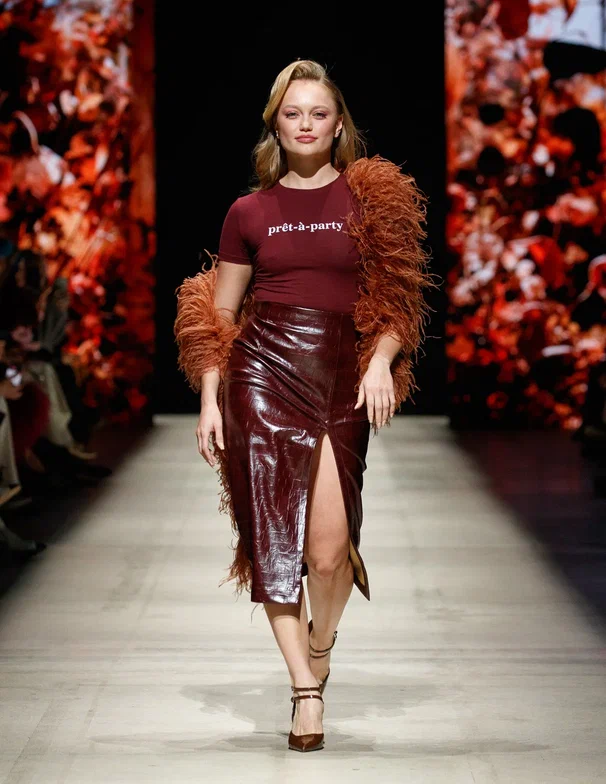
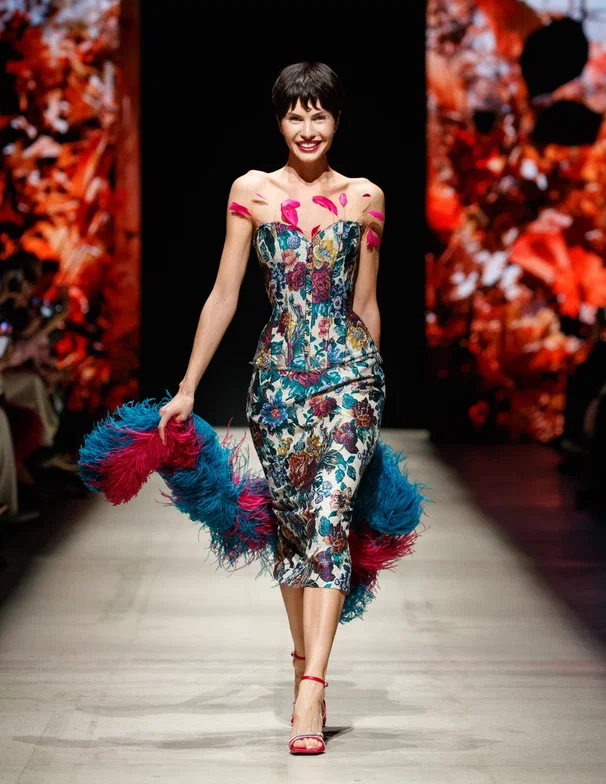
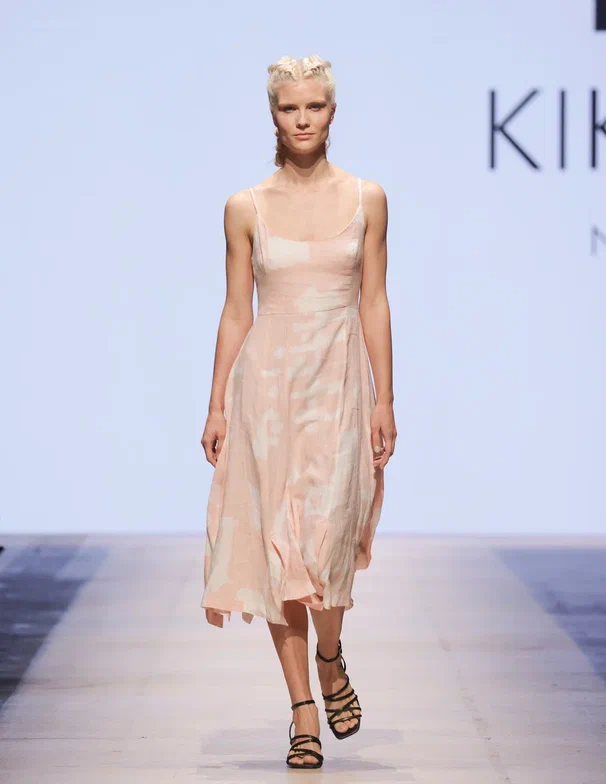
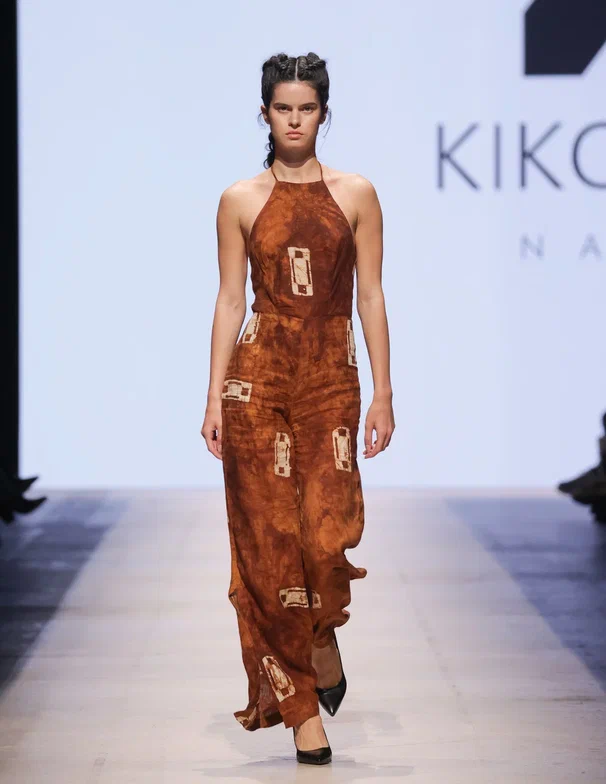
KikoRomeo
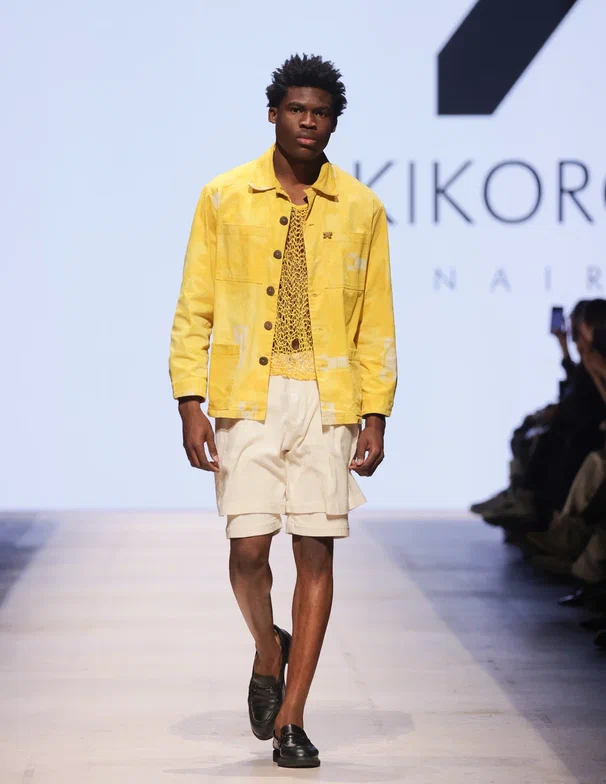
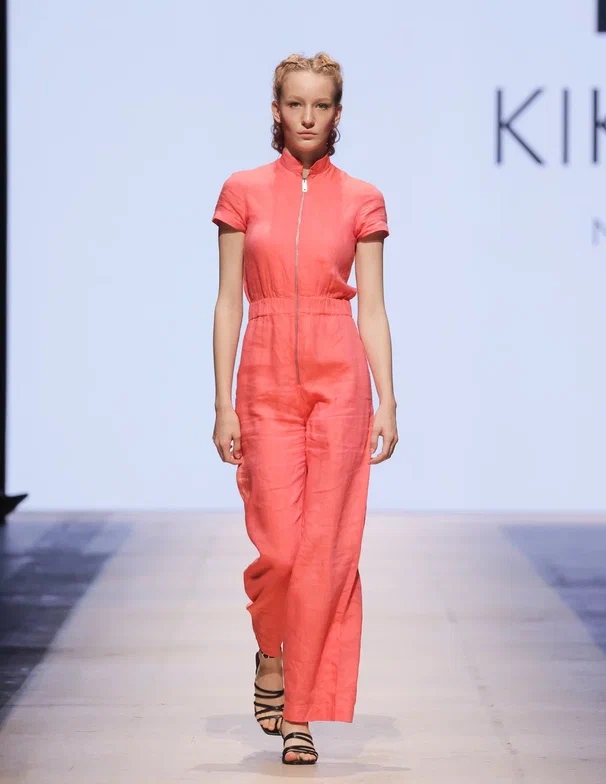
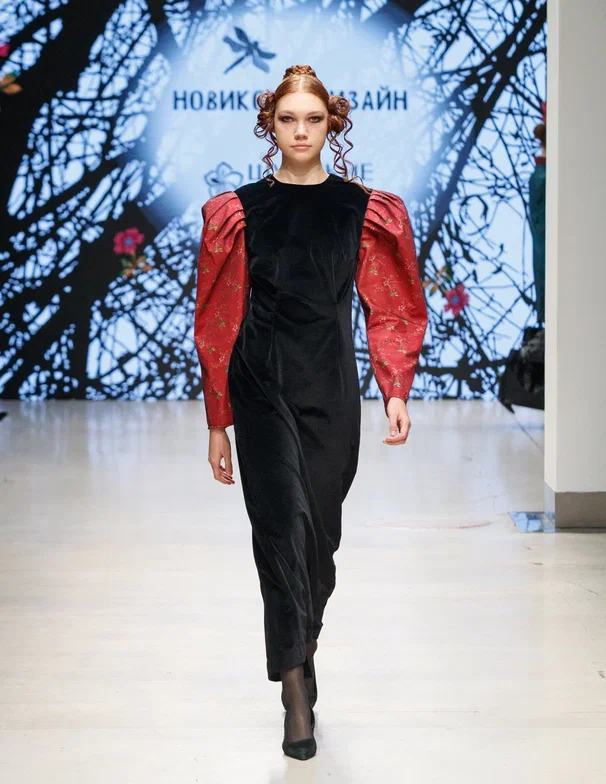
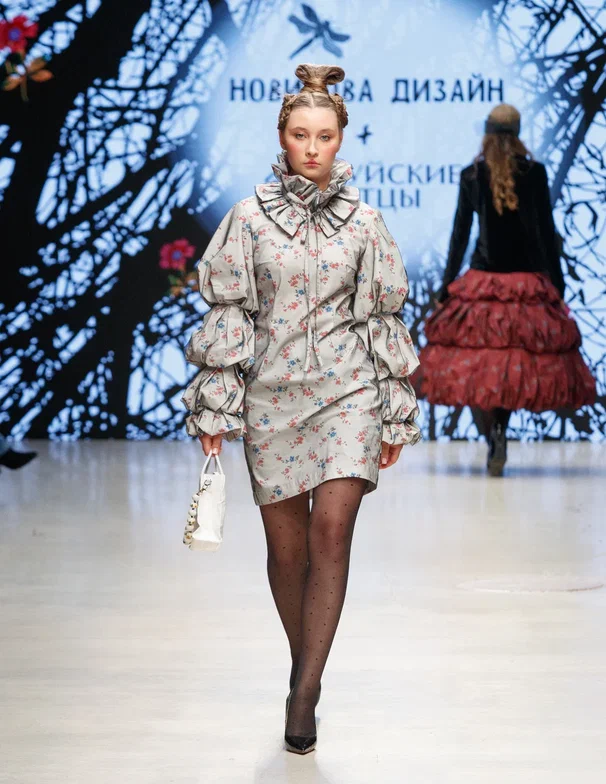
Novikova Design
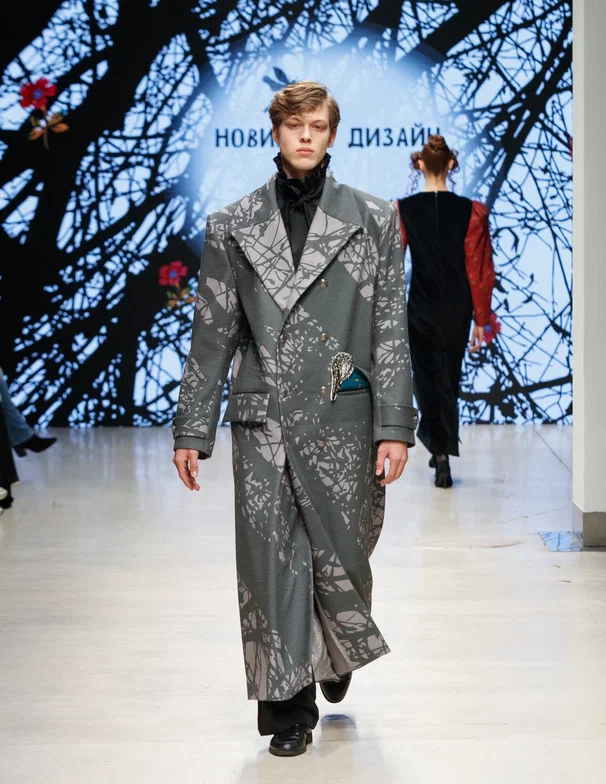
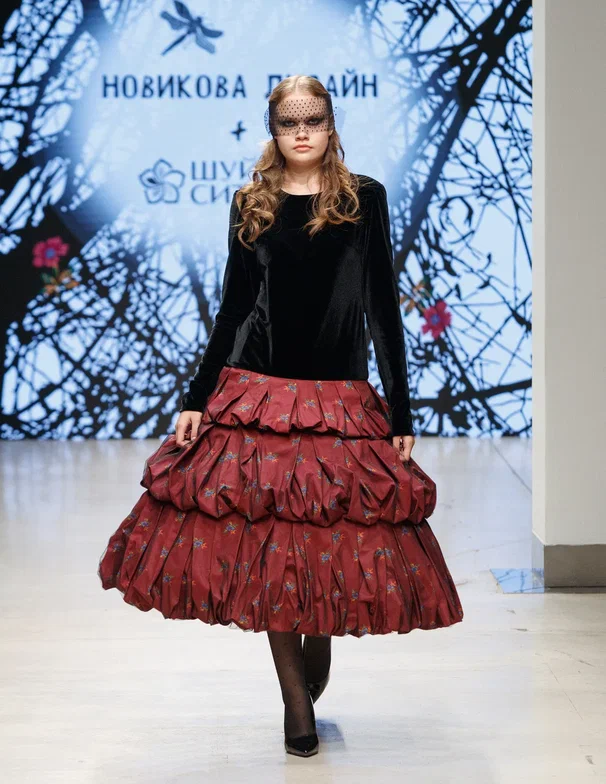
Sergey Sysoev School of Fashion
Victoria Andreyanova