


Few songs in Ugandan music history carry the weight, warmth, and enduring life of Obangaina. Decades after its creation, the track remains a timeless classic that bridges generations and continues to command a room. For Rachel Magoola, whose voice and stage presence created the classic, that legacy invites both celebration and reflection. Ahead of her upcoming concert next Friday, November 27, 2026, Magoola sat down with us for a candid conversation about the story behind the creation of Obangaina, the future of Afrigo Band, and oa frank assessment of the current state of Uganda’s arts industry.
Take us back to the little girl growing up what kind of child were you?
I was a quiet child. The thumb-sucking, reserved one in the family, though I still had a playful streak. My little sister, who always tagged along with me, was the wild one. She would drag me into all sorts of mischief, keeping us out playing until 8:00 p.m. while Mom searched everywhere for us. Because both of my parents were teachers, we moved from one college to another, making new friends wherever we landed. Music was a big part of our home; my father was a music science teacher who taught us early on how to read music and sing. By the time I was eight, I was already in the choir.
Where did you grow up?
I grew up in different places. I think I was born around the time we moved to Gaba TTC. From there, we moved to Buwalasi TTC when I was about four, then spent ages eight to ten at Kabwangasi TTC. Around thirteen or fourteen, we moved again to Nyondo TTC. Later, my mom became a deputy principal at Kamuli Teachers’ College while my dad remained at Nyondo TTC in the same role, so we moved with my mom to Kamuli.
Do you remember the first song you sang?
Growing up, we sang a lot at home, mostly church songs. Later, when my mom returned from studying in Canada, she brought back LPs by Harry Belafonte and Jim Reeves, along with classical records by Beethoven, Vaughan, and Mozart. For years after, I found myself walking around singing “ta, ta, ta, ta”, that’s Beethoven motif. Looking back, we were exposed to so much music.
Growing up, what did you want to become?
I think the first thing I wanted to become was a singer. I loved music, and growing up in the early ’70s, every captivating performer felt like a star to me. I watched Pongo Love and thought, “Look at that beautiful woman.” I watched Diana Ross and knew I had to be like her. I watched Tina Turner and told myself I was going to dance just like her. As a child, I was raving to hold that microphone.
Namasagali College was revered for training artists, what was your experience attending the school?
Well, when I joined Namasagali, it felt like a blessing in disguise. I had just been expelled from my previous school for singing with the band during the school term, so my mom took me to Father Grimes. When we got there, Father Grimes looked at me and said, “This child is obviously an artist, why would anyone expel them?” He gave me a place immediately.
Namasagali taught me so much because they offered a 360-degree, holistic training. You didn’t have to be the brightest in class, they never pushed for that. Instead, they pushed for you to become a well-rounded person.
The activities we got involved in taught us how to express ourselves clearly. We had elocution competitions where you had to memorize and perform poems, including Shakespeare and Wordsworth. That is why so many Namasagali students speak clearly and eloquently; speech and self-presentation were taken seriously. I still remember Father Grimes reminding us to smile; he hated seeing an unwelcoming face. Through all of that, I learned how to carry myself, communicate easily with strangers or friends, and stand before a large audience without fear.
We took part in drama, elocution, fashion, and beauty competitions, alongside the boat regatta, table tennis, netball, football, and athletics. Above all, music is where I truly immersed myself. I was the choir leader, training the school choir and even conducting them on stage during national competitions while still a student. Namasagali exposed me to far more than other schools ever could have.
As you celebrate 40 years in music, where do you count from? Is it the first time you sang a song, or when you first performed on stage?
I don’t count school. If I did, it would be 60. The day I joined Afrigo is where I start counting, because that’s when I went into professional music.
What was your story joining Afrigo what was your first day there like?
Well, I came here to this very place where we are sitting. I sat on this same bench 40 years ago talking to Moses Matovu and James Wasula. This is the story.
Since I had been expelled in Senior Two for singing with a band, nobody would ever allow me to go into professional music before finishing my studies. I had to complete my education first. Once I was done with school, I went looking for Mr. James Wasula. I had been told that he was a director at Afrigo band. He worked at the Coffee Marketing Board, so I went to his office. I told him I wanted to be a singer; that I could sing, write, and dance, and that I was also a teacher of music and English.
Not long after, I came right here, to this very place where we are sitting on this same bench 40 years ago and met Moses Matovu. I told him everything I could do. Looking back now, I realize he had such great foresight, because when I came here, I didn’t even speak the language the band mostly sang in—Luganda. I could only speak English and Lusoga. He told me, “Okay, come on Tuesday and let’s rehearse.” And the first song we did with Afrigo was called “Kukusangana.”
What are your biggest career milestones?
Where do I start? I think the first time I played with Afrigo Band. This was a performance at Gaba Beach on Easter Sunday. All I could see was heads everywhere. It was a sea of people. It was my first time performing with the biggest band in the country, in front of the largest audience I had ever seen in my life. That was a huge milestone.
Another major milestone was the first time we played “Obangaina” back home in Uganda. Because we recorded it in London, it had already become a hit before we returned. I remember performing it for the first time at the Kabaka of Buganda’s birthday at the Serena; the whole crowd went crazy. I remember thinking, Oops, I think we have something going here. It was massive.
Then, of course, there are the crazy moments. I remember learning and rehearsing a song for a Private Sector event with the late Elly Wamala. When I stepped on stage in front of that huge audience, I completely forgot the words. Oh my God, there are things that happen to you and you never forget.
Obangaina is one of the biggest highlights of your career. Who produced it?
Obangaina was first produced by Timothy Kizito, RIP, and featured on my 1997 solo album, Ina Ife. Later, when we went to London in 1999, each member had to bring a song for the band album, so that’s what I brought to the table. We worked with a gentleman in London, a Jamaican called Vincent, who’s a producer.
I learned that it is inspired by a folk song that goes back many years. What is story behind it?
At its core, Obangaina Obangeyo is a story about infidelity. After discovering that her husband has been with Margaret, a betrayed wife confronts him, demanding, “Obangaina?” “Where were you?” before repeating, “Obangeyo.” Through her confrontation, she calls him out for neglecting his family and bringing shame upon their home by taking a mistress.
How long did it take you to turn the idea into the finished song?
The 1997 recording wasn’t that great, and before it became the hit it is today, Abbey Mukiibi and the late Kato Lubwama actually used the first version in a play at Bat Valley Theatre. Back then, Lusoga wasn’t a language everybody spoke, yet they brought it onto the stage in that play. So, by the time the song was rearranged, and the production completely redid, a lot of people already had a feel for it from Abbey Mukiibi’s play.
During its production, did any of you think you were creating a classic?
Right after finishing the track in the studio, we shot the video the very next week. It was during the video shoot when we first realized that the song might actually be something special. Still, none of us ever imagined it would become a song of the millennium; a number one for four years straight. Even years later, every family knows it, and people still sing and jump to it whenever it plays. No one saw this coming.
How did you feel the first time your performed it?
When we first played it on stage, I just enjoyed what I was doing. At the time, it was just a song to me. I never thought it would become a big song. So, we really didn’t know. Even when I was putting it together, my sisters wondered and asked. “Who is going to listen or dance to that “village song? Toleta Byamukyalo.” And I told them, “No, I’m going to record this song.”
That’s when I realized you can never predict what will become a big song. For real writers, we don’t write to chase hit songs; we write because a great idea has to come out. It’s like a baby, it has to grow, and it has to be released.
What factors do you think contributed to the song becoming such a cultural phenomenon?
It hit a chord in society because it spoke to something deeply real. Our grandfathers and forefathers lived polygamous lifestyles where having several wives was the norm. My own grandfather was a chief who had 77 wives. When the missionaries arrived and preached monogamy, men tried to wed just one wife, yet in the background, there were still mistresses. Meanwhile, the wives who thought they were marrying into a strictly monogamous union fought hard against a second or third wife.
And then came “Margaret.” Anyone named Margaret claimed that song as her own, because there is always another Margaret in the picture. Every Margaret celebrated; whether she was the wife or the mistress, and for a wife whose husband had cheated, it became an anthem against him. Almost every family seems to have a Margaret lurking in the background, so of course it resonated.
On top of that, the musicality was undeniable. The way the band recorded it, the instrumentation, and the orchestration came together seamlessly. It was fun rhythmically and melodically, and the lyrics told a real story. That combination is what made it so big.
My other favourite song from you is ‘Vooto’. What is the story behind it?
Vooto, yes, oh yes. it is also from a folk song. Vooto was a creeping vegetable delicacy grown in plantations, which has nearly gone extinct because of climate change. That explains why people keep saying, “Wandya ku voto”—how could you eat Vooto without me? Of course, with minds as funny and tricky as people have today, everyone brings their own interpretation to what Vooto is.
The song I like is called ‘Serubonera’. It’s from a new album.
“Serubonera” is on the Resilience album, and a friend of mine Joe Kahirimbanyi of Qwela Band taught it to me. Back in the day in Kigezi, there was a practice where if a woman got pregnant before marriage, she would be cast out onto that island and left to die. So, in the song, the boy is pleading, “Let’s just sleep together,” while the girl says, “No, no, no, if I do that, I’ll cast shame on my community.” That’s the story behind “Serubonera.”
Let’s talk about your style. What’s the story behind your signature afro hairstyle?
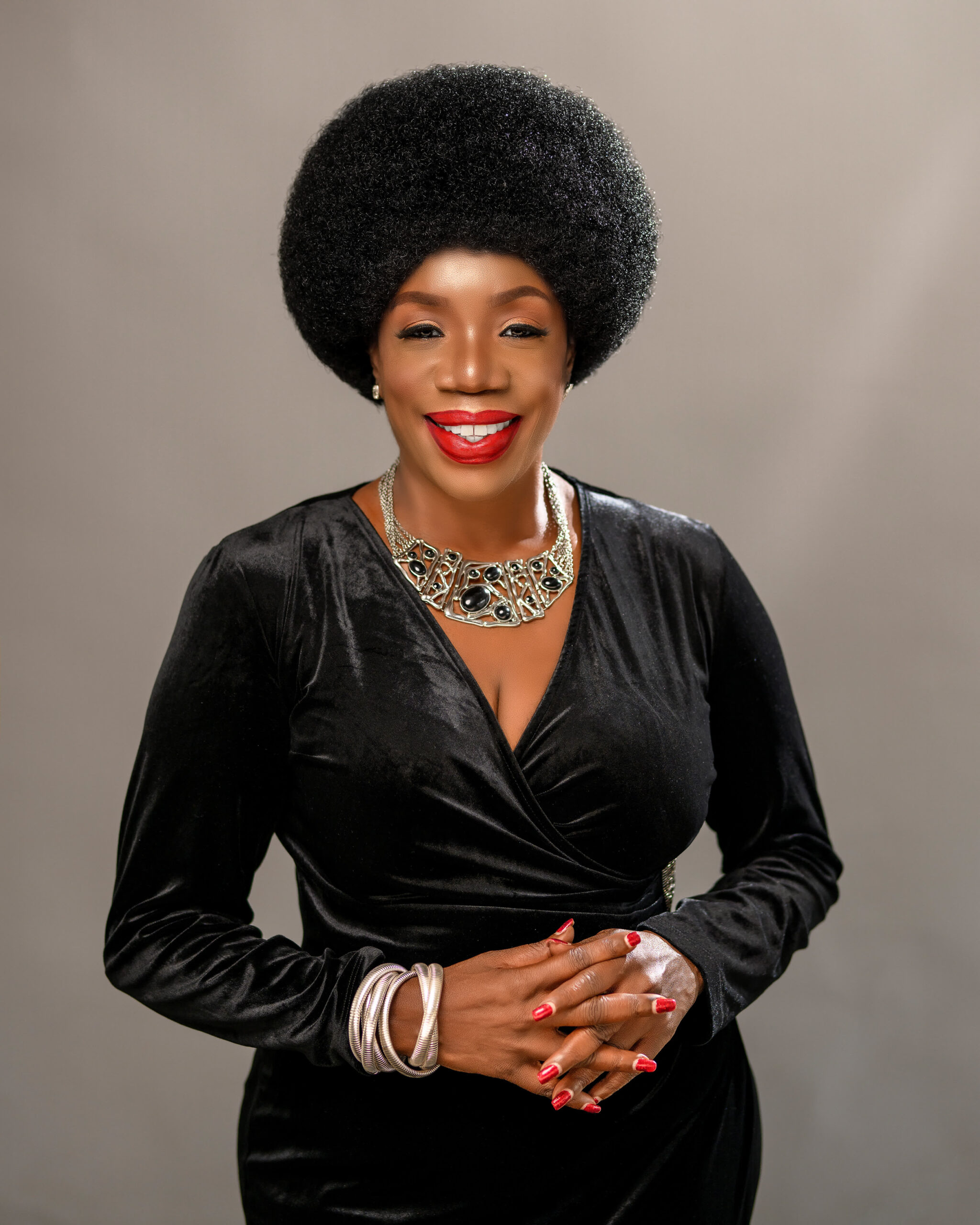
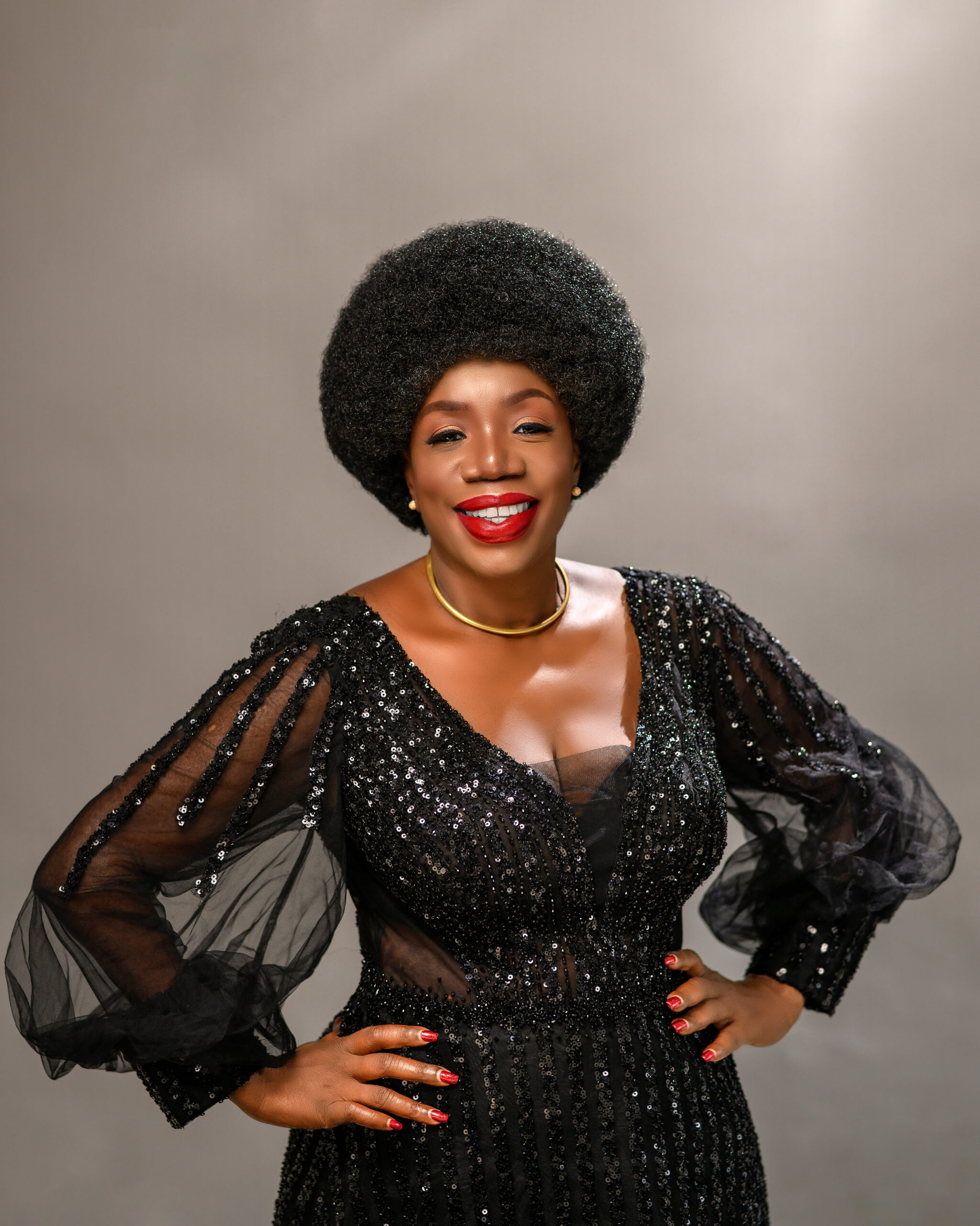
It’s a very simple story, really. It started as a bad hair day. My niece had brought this wig back for me from the US or somewhere around there, and it was just sitting there. That day, I really couldn’t figure out what to do with my hair, so I thought why not do a daring look. I put the wig on, and oh my God, everyone went, “Oh my God, that’s beautiful!” I was still a Member of Parliament, when I walked into the chamber, there was stir. It was a bit bolder than the usual politician look. Around that same time, I traveled to Addis Ababa for the jazz festival. When I got on the plane, everyone was looking and saying, “Oh my God, African woman, beautiful—beautiful hair!” That was the moment I thought, “I think I’m going to maintain this style from now on.” And it’s been about five years now.
How has your style sense evolved over the years?
A lot has changed over the years. Looking back, in the Obangaina music video, I was wearing a hot mini dress, but I can’t wear that style anymore. I’m just not that person now. The culture has shifted so much that girls are going bolder and bolder with their fashion, almost everyone is trying to look like Beyoncé. Everything has gotten skimpier and skimpier, and these days, sex sells.
Have you had any pressure to conform to new style trends?
I would never wear anything as skimpy as today’s styles. As an older woman, my body has naturally changed. I don’t have that tiny waist anymore, and I wouldn’t dress like that or advise my daughter to. I know times change and you have to dress for the body you have now. It’s great that it’s making sales for the younger girls, and everyone has what they like, so I can’t judge. Skimpy sells, no doubt, but where you draw the line matters. You have to leave a little room for the imagination, once you overdo it, it just becomes tacky.
The industry is crowded with so much young talent. Are you listening to any young artists?
I really like Cindy; she’s bold, she’s big, and she’s the king. I enjoy watching her because she’s so creative and goes out there and does her thing in a way nobody else does. I’ve also watched Rema Namakula; she has a beautiful voice, makes beautiful songs, and has really done well for herself. Then there’s Sheebah Kalungi, another bold woman who has carved out a niche of her own. Watching her, along with Spice Diana, it’s clear that women are ruling the industry right now, and that makes me really proud because we started this journey.
Talking about Cindy and Sheebah, what are your thoughts on the industry pitting two successful women, like Sheebah and Cindy, against each other?
As I’ve said before, every artist has their own voice and presence. Much of the negativity is driven by media and promoters looking to feed off these women’s vibrancy and profit from it, without adding real value to the industry. Turning two young, powerful women against one another despite each bringing a distinctive talent and strength diminishes their aura of talent and beauty. That kind of pitting is anti-art, because art isn’t meant to work that way.
Have you had similar run-ins with the media as well?
I’ll give you one example. I needed to step away from Afrigo for a while because I wanted to take my music abroad. I had secured a solo investment from a company to promote their product, so I asked Moses Matovu for permission to do my own thing for a bit, promising I’d be back. He was even planning a farewell party so I could go out and explore.
However, when the media caught wind of it, they spun the story in a way that made it seem like I’d gone to the press announcing I was leaving to do my own thing. That put a strain on what we had, and it’s sad that Moses almost believed it. Even so, I still came back, and he welcomed me. In the end, things turned out okay, though the media ruined the send-off we had planned, so the farewell party never happened. Looking back, though, since I came back anyway, maybe the farewell wasn’t necessary.
Let’s talk about your dance moves. What has kept that youthful spirit going?
Dancing has been part of the way I work for years. I have a dancing streak in me; I danced all through my school days, went to Namasagali where we did creative dance, and also, I have choreographed a lot. Having done it for so long, practice makes perfect, which is why I’m always surprised when people act shocked that I can dance.
You mention Moses Matovu a lot. With him out of the picture, what does the next chapter of Afrigo band look like?
For this next chapter, one thing is clear: every member is committed to keeping Moses’ dream alive. No matter the circumstances or the naysayers, what drives the band is a shared desire to honor a man who gave us so much. He was a mentor, a leader, a friend, and a father, so many different things to each of us, but above all else, our most important duty is to keep his vision going.
What does the future of Rachel Magoola look like?
I really want to step into mentoring younger creatives and connecting talented artists to the opportunities I’ve been fortunate enough to experience. Stage shows are so expensive to put together that you’re lucky to have any money left after hosting a big one. Yet intellectual property remains the most lucrative way for a creative to earn a living and right now, we aren’t getting the best out of it. We have a copyright law, but the systems to manage intellectual property properly don’t exist; without those systems in place, it feels stillborn.
My stint in government helped me see that the legal and regulatory frameworks governing the creative industry are still outdated. We need to reform those laws so the industry has room to breathe and thrive. At the same time, I’d love to see much greater international recognition for Ugandan music, because we are still largely absent from the global circuit.
Lastly, what should we expect at the concert?
I’m putting together an event, a musical journey that’s one of a kind. That’s what I promised the audience, because with the trilingual nature of the way I sing, I have something for everybody from around the country. That is why the Explore Uganda brand by the Uganda Tourism Board came on board, it tells a story of unity in diversity. It’s also a tribute concert. I have young artists singing my music their way, and I can’t wait to see that. I think it’s going to be explosive, so we promise an amazing show, and music lovers should be there to come and see for themselves that at 60, you can still shine.
One of the things I’m doing is launching the Rachel Magoola Foundation. For the last 15 years, I’ve been taking vulnerable children, especially orphans, back to school. Several are moving along that journey: the eldest has now entered MUBS in Nakawa to study entrepreneurship, while the youngest is in P2.
Then, after COVID-19, while I was in Parliament, I kept seeing young girls carrying babies. At first, I assumed they were carrying their siblings. Little did I know. I went to a funeral and was told to go and commiserate with the mother of the baby who had passed away. As I sat there wondering where the mother was, I realized she was sitting right next to me, and she was so young. It would never have crossed my mind that she was a mother who had lost her child.
I did some research and found there were 4,000 cases in my constituency of Bugweri alone. I met about 60 of these young mothers, and most of them said they wished they could go back to school so they could raise their children. Because when a baby arrives, the boys often run and the girls are left with their parents, I decided to start the “Go Back to School for Teenage Mothers” campaign. To me, the foundation is the most important work I do because it prepares young women in Uganda for the future. Since they look up to me, I need to keep that door open for a girl in Uganda.


